How To Make Thermal Curtains More Effective: 10 Fixes For Window Gaps, Sunlight And Heat Leakage
Make thermal curtains work harder with 10 practical fixes for window gaps, harsh sunlight and heat leakage. Improve coverage, seal air leaks and keep rooms cooler with simple, low-cost adjustments.

10 ways to make thermal curtains more effective for hot summer days
Thermal curtains often arrive with impressive promises. They claim to block heat, soften sunlight and reduce the burden on air conditioners. Yet after hanging them up, many households still find the room warming by noon or losing its cosiness after sunset. The curtain itself may not be the problem. Heat behaves like an uninvited relative during festival season: it notices every tiny opening and settles in comfortably. A narrow gap near the curtain rod, an exposed strip beside the window or a loose frame can allow warm air and sunlight to enter. Even a premium curtain struggles when it hangs several centimetres away from the wall.
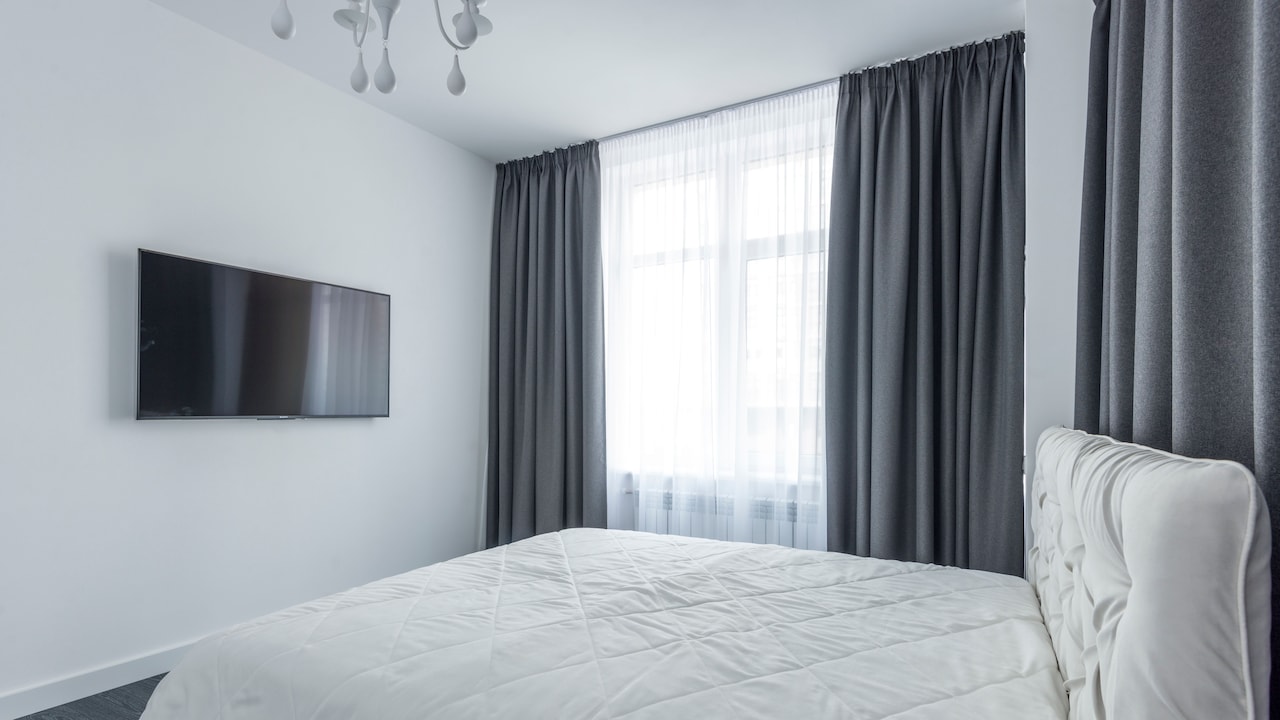
Easy tips to make thermal curtains more effective in blocking heat
Photo Credit: Pexels
The good news is that most of these issues have simple fixes. Better measurements, smarter layering and a few low-cost adjustments can turn ordinary thermal curtains into a far more effective barrier. The following ideas focus on three common troublemakers: window gaps, direct sunlight and heat leakage.
Also Read: 5 Best Curtains That Block Out Summer Heat Under ₹2500
10 Practical Ways To Improve Thermal Curtain Performance
1. Extend The Curtain Rod Beyond The Window
A curtain rod that ends exactly at the window frame leaves the sides exposed. Sunlight slips through those narrow strips, while warm air moves freely around the fabric. By afternoon, those small openings can feel like miniature heaters.
Extend the rod by roughly 15 to 25 centimetres on both sides of the window. This extra width allows the curtains to overlap the wall instead of merely covering the glass. It also gives the fabric enough room to form a more complete barrier when closed.
This adjustment works especially well for west-facing rooms, where the late-afternoon sun arrives with all the subtlety of a pressure cooker whistle. Wider coverage reduces glare on television screens, protects furniture from fading and keeps the area near the window more comfortable.
Choose sturdy brackets because thermal curtains tend to weigh more than regular ones. Fix them securely into the wall rather than relying on weak adhesive hooks. A properly extended rod also makes the window appear larger, so the room gains a little visual drama along with better insulation.
2. Hang The Curtains Closer To The Ceiling
Curtains fitted just above the window frame often leave a large patch of wall uncovered. Hot air gathers near the ceiling and can travel behind the curtain through the open space above the rod. That movement weakens the insulating pocket between the fabric and the glass.
Install the rod closer to the ceiling, or at least 15 to 20 centimetres above the window. Floor-length curtains should then fall from this higher position and cover the entire opening. The result feels more polished and gives heat fewer routes into the room.
High-hung curtains also make low ceilings appear taller. This can help compact bedrooms and flats feel less boxed in, particularly where ceiling fans, cupboards and storage units already compete for visual space.
For better results, keep the top gap as small as possible. A pelmet, cornice box or simple fabric valance can cover the remaining opening above the rod. Think of it as putting a lid on a container. Without that lid, warm air keeps circulating behind the curtain instead of staying trapped near the window.
3. Choose Curtains With Extra Width And Fullness
A thermal curtain should not stretch flat across the window like a bedsheet clipped to a washing line. Flat fabric leaves little room for folds, and those folds play an important role in slowing heat transfer.
Choose curtains with a combined width around one-and-a-half to two times the width of the rod. This creates generous pleats when the curtains remain closed. The folds trap small pockets of air, adding another layer between the room and the hot glass.
Extra fullness also helps the two curtain panels overlap at the centre. Without that overlap, a bright vertical line often appears between them, especially when ceiling fans or coolers move the fabric. That narrow line can admit surprising amounts of sunlight.
For a standard window, two broad panels usually work better than one tightly stretched panel. Draw them together and allow a slight overlap in the middle. Curtain magnets or discreet clips can keep the panels connected during windy weather. The finished look feels softer, richer and far more intentional, while the window gains a thicker shield against outdoor heat.
4. Seal The Gaps At The Curtain Sides
Even wide curtains can curve away from the wall at the edges. Those side gaps allow sunlight to enter at an angle and create bright, heated strips along the floor or furniture.
Use hook-and-loop tape, magnetic strips or small wall-mounted curtain clips to hold the outer edges close to the wall. Attach one side of the fastener to the wall and the other to the curtain lining. The fabric can still open when needed, yet it stays firmly sealed during the hottest hours.
This trick works particularly well in rooms where sunlight hits from the side rather than directly through the centre. It can also help near balconies, where passing air often pushes curtains inward and breaks the thermal barrier.
Avoid fixing the tape to delicate paint or fresh plaster without testing a small hidden area first. Removable fasteners may suit rented homes, though their adhesive strength varies.
Once the side gaps disappear, the curtain begins to behave more like a fitted cover than a decorative drape. That closer fit can reduce glare, improve privacy and stop the edges from fluttering dramatically every time someone opens the front door.
5. Close The Gap At The Centre
The centre of the window often becomes the weakest point, particularly when two curtain panels meet without overlapping. A thin shaft of sunlight can travel through this gap and slowly heat the room.
Arrange the panels so one crosses slightly over the other. If the curtains naturally slide apart, use hidden magnets, curtain clips or fabric ties placed behind the front layer. These small additions keep the join closed without changing the appearance from inside the room.
For eyelet curtains, the folds sometimes pull the centre edges backwards. In that case, add a little more width or move the first eyelet beyond the centre point. Pencil-pleat and pinch-pleat styles usually create a tighter meeting line, although any heading can work with careful positioning.
Check the gap at different times of day. Morning light may enter from one angle, while evening sunlight finds another. A seal that looks perfect at 9 am may reveal a glowing line at 4 pm.
The goal is not to create complete darkness unless that suits the room. It is to stop concentrated sunlight from turning one narrow patch into a stubborn source of heat.
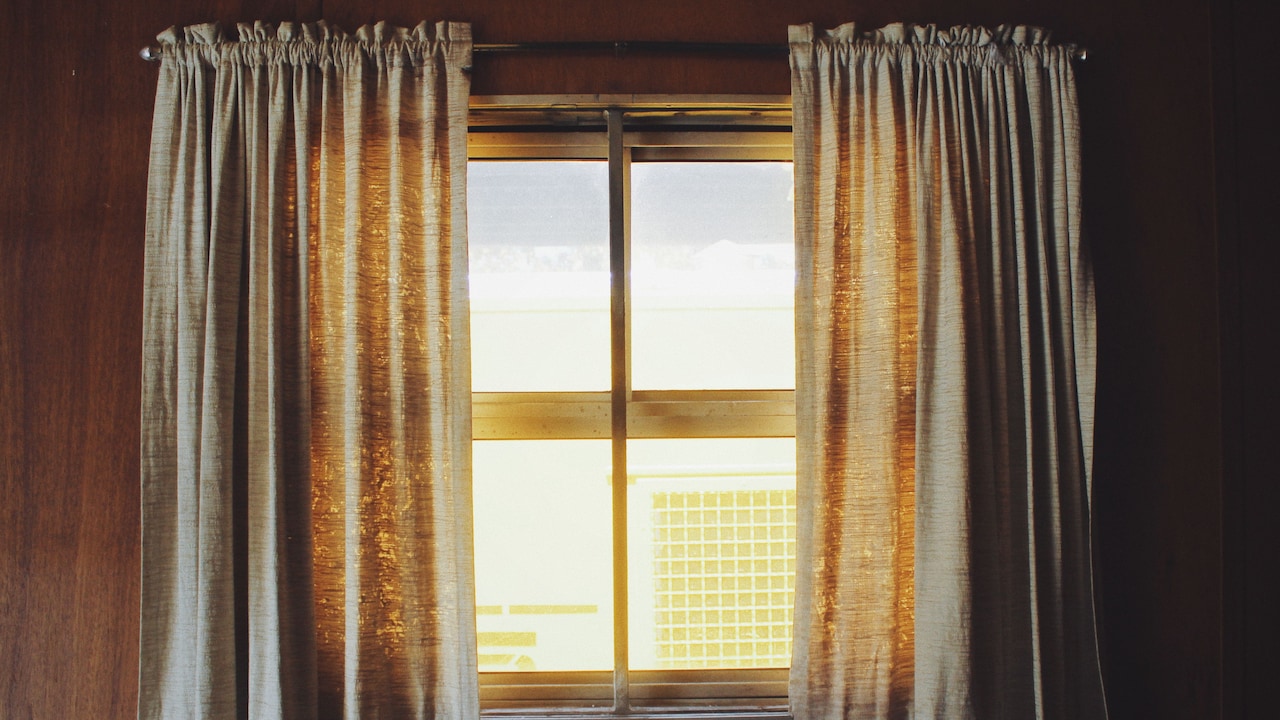
Always ensure to close the gap in the centre
Photo Credit: Pexels
6. Let The Curtains Touch The Floor Or Sill
Curtains that stop several centimetres above the floor leave an easy escape route for trapped air. Warm air behind the fabric can spill into the room from below, while cooled indoor air moves towards the hot window.
Floor-length curtains should lightly touch the floor or hover no more than a centimetre above it. This creates a better seal without gathering too much dust. For windows above kitchen counters, desks or built-in seating, allow the fabric to reach the sill and cover it fully.
Avoid excessively long curtains that form heavy puddles unless the room stays exceptionally clean. While the extra fabric may block gaps, it can collect dust, interfere with sweeping and become a favourite hiding place for small household surprises.
A weighted hem can help the curtain hang straight and remain close to the floor. Some thermal curtains already include one, but curtain weights can also be stitched into the bottom corners.
The correct length makes the window look finished and stops air from circulating freely underneath. It may seem like a tiny detail, yet thermal performance often depends on removing several tiny weaknesses rather than finding one grand solution.
7. Add A Pelmet Or Curtain Box
The open area above a curtain allows warm air to rise behind the fabric and return to the room. This circular airflow, known as convection, can carry heat past even a thick thermal lining.
A pelmet or curtain box blocks that path. It covers the rod and closes the space between the wall and the top of the curtain. Ready-made wooden, fabric-covered or lightweight board versions can suit different budgets and interiors.
A simple do-it-yourself pelmet can work too. Use a rigid board, cover it with fabric that matches the curtains and fix it securely above the rod. Keep enough clearance for rings, eyelets or tracks to move without catching.
The design does not need to resemble an old hotel ballroom. A clean rectangular box can look modern and discreet. In a living room, it can even hide curtain hardware and create a neater finish.
This fix proves particularly useful in rooms with strong afternoon heat or large glass windows. By restricting airflow at the top, the curtain holds a more stable pocket of air against the glass. That trapped layer helps slow the movement of heat into the room.
8. Layer Thermal Curtains With Blinds Or Sheers
One barrier helps, but two barriers work better. Pair thermal curtains with blinds, solar shades or tightly woven sheers to reduce both sunlight and heat transfer.
Install the blind close to the glass and hang the thermal curtain over it. The blind handles direct sunlight first, while the curtain traps an additional layer of air. Cellular blinds perform particularly well because their honeycomb structure contains insulating pockets. Roller blinds with reflective backing can also reduce glare.
Sheer curtains provide a lighter option. They soften harsh daylight during the morning without making the room feel gloomy. When the sun becomes stronger, close the thermal curtains over them.
Keep a small gap between each layer. Pressing several fabrics tightly together removes the air pockets that improve insulation. The arrangement should resemble layers of clothing: each one helps because it holds a little air between surfaces.
Layering also gives the room more flexibility. You can enjoy natural light during pleasant hours and switch to stronger protection when the sun turns fierce. It feels less like living inside a sealed cave and more like having sensible control over the window.
9. Repair Leaks Around The Window Frame
Thermal curtains cannot compensate for a window frame that leaks air. Tiny cracks around the edges can allow hot outdoor air, dust and noise to enter throughout the day.
Check the frame by slowly moving your hand around it. A flickering candle can reveal airflow, but use great care and keep the flame away from curtains. Safer options include a strip of tissue paper or a thin thread held near the suspected gap.
Seal movable sections with weatherstripping. Use silicone or acrylic sealant for fixed cracks between the frame and the wall. Choose a product suitable for the frame material and local weather conditions. Poor-quality foam tape may flatten quickly, so inspect it every few months.
Sliding windows often leak where the panels meet. Brush seals or replacement gaskets can reduce these gaps without stopping the window from opening.
Fixing the frame improves more than curtain performance. It can reduce dust, dampen street noise and help the air conditioner maintain a steadier temperature. The curtain then becomes part of a complete system rather than a lonely guard standing in front of a window full of holes.
10. Use Reflective Protection On The Glass
Thermal curtains deal with heat after it enters through the glass. Reflective films, solar screens and exterior shades reduce the amount that enters in the first place.
Apply a suitable heat-control film to windows that receive strong direct sunlight. Some films reflect solar energy while still allowing daylight into the room. Choose carefully, as very dark films can reduce visibility and may not suit every type of glass.
Exterior awnings, bamboo screens and balcony blinds can provide even stronger protection because they stop sunlight before it reaches the window. A shaded pane stays cooler than one covered only from inside.
In homes where permanent changes are not possible, removable reflective panels can help during peak summer. Place them against the glass behind the curtains during the hottest hours, then store them when the weather improves.
Avoid using improvised materials that trap excessive heat against unsuitable glass, as sudden temperature differences may damage certain panes. Follow the glass manufacturer's advice when in doubt.
By combining reflective protection with well-fitted thermal curtains, the window gains both an outer shield and an inner barrier. That partnership tackles sunlight before it becomes indoor heat.
Products Related To This Article
1. HOMEMONDE Premium Blackout Curtains 8 Feet Long Set of 2
2. LINENWALAS 100% True Blackout Solid Curtains (5 Feet)
3. Wakefit Solid Blackout Door Curtains 7 Feet | Set of 2
4. Story@Home 100% True Blackout Door Curtains 7 Feet Long Set of 2
5. Galaxy Home Decor Premium Blackout Curtain for Window 4 Feet
6. Cortina 80-90% Blackout Solid Door Curtains 7 Feet Set of 2
7. 100% Blackout Window Curtains, 7 Feet, Solid Design
Thermal curtains work best when they fit the window like a protective envelope. Width, height and placement matter just as much as fabric thickness. A premium curtain hung too far from the wall may perform worse than an affordable one fitted with care.
Start by checking where sunlight appears around the edges. Look for air movement near the frame, beneath the hem and above the rod. Each visible line of light usually points to a gap that needs attention.
Not every home requires all ten fixes. Extending the rod, sealing the sides and repairing the frame may already produce a noticeable improvement. Rooms with large west-facing windows may benefit from blinds, pelmets and reflective glass protection as well.
The aim is not to turn the room into a dark storage cupboard. It is to control when sunlight and outdoor heat enter. With a few thoughtful adjustments, thermal curtains can keep interiors calmer, reduce cooling demands and make summer afternoons far less exhausting. Even the ceiling fan may finally stop feeling as though it is merely stirring hot soup.
(Disclaimer: This article may include references to or features of products and services made available through affiliate marketing campaigns. NDTV Convergence Limited (“NDTV”) strives to maintain editorial independence while participating in such campaigns. NDTV does not assume responsibility for the performance or claims of any featured products or services.)