How To Choose The Right Baby Carrier For Long Travel Days?
The right baby carrier can make long travel days with a baby easier. Here’s how you can choose the right one for your baby and have a comfortable travel experience.
How To Choose The Right Baby Carrier For Long Travel Days?
Airports these days look like an obstacle course built for people who don't have a baby strapped to them. Strollers get stuck at security, prams don't fit in overhead cabins, and somewhere between gate changes and long queues, most parents give up and just carry the baby by hand. That's usually when the shoulder pain starts. A baby carrier solves these issues, but only if you pick one meant for hours of wear, not just a quick trip to the park. Not every carrier sold online can handle a six-hour flight or a bumpy overnight train ride. This one's for parents planning a long journey soon, whether it's a flight to Goa, a train to your hometown, or a road trip through the hills. We'll get into what actually matters when buying a carrier for long stretches, not just what looks appealing in photos.

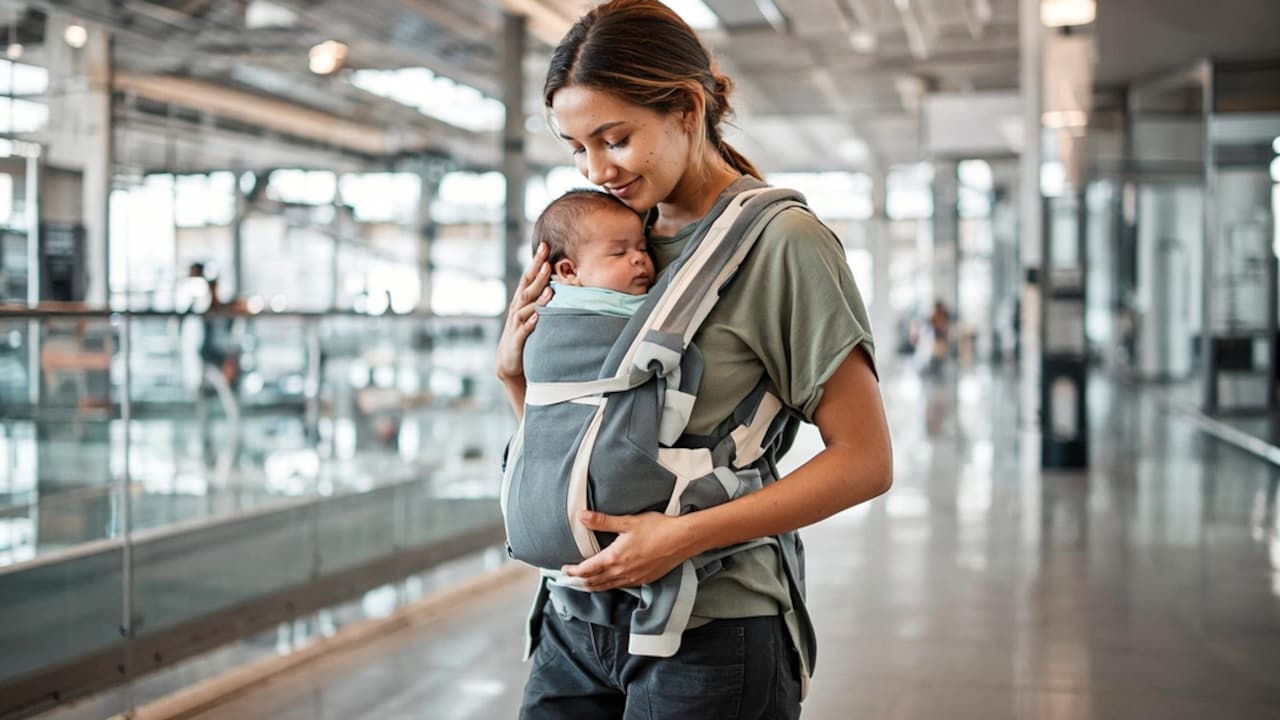
Finding the perfect baby carrier makes long travel days with your infant comfortable and easy; Photo Credit: iStock
Types Of Baby Carriers You Can Choose From
Before features, sort out the basic type. Each one suits a different travel situation, and picking the wrong type is the most common mistake first-time parents make.
1. Soft Structured Carriers
These look like small backpacks worn on the front or back, with buckles at the waist and shoulders. Most parents go with this style because it needs zero practice; you just buckle up and go. Ideal for flights, train platforms, and busy stations where you need to be hands-free quickly.
2. Ring Slings And Wraps
A single piece of fabric that wraps around you and the baby. It's lighter to pack and folds into a small pouch but takes a bit of practice to tie correctly. Better suited for shorter carry stretches during travel, like walking through a mall or waiting at a boarding gate, rather than an entire day out.
3. Hip Seat Carriers
These have a shelf-like seat that sits on your hip, taking the baby's weight off your shoulders. Works well once your baby crosses six months and gets heavier. Many parents switch to a backpack carrier for toddler-stage travel since it's easier on the back during long walks at a destination.
Key Features To Check Before You Buy
Once you know the type of carrier you need, the next step is to consider its features. A carrier that looks premium in pictures can still hurt your back after two hours if it's missing the basics below.
1. Ergonomic Hip Seat Support
Look for the M-position, where the baby's knees sit higher than the bottom, like a natural squat. This protects hip development and is something paediatricians recommend checking before you buy. Skip carriers where the baby's legs just dangle straight down.
2. Breathable Fabric
Summers are unkind, and a baby strapped against your chest for hours in thick polyester is a recipe for rashes and irritability. Mesh panels or cotton blends work far better, especially if you're travelling through humid cities like Mumbai or Chennai.
3. Adjustable And Padded Straps
Wide, padded shoulder straps distribute weight better than thin ones. This matters more than people realise once you're carrying a 10kg toddler through a three-hour layover. Check if the waist belt is padded too, since that's what really saves your lower back.
How To Pick Based On Your Travel Style?
Not every trip needs the same carrier. Here's how to match one to how you're actually travelling.
1. For Flights And Long Layovers
Go for a soft structured carrier that folds flat, since it needs to pass through security trays without hassle. A front-carry position also lets you soothe a fussy baby quickly during turbulence or boarding queues.
2. For Road Trips And Train Journeys
Here, a hip seat or a convertible carrier works better, since you'll likely be getting in and out of the vehicle often. Something with a detachable hood also helps block sun glare through car windows during afternoon drives.
Also Read: Best Baby Carriers In India That Keep Little Ones Close And Parents Comfortable
Getting The Fit Right Before You Travel
Even the best carrier feels wrong if it's not adjusted properly. A loose or overly tight fit is often why babies cry in carriers, not the carrier itself.
Step 1: Check The Leg Position
Sit your baby in the carrier and check that their knees are slightly higher than their hips, forming that natural M shape mentioned earlier. If their legs hang straight down, the seat is too narrow for their current size.
Step 2: Test The Weight Distribution
Wear the carrier for ten minutes around the house before your travel day. If you feel pressure only on your shoulders and none on your hips or waist belt, tighten the waist strap further, that's usually where the imbalance comes from.

Choosing the right baby carrier transforms stressful family travel days into comfortable, hands-free adventures; Photo Credit: iStock
Some Baby Carrier Products You May Like
1. LuvLap Elegant Baby Carrier With 4 Carry Positions
2. Mee Mee Lightweight Baby Carrier With Padded Straps
3. R For Rabbit Upsy Daisy Ergonomic Baby Carrier
4. Chicco SnugSupport 4-in-1 Infant Carrier
5. Infantino Flip 4-In-1 Convertible Carrier
6. Infantso Premium Hip Seat Baby Carrier with 6 Adjustable Carry Positions
7. SNOWIE SOFT 3-in-1 Baby Carrier
8. MEDITIVE Baby Carrier with Detachable Hip Seat (3 in 1)
Baby carriers designed for long travel days on Amazon combine comfort, durability, and practicality, ensuring parents can move with ease while keeping their little ones safe and secure throughout the journey. Shop now on Amazon
Frequently Asked Questions (FAQs)
1. At what age can a baby start travelling in a carrier?
Most baby carriers are safe from birth if they have a proper newborn insert, though many parents prefer waiting until the baby has good neck control, around three to four months, before long travel days.
2. Is it safe for a baby to sleep in a carrier for hours?
Yes, as long as the airway stays clear and the chin isn't pressed too tightly into the chest, which is why checking the head and neck support before a long journey matters.
3. Can a baby carrier go through airport security without removing the baby?
Rules vary by airport, but most airports do ask you to take the baby out briefly during the scan, so pick a carrier that's quick to unbuckle and rebuckle.
4. How do you clean a baby carrier after a long trip?
You can usually wash the baby carrier in a washing machine, as most are washable. However, some carriers require hand washing. So, check the labels properly before washing anything.
5. Should the carrier be packed in hand luggage or checked in?
Always keep it in hand luggage, since you'll likely need it the moment you land, whether that's for the walk to baggage claim or getting through a crowded arrival gate.
(Disclaimer: This article may include references to or features of products and services made available through affiliate marketing campaigns. NDTV Convergence Limited (“NDTV”) strives to maintain editorial independence while participating in such campaigns. NDTV does not assume responsibility for the performance or claims of any featured products or services.)