Why Does A Gentle Face Wash Leave Skin Feeling Tight, And How To Fix It
A face wash may say 'gentle' yet leave skin feeling stretched after cleansing. From water temperature and surfactants to your routine, here are 10 possible reasons for that post-wash tightness.

There are many factors that contribute to the 'clean but tight' feeling after cleansing
You pick a face wash labelled 'gentle', 'mild' or 'for sensitive skin', expecting the cleansing equivalent of a soft cotton towel. Then, five minutes after washing, your cheeks feel stretched, your mouth area feels oddly stiff, and smiling suddenly makes you aware of every centimetre of your face. That tight feeling can be confusing. After all, isn't squeaky-clean skin supposed to mean the cleanser worked? Not necessarily. Skin shouldn't have to feel stripped to feel clean. That temporary stretched sensation can sometimes suggest that cleansing has removed more surface lipids than your skin comfortably tolerates. But the face wash itself isn't always the only culprit. Water temperature, cleansing time, weather, other skincare products and even how often you wash can change the way your skin feels afterwards. More importantly, the word 'gentle' on packaging doesn't tell the whole story. Formulas behave differently on different skin types, and your skin's needs can change through the year.
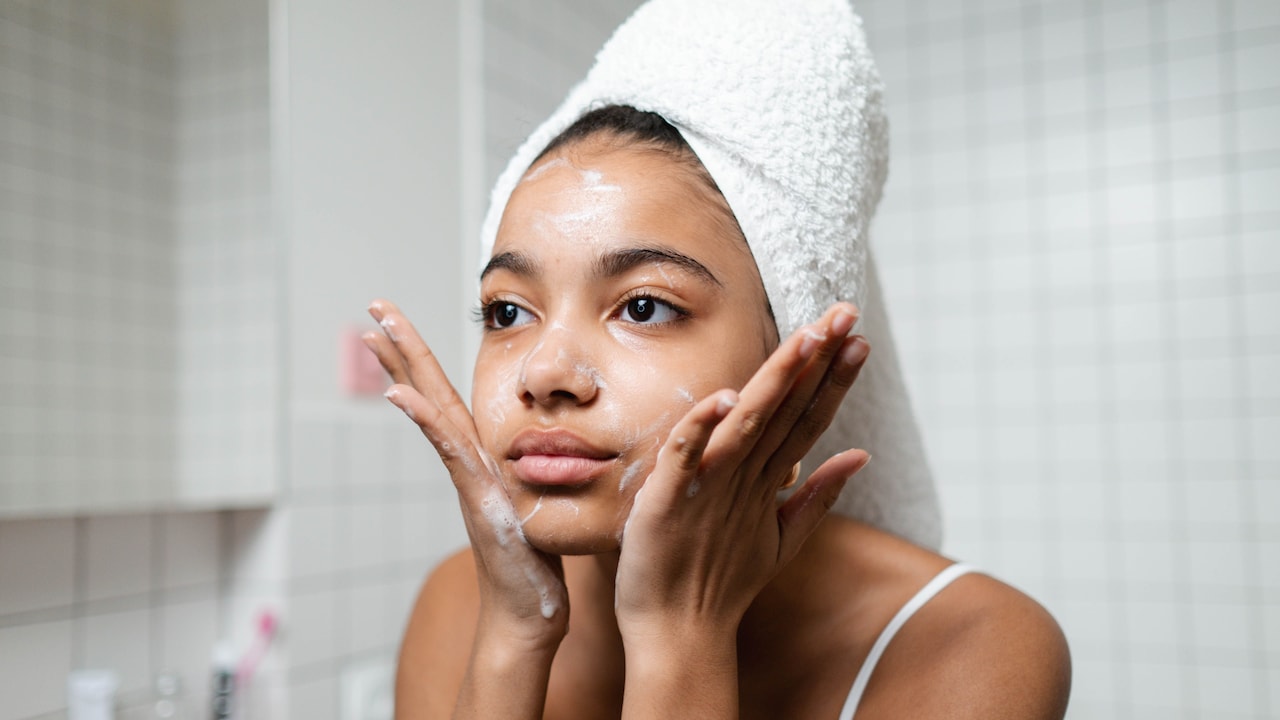
Why does even a gentle face wash can make your skin feel tight
Photo Credit: Pexels
So, before quickly replacing the cleanser, it may help to investigate the cause of the tightness, so you don't make the same mistake again.
Also Read: Grab Best-Selling TIRTIR Makeup Essentials At Unmissable Prices
What To Check When A Gentle Face Wash Still Makes Skin Feel Tight
1. The Cleanser May Still Contain Strong Surfactants
Every face wash needs something that can lift oil, sunscreen, dirt and grime from the skin. Those ingredients are called surfactants. Without them, your cleanser would mostly move water around your face while yesterday's sunscreen remained comfortably seated.
The catch is that surfactants vary considerably in how they interact with skin.
A cleanser can use the word 'gentle' while still containing cleansing agents that feel too efficient for your particular skin. Someone with an oily T-zone may find the formula perfectly comfortable, while another person with dry cheeks may finish washing with that familiar stretched feeling.
Pay attention to how your face behaves rather than relying entirely on the front label. Does tightness appear immediately after rinsing? Do your cheeks feel uncomfortable before you've even reached for moisturiser? Does the cleanser create a large amount of foam despite using only a small quantity?
None of these automatically makes a cleanser bad. They may simply indicate that its cleansing strength doesn't match what your skin currently needs.
Gentle, after all, isn't one universal setting.
2. You May Be Washing With Water That's Too Hot
A steaming shower feels wonderful after a tiring day. Your face may disagree.
Hot water can make cleansing feel satisfying because oil, sweat and product residue seem to disappear quickly. Unfortunately, that same experience may leave dry or easily irritated skin feeling uncomfortable afterwards.
The problem becomes particularly easy to miss when the weather cools down. Nobody enthusiastically reaches for chilly tap water on a cold morning, so shower temperatures gradually creep upwards. Your cleanser remains exactly the same, yet suddenly your face starts feeling tight.
Try using comfortably lukewarm water instead. It doesn't need to feel cold. The goal is simply to avoid temperatures that leave the skin hot, flushed or noticeably dry after washing.
Also, remember that shower cleansing can expose your face to hot water for much longer than washing separately at the sink. If your skin feels fine after morning cleansing but tight after an evening shower, the face wash might not deserve all the blame.
Sometimes the simplest skincare adjustment begins with turning the tap slightly towards cold.
3. You Could Be Cleansing For Longer Than Necessary
Face washing occasionally becomes an accidental endurance event.
You apply cleanser, massage one cheek, move to the forehead, return to the nose, investigate the jawline and suddenly two minutes have passed. Add a facial cleansing tool or an enthusiastic massage technique, and even a mild formula gets considerably more contact time with the skin.
Longer cleansing doesn't automatically mean cleaner skin.
A face wash mainly needs enough time and movement to loosen the everyday mixture of oil, sweat and product residue sitting on the surface. Repeated rubbing can become unnecessary, particularly when your skin already feels dry or sensitive.
Pay attention to your technique for a few days. You may discover that the 'gentle cleanser' gets paired with decidedly ungentle hands.
Use light pressure rather than scrubbing. Be especially careful around the nose and mouth, where people often keep rubbing because those areas feel oilier or more textured.
Skincare routines don't earn bonus points for effort. Sometimes, simply reducing the amount of friction can make a surprisingly noticeable difference.
4. Your Skin Barrier May Already Be Under Stress
Sometimes your face wash arrives at the scene after the damage has already started.
The outermost layer of skin acts as a protective barrier that helps limit water loss while shielding the skin from environmental irritants. When that barrier becomes disrupted, products that normally feel comfortable may suddenly sting, dry or tighten the skin.
Think about what else has changed recently.
Perhaps you've increased the frequency of exfoliating acids. Maybe a retinoid has entered your night routine. Perhaps you've been experimenting with multiple active ingredients because three separate skincare videos promised three separate miracles.
Even prolonged sun exposure, dry indoor air or repeated rubbing can contribute to discomfort.
In situations like these, the cleanser may simply reveal how sensitised your skin has become rather than causing the entire problem itself.
Consider temporarily simplifying the routine and observing whether the tightness improves. Give your skin fewer variables to negotiate.
If nearly every product suddenly burns, stings or causes persistent redness, professional dermatological advice makes more sense than endlessly switching cleansers.
5. You May Be Washing Your Face Too Often
Cleansing once feels good, so cleansing repeatedly must make skin even cleaner, right? But skin doesn't always appreciate that math.
Someone with oily skin may wash first thing in the morning, again after travelling, once after exercise and then before bed. That's several rounds of surfactants and rinsing in a single day. Even a relatively mild cleanser can start feeling drying when used frequently.
The same problem can appear when you're trying to control shine. Skin becomes oily by lunchtime, so washing seems like the obvious reset button. Yet repeatedly removing surface oils can leave certain areas feeling tight while the T-zone continues producing sebum.
Instead, look at the whole day's cleansing pattern.
Consider whether every wash actually needs cleanser. After a light workout, for example, some people may find a simple rinse comfortable depending on their skin, sunscreen and surroundings.
There's no universal cleansing schedule that suits everybody. The useful question is whether your current frequency leaves your skin comfortable.
Cleanliness shouldn't require your cheeks to feel like freshly stretched bedsheets.

Washing your face too often can also cause skin to feel dry and tight
Photo Credit: Pexels
6. Your Skin Type May Have Changed
Skincare habits have a way of becoming permanent even when skin doesn't.
Perhaps you started using a particular cleanser when your face was noticeably oily. Two years later, the same bottle keeps getting reordered because it worked once, and changing routines feels unnecessary.
Meanwhile, your skin may have changed. Age, weather, hormonal fluctuations, medication, air-conditioning, lifestyle and skincare treatments can all influence how oily or dry skin feels. Someone who previously tolerated a foaming cleanser easily may eventually find it uncomfortable around the cheeks and jaw.
Seasonal changes matter too. A cleanser that feels refreshing during hot, sweaty months may feel unnecessarily aggressive during cooler or drier weather.
Rather than assigning yourself one skin type forever, observe what your face is doing now. Look at different areas separately as well. Your forehead can remain oily while the skin around your mouth becomes dry.
That combination isn't unusual.
The best cleanser isn't necessarily the one that suited you years ago. It's the one that fits your skin's present behaviour without turning every wash into a tug-of-war.
7. Your Cleanser's pH May Not Suit Your Skin
The skin's surface naturally sits on the mildly acidic side, and cleansers can influence that environment temporarily.
This is where marketing can become confusing. You may see phrases such as 'pH balanced' displayed prominently on packaging, but without additional information, the phrase doesn't necessarily tell you exactly how the formula will feel on your face.
Some cleansers, particularly traditional soaps and soap-like formulas, can have a higher pH than the skin. For certain people, those products may contribute to that clean-but-uncomfortable sensation after washing.
You don't need to turn the bathroom into a chemistry laboratory. Instead, combine ingredient awareness with observation.
Notice whether the cleanser leaves your skin comfortable while drying naturally, or whether you feel desperate to apply moisturiser within seconds. If a product consistently creates tightness despite sensible water temperature and gentle technique, trying a different formula may be worthwhile.
Terms such as 'low-pH cleanser' can provide a useful starting point when comparing options.
Still, pH represents only one piece of the formula. Skincare rarely lets one number solve everything.
8. Other Products May Be Making The Cleanser Feel Harsher
Your cleanser doesn't operate in isolation.
Imagine an evening routine containing an exfoliating toner, retinoid, acne treatment and mattifying product. Add a cleanser designed to remove excess oil, and the combined routine may become more drying than any individual product seems on its own.
This is why judging skincare products separately can sometimes have misleading results.
A face wash you comfortably used for months might suddenly feel harsh after introducing a new active ingredient. Instead of immediately blaming the cleanser, look at when the discomfort began.
Did tightness appear after increasing exfoliation? Did you recently add benzoyl peroxide, salicylic acid or a retinoid? Have you started using an oil-control product morning and evening?
Your routine needs balance more than it needs the maximum possible number of active ingredients.
If several products perform similar oil-removing or exfoliating jobs, consider whether they all need to appear in the same routine.
Skincare can become surprisingly competitive. Every bottle wants a role. Your face doesn't have to employ all of them at once.
9. Hard Water May Be Affecting The Cleansing Experience
Sometimes the unexpected variable isn't sitting inside the skincare cabinet. It's coming straight from the tap.
Hard water contains higher levels of dissolved minerals such as calcium and magnesium. Depending on the cleanser and individual skin, washing with hard water may affect how products rinse and how the skin feels afterwards.
You may notice the clue elsewhere in the house first. Soap leaves residue around taps. Glass shower screens develop cloudy deposits quickly. Hair feels different after washing despite using the same shampoo.
Then there's the skincare puzzle: your trusted cleanser suddenly feels less comfortable after moving house or travelling.
That doesn't prove hard water causes every instance of post-cleansing tightness, but it's worth considering when the timing matches.
You can first experiment with the variables you control easily. Use less cleanser, shorten cleansing time and moisturise promptly afterwards.
If your skin behaves dramatically differently depending on where you wash it, water quality deserves a place on the suspect list.
Sometimes the skincare routine stays the same while the plumbing changes the plot.
10. You're Waiting Too Long Before Applying Moisturiser
There can be a strange little gap between washing your face and moisturising.
Perhaps you brush your teeth, reply to a message, organise the bathroom shelf or wander off looking for the moisturiser that somehow disappears despite living in the same place every day.
Meanwhile, freshly cleansed skin sits uncovered as water evaporates from its surface.
If your face tends to feel dry or tight, try applying moisturiser soon after cleansing rather than waiting until the skin feels completely parched. Slightly damp skin can make this step feel more comfortable.
This doesn't mean racing through the bathroom with a stopwatch. It simply means treating cleansing and moisturising as connected parts of the same routine rather than unrelated events.
Also, check whether your moisturiser itself provides enough comfort. A very lightweight gel may suit humid days but feel insufficient when your skin becomes drier.
If moisturiser immediately relieves mild post-wash tightness, your routine may need better hydration support. If tightness remains intense, painful, flaky or accompanied by persistent irritation, investigate further rather than simply covering the sensation with another layer of cream.
Products Related To This Article
1. Beyond Rice Rice & Birch Juice Gentle Face Cleanser For Deep Nourishment
2. Reequil Hydrating & Soothing Gentle Cleanser
3. Cetaphil Gentle Skin Cleanser With & Pro-Vitamin B5 & B3
4. The Derma co. 2% Niacinamide Gentle Skin Cleanser for Sensitive, Dry, Normal Skin
5. The Face Shop Clean Beauty Tea Tree Toner Pads
6. Ponds Bright Beauty Facewash with Niacinamide For Glass Skin-Like Shine
7. PLIX THE PLANT FIX Set Of 2 Juicy Cleanser- 100 ml & Night Cream
A 'gentle' label doesn't guarantee that every face will find a cleanser gentle. Post-wash tightness can come from the formula, but it can also point towards hot water, excessive washing, active-heavy routines, changing skin needs or even water quality. Instead of replacing products randomly, change one variable at a time and watch how your skin responds. Comfortable cleansing should leave your face feeling clean, not shrink-wrapped.
(Disclaimer: This article may include references to or features of products and services made available through affiliate marketing campaigns. NDTV Convergence Limited (“NDTV”) strives to maintain editorial independence while participating in such campaigns. NDTV does not assume responsibility for the performance or claims of any featured products or services.)