Do Stronger Adhesives Always Work Better On Tiles? 10 Bathroom-Storage Myths Explained
Strong adhesive alone won’t keep bathroom shelves and hooks firmly attached. Tile texture, moisture, surface preparation, weight and curing time can matter just as much. Here are 10 bathroom-storage myths worth clearing up.
Why Bathroom Adhesive Hooks And Shelves Keep Falling: 10 Myths Explained
There are few household sounds quite as irritating as a bathroom shelf crashing to the floor at 2 am. One minute, the shampoo bottles sit neatly above the sink. The next, there's a clatter loud enough to make everyone wonder whether something has fallen through the ceiling. Adhesive bathroom storage looks wonderfully simple. Peel off a backing, press a hook or shelf against the tile and skip the drill entirely. That convenience has made adhesive soap holders, toothbrush racks, corner shelves and towel hooks common choices, particularly when drilling through tiles feels risky. The trouble starts when we assume every smooth-looking tile behaves the same way. Bathrooms combine steam, water, soap residue, temperature changes and surprisingly heavy bottles. Even a powerful adhesive cannot ignore those conditions. Some popular assumptions also make the problem worse. Adding more adhesive doesn't necessarily strengthen a fitting. Waiting a few minutes before loading a shelf may not count as proper curing. And a tile that feels perfectly smooth under your fingers can still create adhesion problems. So, before replacing another fallen hook with an even stronger one, it helps to understand what actually keeps bathroom storage attached.

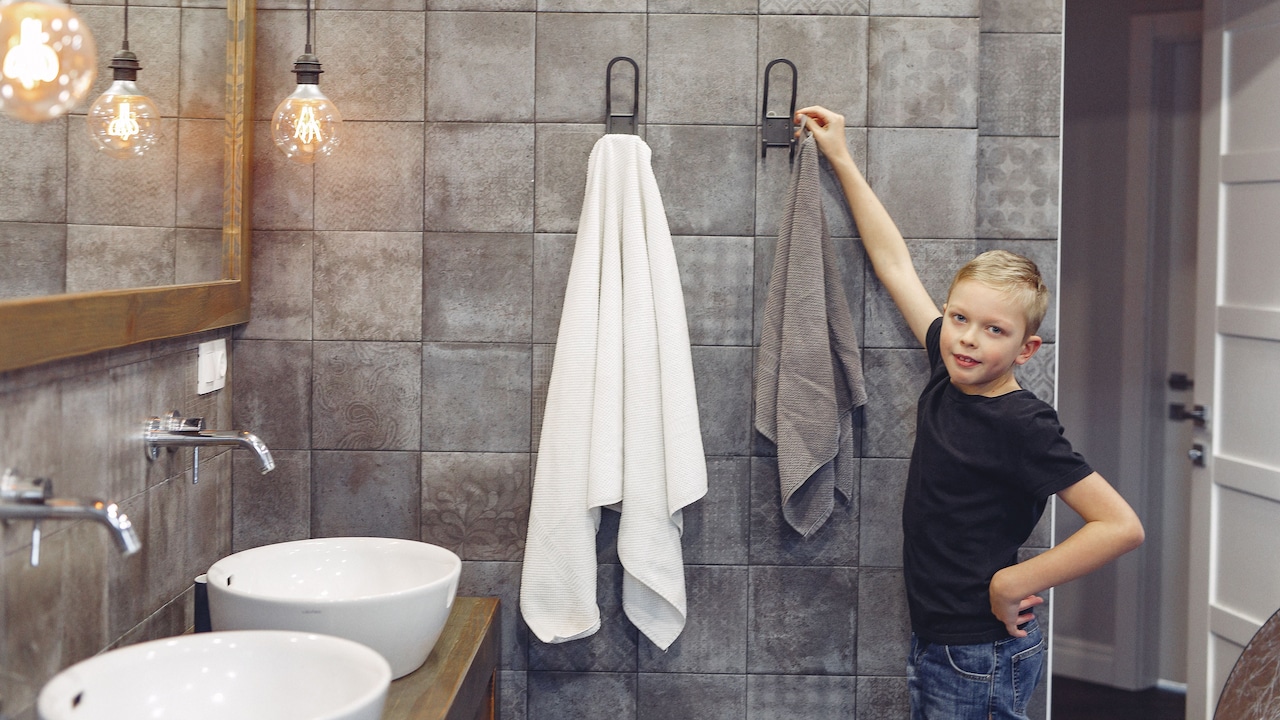
Why Bathroom Adhesive Hooks And Shelves Keep Falling: 10 Myths Explained; Photo Credit: Pexels
What Really Makes Bathroom Adhesives Hold Or Fail
1. Myth: The Strongest Adhesive Will Always Hold Best
It sounds logical. If one adhesive struggles to hold a bathroom shelf, surely a stronger adhesive should solve the problem. Yet adhesive strength means very little when the adhesive cannot form a reliable bond with the tile in the first place.
Different adhesives work best with different surfaces. Glossy ceramic tiles, textured tiles, natural stone and coated surfaces don't offer identical bonding conditions. An adhesive designed to grip one material may perform poorly on another, regardless of how impressive its strength claims sound.
The mounting design matters too. A small adhesive pad supporting a large shelf concentrates force within a tiny area. Add two shampoo bottles, a conditioner bottle and somebody pressing down on the shelf while reaching for soap, and the load increases quickly.
Moisture can weaken the situation further.
Instead of treating adhesive strength as the only number that matters, look at surface compatibility, recommended load, installation instructions and bathroom suitability together. A correctly matched adhesive usually performs more reliably than an extremely strong one applied to the wrong surface.
Sometimes, “stronger” simply means stronger under the right conditions.
Also Read: Best Moisture Resistant Bathroom Shelves And Organisers For Compact Spaces Under ₹1000
2. Myth: Clean-Looking Tiles Don't Need Preparation
A bathroom tile can look spotless while carrying an invisible layer of trouble.
Soap mist, body oils, conditioner, cleaning sprays and hard-water deposits gradually settle on walls. They may leave no obvious stain, yet they can sit between an adhesive pad and the tile surface. The adhesive then bonds to that residue rather than directly to the tile.
That can explain the mysterious hook that falls despite being pressed firmly into place.
Before mounting bathroom storage, clean the intended area according to the adhesive manufacturer's instructions and remove any greasy film. The surface also needs to dry completely. Wiping the tile and sticking a shelf onto it while tiny droplets remain can compromise the bond before it has even started forming properly.
Pay attention to cleaning products too. Some household cleaners leave polishing agents or other residues behind. A tile may look beautifully shiny afterwards but become less suitable for adhesive mounting.
Surface preparation feels like the boring part of the job, which makes it tempting to skip. Yet those extra few minutes often matter more than buying another “heavy-duty” adhesive strip after the first one drops off.
3. Myth: Smooth Tiles Are Automatically Ideal For Adhesive Storage
Smooth tiles certainly give adhesives an advantage, but “smooth” doesn't always mean “easy to bond”.
High-gloss tiles can carry protective coatings, cleaning residues or surface treatments that interfere with adhesion. Some tiles also feel flat to the hand while containing tiny variations that prevent the adhesive pad from making complete contact.
Then there are grout lines.
A wide adhesive plate that crosses a grout joint may sit flush against the tile on either side but leave a small gap over the grout. That missing contact reduces the effective bonding area. Over time, moisture can also creep into that gap and make matters worse.
Whenever possible, position the full adhesive area on a single compatible tile rather than across tile and grout.
Textured finishes need even more attention. Raised patterns, stone-like surfaces and uneven tiles can leave substantial portions of an adhesive pad floating rather than gripping the wall.
So, instead of judging suitability with fingertips alone, inspect where the entire mounting pad will sit. Adhesives generally work best when they can establish continuous contact across as much of their surface as possible.
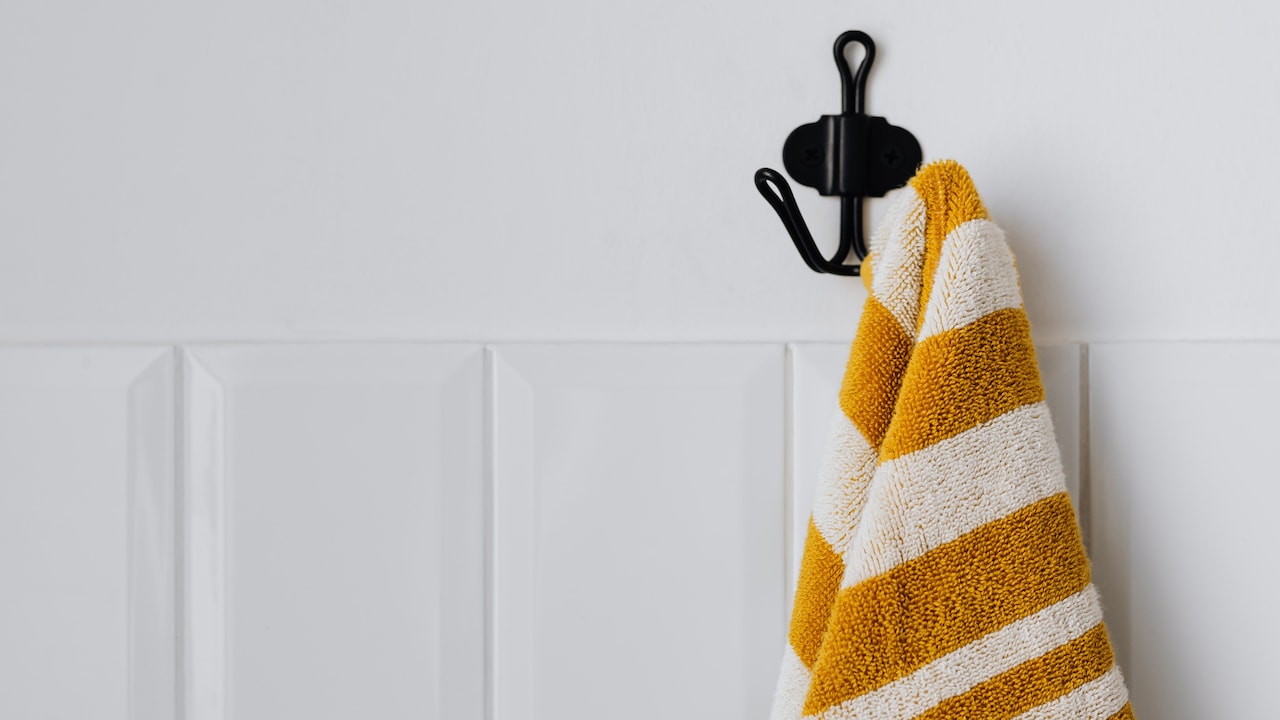
Why Bathroom Adhesive Hooks And Shelves Keep Falling: 10 Myths Explained; Photo Credit: Pexels
4. Myth: More Adhesive Always Means A Stronger Bond
When something keeps falling, the instinctive response often involves adding another layer of adhesive.
Then another.
Soon, the back of the hook resembles a small craft project.
Unfortunately, piling adhesive pads on top of each other can make a mount less stable rather than more secure. Adhesive systems usually rely on close, even contact between the mounting surface and the wall. Multiple layers can introduce movement, uneven pressure and weak interfaces between each layer.
A thick stack may also allow the accessory to flex slightly whenever someone pulls on it. That repeated movement places stress on the bond.
Extra adhesive around the edges doesn't necessarily help either. Unless the mounting system specifically allows additional adhesive, mixing tapes, glues and pads can create unpredictable results.
A better approach involves maximising proper contact with the tile and following the mounting system's intended installation method.
If the accessory needs significantly more adhesive than supplied to stay upright, the real problem may involve excessive weight, an unsuitable tile surface or the wrong mounting method.
With adhesive storage, neat and correctly fitted often beats thick and improvised.
5. Myth: If It Feels Secure After Ten Minutes, It Is Ready To Use
Freshly mounted hooks can feel impressively solid almost immediately.
That confidence can disappear once someone hangs a wet towel from them half an hour later.
Many adhesives need time to reach their intended bond strength. Pressing the mount against the tile starts the bonding process; it doesn't necessarily finish it. Depending on the adhesive system, proper curing may require several hours or longer.
Loading the accessory too early can create small movements in a bond that has not fully developed. It might not fall straight away, either. The shelf can appear fine for several days before gradually loosening.
This makes curing time one of the least glamorous but most important parts of installation.
Follow the manufacturer's stated waiting period before adding toiletries or hanging towels. Avoid “testing” the hook by tugging aggressively at it every few minutes as well. That only places unnecessary stress on the fresh bond.
Think of the waiting period as part of installation rather than an optional extra. The shelf might already look finished, but the adhesive underneath still has work to do.
6. Myth: A Shelf Rated For A Certain Weight Can Always Carry That Much
A shelf marked for a particular load can create a false sense of certainty.
Weight ratings usually assume specific installation and surface conditions. Real bathrooms rarely behave like perfect test environments.
The type of load matters as well. Three bottles weighing 3 kg in total create a fairly steady downward force when they sit untouched. The same shelf experiences different stress when someone repeatedly grabs bottles, pushes items back, leans on the edge or knocks the unit while showering.
Wet towels create another challenge. A towel becomes considerably heavier after absorbing water, so a hook that handles a dry towel comfortably may face a much greater load after a shower.
Where the weight sits matters too. Items placed towards the outer edge of a shelf create leverage that can pull the top of the mounting plate away from the wall.
Treat the stated capacity as a maximum under recommended conditions, not an invitation to load the accessory to its limit. Giving adhesive storage some spare capacity reduces strain and often makes the setup far more dependable.
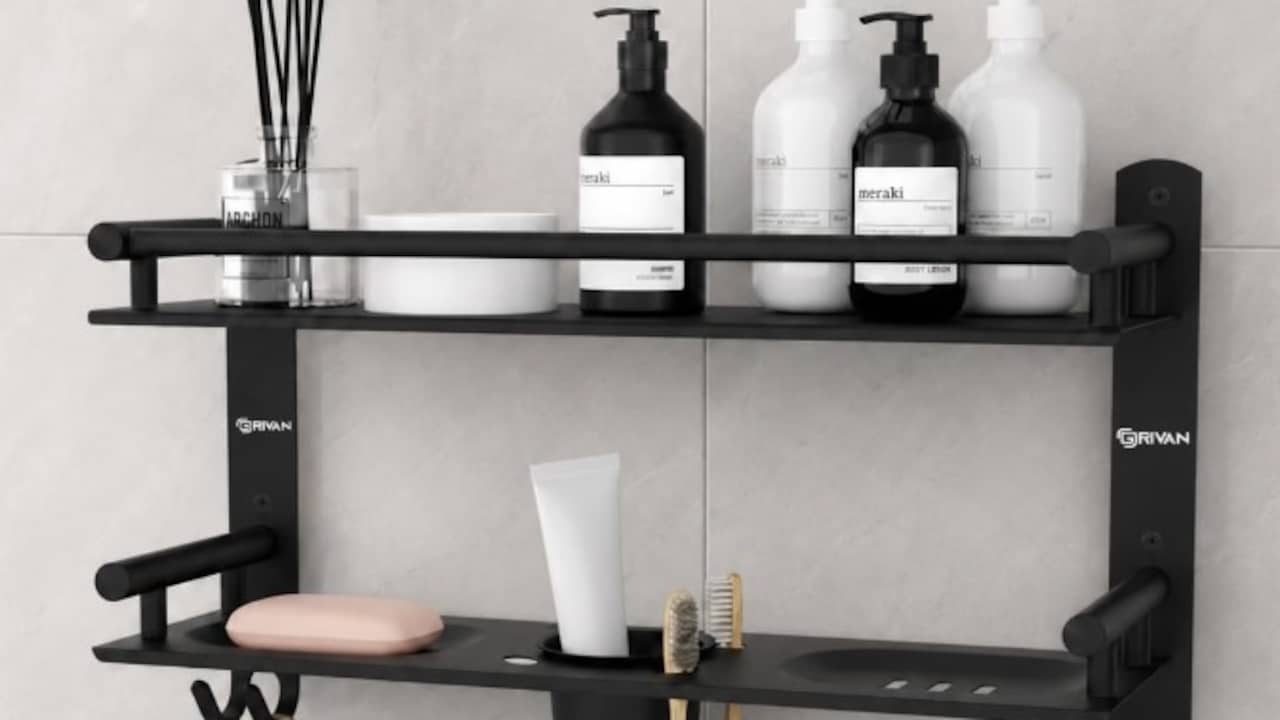
Why Bathroom Adhesive Hooks And Shelves Keep Falling: 10 Myths Explained; Photo Credit: Amazon
7. Myth: Waterproof Adhesive Cannot Fail In A Bathroom
“Waterproof” sounds wonderfully final. Water problem solved.
Bathrooms, however, challenge adhesives with more than direct splashes.
Steam raises humidity. Hot showers warm the wall before the surface cools again. Condensation forms, disappears and returns. Soap, shampoo and cleaning products can reach mounting areas too. All these factors may affect a poorly prepared or unsuitable bond.
Water resistance also doesn't correct installation mistakes. If moisture sat on the tile during application, even a bathroom-friendly adhesive may struggle to establish proper contact. Likewise, water can penetrate around edges if parts of the mounting pad fail to sit flush.
Placement matters. A storage unit fixed directly inside a constantly wet shower zone experiences harsher conditions than one mounted near a comparatively dry basin.
Check whether the adhesive system suits the level of moisture it will actually encounter rather than relying only on the word “waterproof”.
And remember: water resistance cannot compensate for dirt, uneven tiles, excessive loads or insufficient curing time. Bathroom durability comes from the whole installation working together, not from one reassuring word on the packaging.
8. Myth: Adhesive Hooks Fail Only Because Of Heavy Objects
Sometimes the lightest bathroom item brings down a hook.
That's because weight isn't the only force acting on adhesive storage. Direction matters.
Consider a hand towel. It may not weigh much, but every time someone pulls it sideways from the hook, the adhesive mount experiences a short tug. Repeat that several times each day and the stress adds up.
Toothbrush holders face similar treatment. Bottles get pushed into racks. Razors get pulled from holders. A shower caddy may receive an accidental bump from an elbow. None of these actions look dramatic, yet repeated sideways or outward forces can gradually peel an adhesive mount away from the wall.
Peeling forces cause particular trouble because they concentrate stress along one edge instead of spreading it evenly across the adhesive area.
That explains why a small hook sometimes fails while a larger shelf carrying more weight remains intact.
Placement can help. Mount accessories where people can lift items naturally instead of pulling them sharply towards themselves. Keeping commonly grabbed objects easy to reach also reduces unnecessary tugging.
Bathroom storage doesn't just carry weight. It survives daily habits.
9. Myth: Once An Adhesive Pad Falls, You Can Simply Stick It Back Up
The fallen hook looks fine. The adhesive still feels sticky. Pressing it back onto the wall seems waste-free and perfectly sensible.
Unfortunately, many adhesive pads don't work that way.
Once removed or detached, the adhesive surface may collect dust, moisture, fibres and traces of soap. Its shape can also change during removal. Even if it feels tacky afterwards, it may no longer create the same uniform bond as a fresh pad.
Pressing the same pad repeatedly onto the wall can turn a temporary failure into an ongoing morning ritual: stick hook, hang towel, hear crash, repeat.
Check the product instructions before reusing any adhesive component. If the manufacturer calls for a fresh strip or mounting pad, replace it instead of relying on leftover stickiness.
Also investigate why the original installation failed. Simply fitting a new pad onto the same dirty, damp or textured spot may produce the same result.
A failure offers useful information. Check the tile, load, position, moisture exposure and installation method before trying again.
Otherwise, the replacement pad may just start the same countdown from day one.
10. Myth: Adhesive Storage Can Replace Drilling In Every Situation
Adhesive storage offers a brilliant solution when you want quick installation, fewer holes and easier repositioning. But it isn't automatically the right mounting method for every bathroom item.
A lightweight toothbrush holder and a large metal shelf carrying multiple litre-sized bottles ask very different things from a wall mounting system.
The heavier and deeper an accessory becomes, the more leverage it can place on the attachment point. Regular pulling adds even more stress. Large towel rails, grab bars and heavy storage units may therefore need a more secure mechanical fixing designed for their purpose.
Safety matters especially with anything that someone might instinctively grab for support. An adhesive accessory intended to hold towels should never double as a handhold while someone steps out of a wet shower.
The goal isn't to choose between adhesives and drilling as though one method must win. Match the mounting method to the job.
Adhesives excel with suitable surfaces and reasonable loads. Mechanical fixings make more sense when weight, leverage or safety demands something stronger.
Convenience works best when it doesn't pretend to be universal.
Products Related To This Article
1. JIALTO 2 Pcs Aluminum Wall Mounted Bathroom Organiser
2. KASHIVAL Bathroom Shelf Wall Mount
3. House of VIPA Wall Mounted Bathroom Shelf Organizer
4. Oslen (Pack of 2 Self-Adhesive Multipurpose Bathroom Rack
5. Hallstatt Self Adhesive Bathroom Shelf for Wall Shelf Organizer Wall Mounted Bathroom Shelves Rack Holder
6. SquareUp Self-Adhesive Wall-Mount ABS Plastic Bathroom Corner Shelf Rack Organizer Without Drill Storage Shelves Holder
7. Hallstatt Self Adhesive Bathroom Shelf for Wall Shelf Organizer Wall Mounted Bathroom Shelves
Bathroom storage rarely falls because one adhesive simply wasn't “strong enough”. More often, several smaller issues work together: a little soap residue, an uneven tile, a rushed curing period, an overloaded shelf or months of sideways tugging.
The good news is that most of these problems are preventable. Choose an adhesive that suits the surface and moisture level, prepare the tile carefully, respect weight limits and give the bond enough time to set. Just as importantly, recognise when adhesive mounting isn't suitable for the job. A tidy, drill-free bathroom can absolutely work. It just needs a little more planning than peel, press and hope.
(Disclaimer: This article may include references to or features of products and services made available through affiliate marketing campaigns. NDTV Convergence Limited (“NDTV”) strives to maintain editorial independence while participating in such campaigns. NDTV does not assume responsibility for the performance or claims of any featured products or services.)