Why Induction Cooktops Struggle With Very Small Or Lightweight Pans
Small pans can behave unpredictably on induction cooktops, from refusing to heat to switching off mid-cook. Pan size, weight, magnetic material and contact with the cooking zone all play a part.

Why are some pans incompatible with induction cooktops
Induction cooking can feel wonderfully straightforward when everything works. Place a pan on the cooking zone, choose a heat level and within seconds the oil starts shimmering. There's no open flame, the surface stays comparatively easy to clean, and boiling water for tea or noodles can happen surprisingly quickly. Then comes the tiny tadka pan. You place it on the cooktop, press the controls and nothing happens. Perhaps the display starts flashing. Maybe it heats for a few seconds and stops. A lightweight frying pan might behave similarly, even though a larger pan from the same kitchen works without complaint.
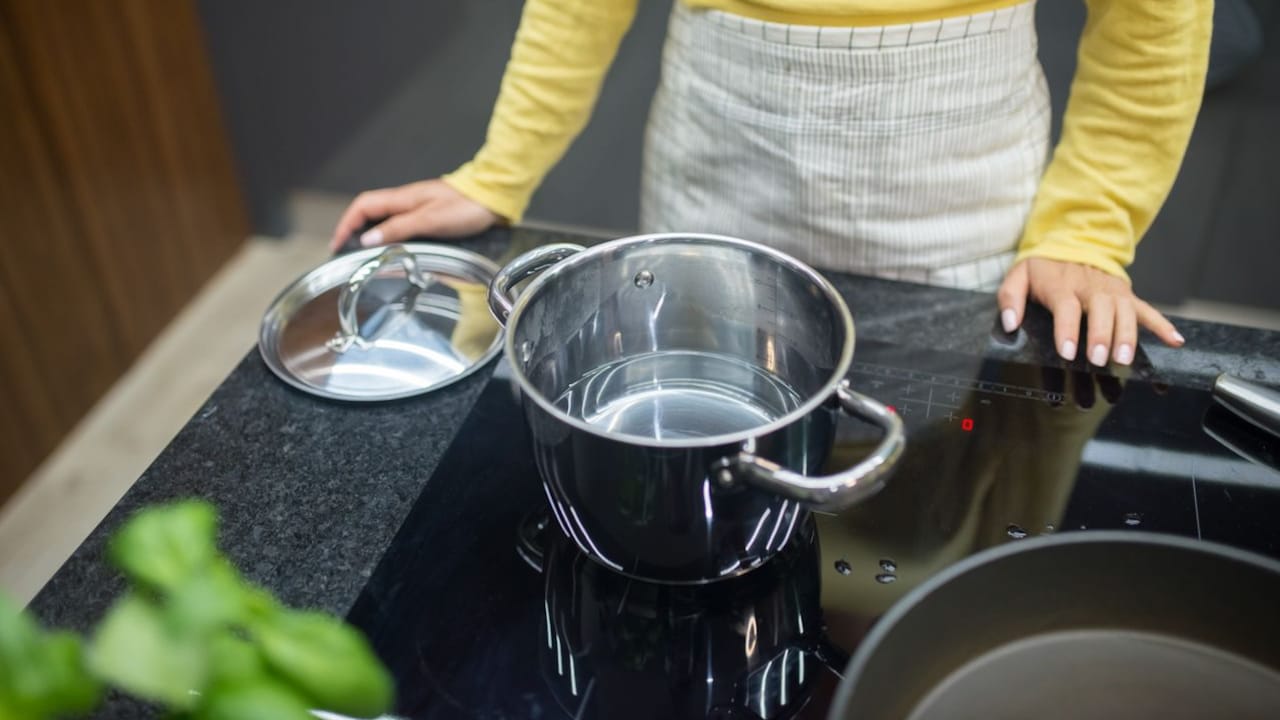
Why induction cooktops don't work well with lightweight pans
Photo Credit: Pexels
That can make the cooktop seem temperamental, but induction has a rather specific way of working. It doesn't simply heat whatever happens to sit on top. The appliance needs to recognise suitable cookware and create an effective magnetic connection with its base. Very small, thin or lightweight pans sometimes fall outside the conditions the cooktop expects. Understanding what happens underneath the glass makes these little kitchen mysteries much easier to solve.
Also Read: Navratri Ready Kitchen: 5 Induction Cooktops With 4-Star+ Rating Under 5000
What Makes Small And Lightweight Cookware Tricky For Induction Cooking
1. The Pan May Be Smaller Than The Cooktop's Detection Area
Induct ion cooktops need to detect cookware before they start delivering meaningful power. Each cooking zone contains a coil beneath the glass, and the pan needs to cover enough of that coil for the system to recognise it reliably.
This is where tiny cookware can cause trouble.
A little milk pan, tadka pan or one-egg frying pan may have a base that measures only a fraction of the cooking zone. The cooktop might interpret this as no pan being present at all. Instead of heating, it may flash a symbol, beep or switch itself off after a short delay.
The confusing part is that the same small pan may work on one induction stove but not another. Manufacturers use different minimum cookware detection sizes.
A compact pan therefore isn't automatically unsuitable for induction. Its base simply needs to meet the cooktop's detection requirements.
Before blaming the cookware, check the appliance manual for the minimum pan diameter recommended for each zone. Using the smallest available cooking zone can also improve recognition because the pan overlaps more of the active magnetic area.
2. Lightweight Pans Can Have Extremely Thin Bases
Weight alone doesn't determine whether cookware works with induction, but very lightweight pans often come with thin metal bases.
That can affect cooking performance in several ways.
Induction creates heat directly inside suitable magnetic cookware. A thick base has enough material to absorb and spread that heat across the cooking surface. A very thin base heats quickly, sometimes almost too quickly. Hot spots can develop before the rest of the pan catches up.
Imagine warming half a cup of milk in a feather-light saucepan. One section of the base may become intensely hot while another remains noticeably cooler. The cooktop itself may appear inconsistent even though the pan construction causes much of the unevenness.
Thin metal can also respond dramatically whenever the induction unit cycles its power at lower settings. Food may simmer, stop bubbling and then start again.
A heavier base generally smooths out those changes because it stores heat between power cycles. That doesn't mean every induction pan needs to feel hefty, but a solid, well-constructed base usually produces steadier results.
3. A Tiny Magnetic Base Gives The Coil Less To Work With
Induction cooking depends on magnetic interaction between the coil underneath the glass and the cookware sitting above it.
The cooktop produces a rapidly changing magnetic field. Suitable metal in the pan responds to that field, creating electrical currents that generate heat inside the cookware itself.
With a large pan, plenty of magnetic material sits above the coil. With a tiny pan, the effective magnetic surface becomes much smaller.
Think of it as trying to hold a conversation across a crowded room. A stronger connection makes communication easier. Reduce that connection considerably and things become less reliable.
Some small pans have another disadvantage: their actual magnetic layer may be narrower than the visible base. Manufacturers sometimes attach a smaller induction-compatible disc underneath otherwise non-magnetic cookware.
So an 11 cm saucepan might have considerably less than 11 cm of usable magnetic material.
That difference can explain why the pan technically carries an induction-compatible label yet still struggles on certain cooktops. The appliance isn't looking at the pan's outer dimensions. It responds to the magnetic material directly above its coil.
4. The Pan May Not Be Properly Centred Over The Cooking Zone
Pan placement matters more with small cookware than many people realise.
When a large kadai sits slightly off-centre, plenty of its base still overlaps the induction coil. Move a tiny saucepan by the same distance and a sizeable portion of its magnetic base may suddenly sit outside the strongest part of the field.
That can lead to weak heating, intermittent detection or repeated switching.
It often happens during busy cooking sessions. A spoon nudges the pan while stirring. The handle gets turned to make space for another utensil. The pan shifts a couple of centimetres without anyone noticing.
The food then starts heating strangely and the cooktop receives the blame.
Keeping a small pan directly over the centre marking usually improves performance. Some glass tops make this simple with clear circles or cross-shaped guides. Others use subtler markings that disappear beneath dark cookware.
Whenever a small pan suddenly stops heating after working perfectly a moment earlier, repositioning it should be one of the first things to try.
5. Some Small Pans Only Have A Partial Induction-Compatible Base
Cookware construction can look surprisingly complicated once you turn the pan upside down.
Many aluminium and stainless-steel pans use an additional magnetic plate so they can work on induction cooktops. In good-quality cookware, manufacturers bond this layer securely across much of the bottom.
Cheaper or very compact cookware may use a much smaller magnetic disc.
That creates a curious situation. The pan passes the basic magnet test, so it appears suitable for induction. Yet the cooktop still struggles to recognise it.
A simple fridge magnet can reveal part of the story. If it sticks firmly across most of the base, that's encouraging. If it only sticks strongly to a small circle in the middle, the actual induction-compatible area could be considerably smaller than expected.
This matters most with tiny cookware because there isn't much surface area to begin with.
A larger induction plate can compensate for some design limitations. A miniature pan can't. For frequent tasks such as melting butter, preparing tempering or heating small portions, cookware designed specifically for compact induction zones tends to behave more predictably.
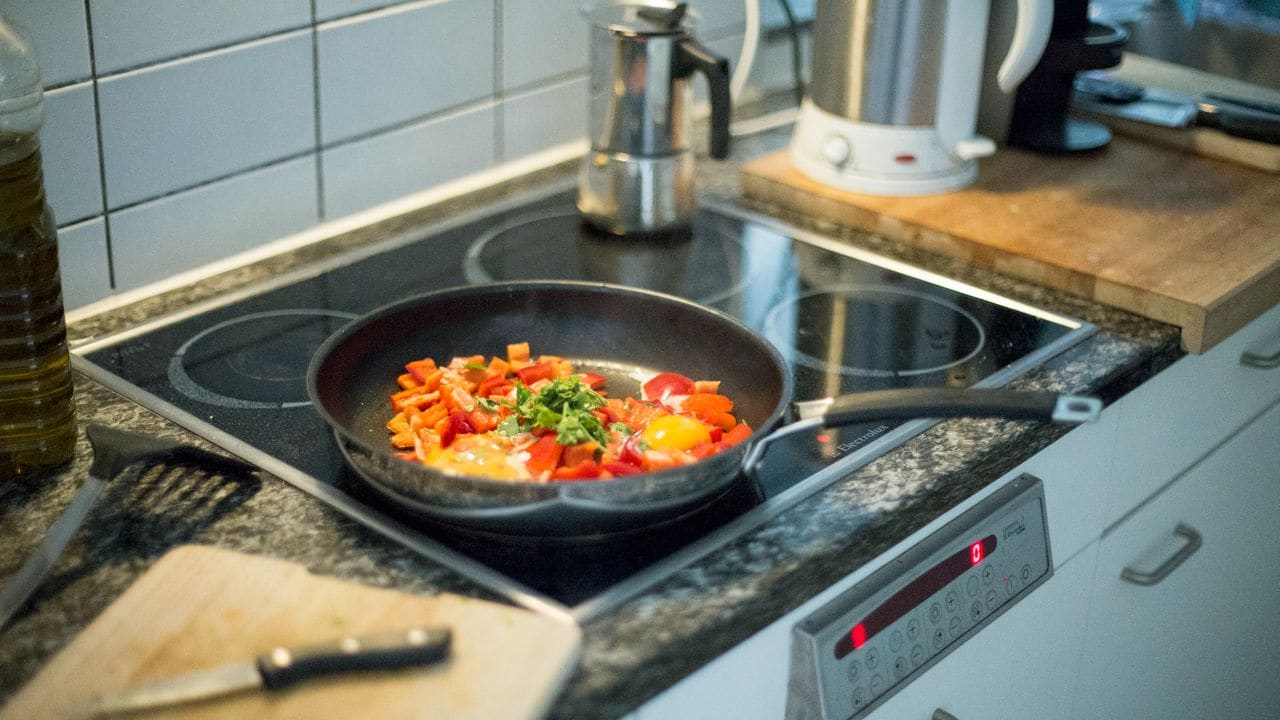
Pans with partial induction-compatible base usually don;t work well with induction cooktops; Photo Credit: Pexels
6. A Warped Base Can Reduce Effective Contact
A pan doesn't technically need physical contact with every millimetre of the glass for induction to function. The magnetic field can travel across a small gap.
Even so, a flat base remains important.
Thin and lightweight cookware can warp after repeated heating, especially when an empty pan sits over high heat or someone runs a very hot pan under cold water. The centre may bow upwards while the edges remain against the cooktop.
Place the pan on a flat kitchen counter and give the handle a gentle press. If it rocks noticeably, the base probably isn't completely flat.
With small pans, even a little warping can make an already limited magnetic connection less dependable. It can also cause the pan to wobble whenever food gets stirred.
That wobble becomes particularly irritating while making something that needs constant movement, such as custard or a small batch of sauce.
A flatter, sturdier base generally offers more stable cooking. Avoiding sudden temperature shocks can also help cookware retain its shape for longer.
7. Low Heat Settings Can Make The Problem More Noticeable
Many induction cooktops don't deliver a perfectly continuous trickle of energy at low settings. Instead, they may alternate between short bursts of power and pauses.
With a heavy saucepan full of dal, this behaviour barely registers. The metal and food hold enough heat to bridge those pauses.
Put a lightweight pan containing two tablespoons of butter on the same setting and the cycling becomes obvious.
The butter may bubble vigorously for a moment, then settle completely, then start bubbling again. A delicate sauce can swing between simmering and sitting still. It can look as though the appliance cannot decide what temperature it wants.
The smaller the quantity of food and the lighter the pan, the less thermal mass exists to soften those fluctuations.
Starting slightly higher and reducing the setting once the pan warms can sometimes give better results, depending on the recipe. Using thicker cookware also helps.
Induction remains extremely responsive, but that responsiveness can expose weaknesses in lightweight cookware that would feel less noticeable on slower heating systems.
8. Small Pans Can Trigger Safety Detection More Easily
Modern induction cooktops contain several safety features designed to prevent unnecessary heating and protect the appliance.
Pan detection sits at the centre of many of them.
If the cooktop believes the cookware has been removed, sits incorrectly or falls below an acceptable size, it may reduce power or stop heating entirely. Small cookware lives much closer to those detection thresholds.
That explains a particularly annoying scenario: the pan works when first placed on the stove but switches off after someone lifts it briefly to swirl oil or toss ingredients.
When the pan returns, the appliance may need to detect it again. If its base barely meets the minimum requirement, recognition can become inconsistent.
The same behaviour sometimes appears when cooks repeatedly lift a tiny pan while making tadka. Traditional cooking habits and modern safety sensors don't always cooperate gracefully.
Keeping the cookware on the surface while stirring, whenever practical, can help. Choosing a small but sufficiently wide induction-compatible pan offers an even better long-term fix.
9. Very Small Quantities Heat Faster Than Expected
Sometimes the problem isn't that the cooktop struggles to heat a small pan. It heats it remarkably well.
Induction can transfer energy into compatible cookware quickly, and a tiny pan holding very little food has almost no thermal buffer.
A teaspoon of ghee can become hot within moments. A few spices can go from fragrant to burnt while someone reaches for the next ingredient. Milk meant for one cup of coffee can suddenly foam towards the rim.
This rapid response can make a lightweight pan seem difficult to control.
The situation becomes more dramatic when users apply the same heat setting they normally use for larger cookware. A level that gently heats a 24 cm saucepan might feel aggressive beneath a 12 cm pan containing barely 100 ml of liquid.
Starting at a moderate setting gives small cookware more room for error. Ingredients should also stay within reach before the pan goes onto the cooktop.
When cooking quantities shrink, reaction times shrink too. Induction simply makes that relationship harder to ignore.
10. An Induction Interface Disc Can Help, But It Has Trade-Offs
People often consider an induction interface disc when favourite cookware refuses to cooperate.
These flat magnetic plates sit between the cooktop and the pan. The induction coil heats the disc, and the disc then transfers heat into the cookware above it.
That can allow extremely small or non-magnetic cookware to sit over an induction surface, but it changes the way induction normally works.
Instead of heating the pan directly, the appliance first heats another piece of metal. Some of induction's speed and efficiency disappear in the process.
The disc can also become extremely hot. Heat may remain trapped between the plate and glass after cooking, so careful handling matters.
For occasional use with a cherished little coffee pot or specialised utensil, an interface plate may prove useful. For everyday cooking, however, buying cookware with a sufficiently wide magnetic base usually gives better results.
Before purchasing an adaptor, check the cooktop manufacturer's instructions as well. Some brands discourage or restrict their use because excessive concentrated heat can affect the glass or internal temperature sensors.
Products Related To This Article
1. Cadlec CookEase 2000W Induction Cooktop | 8 Cooking Modes
2. Pigeon by Stovekraft Cruise 1800 watt Induction Cooktop With Crystal Glass
3. Philips Viva Collection HD4928/01 Induction Cooktop
4. Bajaj IRX 220F Infrared Induction Cooktop | 2200 Watts
5. Wonderchef Easy Cook Infrared Cooktop | 2200 Watt Induction Cooktop
6. Longway Cruiser IC 2000 Watt Induction Cooktop with Auto Shut-Off
7. iBELL 20YO Induction Cooktop 2000W - 3 YEAR WARRANTY Full Touch Panel
Small cookware exposes some of the quirks that remain invisible when induction cooktops handle larger pots and pans. A tiny base may fall below the detection limit, thin metal can exaggerate power cycling, and lightweight construction may create hot spots or warping.
None of this means small pans and induction cannot get along. The right combination usually works beautifully.
Look for a flat magnetic base with enough diameter to match the cooktop's smallest zone. Keep the pan centred and use gentler heat when cooking tiny portions. A little attention to cookware construction can turn those mysterious flashing displays and stop-start heating episodes into much more predictable everyday cooking.
(Disclaimer: This article may include references to or features of products and services made available through affiliate marketing campaigns. NDTV Convergence Limited (“NDTV”) strives to maintain editorial independence while participating in such campaigns. NDTV does not assume responsibility for the performance or claims of any featured products or services.)