Why ANC Earbuds Struggle To Block Human Voices Despite Reducing Traffic Noise
ANC earbuds can mute engines and traffic surprisingly well, yet nearby voices often cut through. The reason lies in how speech changes rapidly across frequencies, making it far harder to cancel than steady background noise.

Why ANC earbuds can't make certain noises unavoidable
There is a slightly comic moment familiar to anyone who has used good ANC earbuds during a commute. The bus engine fades into the background. The air-conditioning hum melts away. Even the low rumble from the road seems to have packed its bags and left. Then somebody nearby says, “Bhaiya, next stop?” and every syllable sails straight through. That can feel puzzling, especially after paying several thousand rupees for earbuds advertised with phrases such as “powerful noise cancellation” or “immersive silence”. If a pair of tiny earbuds can tame traffic, surely a conversation should be an easier opponent.

Why do ANC earbuds struggle with certain noises
Photo Credit: Pexels
Acoustically, however, voices are far more troublesome. Active noise cancellation, or ANC, works best when sound remains relatively steady and predictable. Human speech does almost the opposite. It jumps between pitches, changes volume rapidly, contains sharp consonants and arrives from constantly changing directions. The earbuds must detect all of that, calculate an opposing sound wave and play it back almost instantly.
Also Read: Top 5 Wireless Earbuds Under ₹2,000
That is a demanding job for hardware small enough to disappear inside a pocket. Here is why traffic often fades beautifully while conversations stubbornly refuse to leave.
What Makes Human Voices So Difficult For ANC To Cancel?
1. Traffic Noise Is Surprisingly Predictable
Busy roads may sound chaotic to human ears, but much of their background noise has a useful characteristic: it changes relatively slowly.
A bus engine produces a sustained low-frequency rumble. Tyres rolling over tarmac create a broad but fairly continuous sound. Metro trains generate recurring mechanical vibrations. Aircraft cabins contain an even more obvious example, with engines producing a steady drone for long stretches.
ANC systems love this kind of noise.
Microphones on the earbuds listen to incoming sound while a processor generates an opposing waveform. When the unwanted sound wave rises, the earbuds create another wave designed to fall at roughly the same moment. The two partially cancel each other.
A stable rumble gives the system enough time to recognise what is happening and respond accurately.
That is why slipping ANC earbuds into the ears during a long cab ride can suddenly make the vehicle feel more refined. The engine has not become quieter. The earbuds have simply found an acoustic opponent whose moves are easy to anticipate.
Conversation provides no such courtesy.
2. Human Speech Changes Constantly
Speech is one of the most unpredictable everyday sounds ANC earbuds encounter.
A person can move from a deep vowel to a sharp consonant in a fraction of a second. Pitch rises during a question, falls at the end of a sentence and changes again depending on emotion. Whispering, laughing and sudden emphasis add even more variation.
Consider a lively conversation at a café. One person speaks softly. Another bursts into laughter. Someone at the next table calls for another chai. A chair scrapes the floor halfway through a sentence.
For an ANC processor, that soundscape is a moving target.
Traffic noise often resembles a long brushstroke. Speech looks more like hundreds of tiny dots appearing at different places and different moments.
ANC algorithms still reduce parts of a voice, particularly its lower frequencies. However, by the time the earbuds identify a rapidly changing element and generate a suitable cancelling wave, that sound may already have changed.
This is why voices heard through ANC often sound thinner or more distant rather than completely disappearing.
The system is working. Speech simply refuses to stand still.
3. Voices Occupy Difficult Frequencies
Frequency makes another huge difference.
Many forms of transport noise contain plenty of low-frequency energy. Engine vibrations, road rumble and air-conditioning systems commonly produce sounds in ranges where ANC performs particularly well.
Human speech spreads across a much wider spectrum.
The deeper body of a voice may sit at relatively low frequencies, but intelligibility depends heavily on higher-frequency information. Consonants such as “s”, “t”, “k” and “f” contain quick, detailed bursts of sound that help the brain understand words.
ANC becomes harder as frequencies rise.
Higher-frequency sound waves are shorter. That means even tiny timing errors can prevent the cancelling wave from lining up correctly with the unwanted sound.
Imagine trying to clap exactly opposite somebody else. When they clap once every few seconds, matching their rhythm feels manageable. If they start clapping rapidly and unpredictably, staying perfectly out of phase becomes far more difficult.
A similar problem affects ANC.
The low rumble beneath somebody's voice may disappear, while the crisp details carrying actual words remain surprisingly understandable.
4. ANC Cannot Escape Processing Delay
Noise cancellation feels instantaneous, but several things must happen before the earbuds can counter a sound.
First, microphones detect the incoming noise. Then a processor analyses the signal. An algorithm calculates the appropriate response. Finally, the speaker driver produces the cancelling waveform.
Modern earbuds complete this sequence extremely quickly, yet physics does not allow it to happen with literally zero delay.
With steady sounds, a tiny delay matters less. If a bus engine continues humming at roughly the same frequency, the processor can keep producing an effective response.
A spoken syllable may exist for only a brief moment.
By the time the system reacts to one acoustic event, the speaker may already have moved to the next.
Manufacturers reduce latency through faster chips, adaptive algorithms and microphones placed both inside and outside the ear canal. Even so, perfect cancellation of rapidly changing sounds remains enormously difficult.
This also explains why ANC technology keeps improving without producing absolute silence.
Processing has become clever, but it has not negotiated an exemption from physics.
5. Your Brain Is Exceptionally Good At Finding Voices
Earbuds are not solely responsible for the problem. The human brain deserves some credit too.
People are remarkably good at recognising speech in noisy surroundings. The brain can piece together incomplete words, predict missing sounds from context and focus on familiar voices even when background noise remains loud.
Researchers often discuss this ability through the “cocktail party effect”: the tendency to notice meaningful speech amid competing sounds.
ANC can therefore reduce a nearby conversation substantially without making it feel equally reduced.
Suppose the earbuds lower road noise and speech at the same time. Once the road rumble disappears, the remaining voice has less competition. Strangely, it may feel more noticeable than before.
Anyone who has worn ANC earbuds in a railway waiting area may have experienced this effect. Much of the environmental roar retreats, yet a nearby discussion about where to find platform six remains perfectly understandable.
The earbuds have not amplified the conversation.
They have cleaned up its surroundings, giving the brain a clearer acoustic stage on which to spot words.
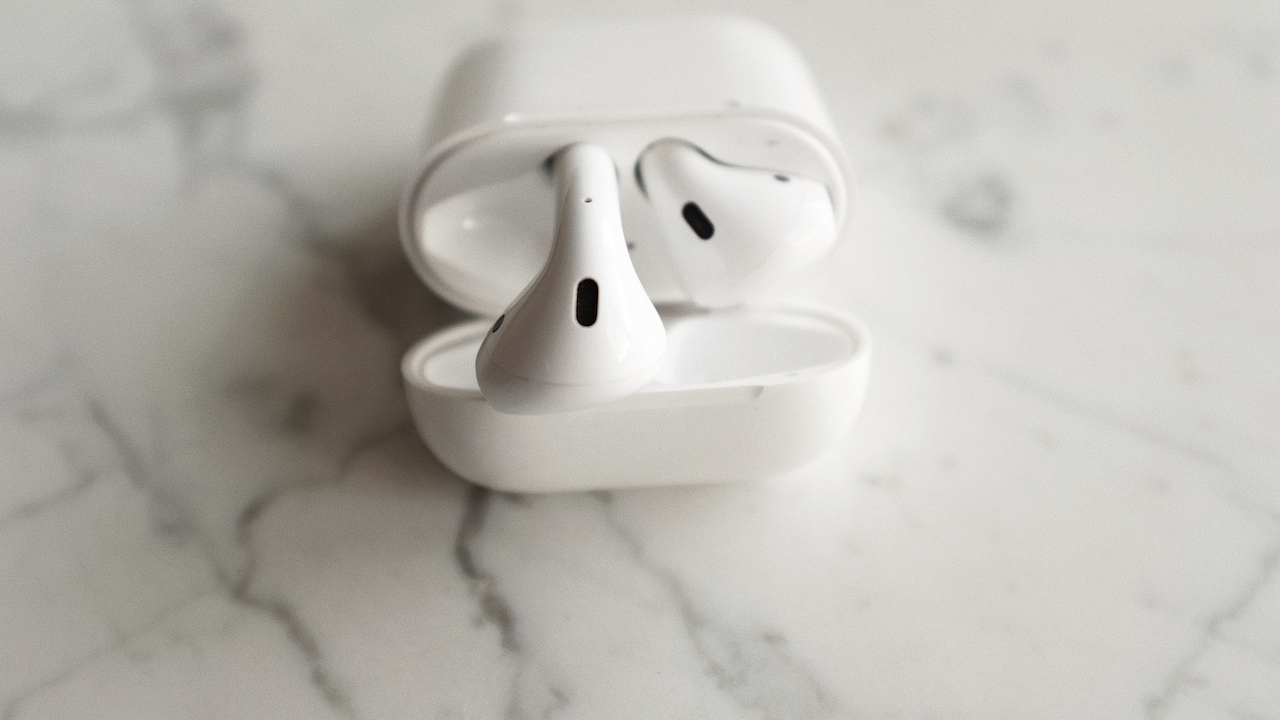
The brain can piece together incomplete words even when background noise remains loud; Photo Credit: Pexels
6. Passive Isolation Matters More Than Many People Realise
Active noise cancellation gets the glamorous advertising, but physical isolation does a surprising amount of the work.
Ear tips create a seal inside the ear canal. That seal physically blocks some sound before electronics become involved. This process is known as passive noise isolation.
It becomes especially important for higher frequencies, including many of the components that make speech clear.
An imperfect fit can therefore make voices seem much louder.
Suppose an earbud comes with small, medium and large silicone tips. The medium pair may feel comfortable but leave a tiny acoustic gap. Low-frequency ANC might still suppress an air-conditioner convincingly, while voices and clattering dishes leak through.
Trying a larger tip can sometimes improve perceived isolation more than changing any setting in the companion app.
The ideal fit should feel secure rather than painfully tight. Ear anatomy also differs between the left and right sides, so matching tip sizes are not compulsory.
Before blaming the ANC algorithm, checking the seal makes sense.
Sometimes the difference between impressive cancellation and disappointing cancellation is a few millimetres of silicone.
7. Voices Arrive From Awkward Directions
Direction adds another layer of difficulty.
A steady engine beneath a bus produces noise with relatively consistent characteristics. Human voices can appear from almost anywhere.
One person may speak directly beside the listener. Another may call from behind. Sound can bounce off windows, walls, ceilings and hard floors before reaching the microphones.
Those reflections create multiple slightly delayed copies of the original voice.
The earbuds must now deal not only with what someone said but also with echoes of what they said arriving from different directions.
This becomes particularly noticeable in stations, shopping centres and tiled cafés, where sound reflects easily.
Someone ordering a ₹60 coffee nearby may produce a direct voice signal, while the same syllables bounce from a glass wall milliseconds later. Those overlapping arrivals complicate the waveform the ANC system must cancel.
Manufacturers use several microphones and increasingly sophisticated processing to estimate where sound originates.
Even then, the acoustic environment keeps changing as people move their heads, walk past or turn while speaking.
Traffic tends to behave like scenery. People behave like actors wandering across the stage.
8. Earbuds Must Preserve Useful Sounds Too
Complete isolation would not always be desirable.
Manufacturers must balance strong cancellation with safety, comfort and natural sound. An ANC system that aggressively attacked every sudden mid-frequency sound could create unpleasant artefacts or interfere with audio playback.
There is also the practical issue of awareness.
During a commute, completely eliminating horns, announcements or nearby warnings could create obvious problems. Although dedicated transparency modes handle awareness more directly, ANC algorithms still need to avoid unstable reactions to sudden noises.
Overcorrection can produce pressure-like sensations, distortion or strange electronic sounds.
Designers therefore tune earbuds carefully rather than simply maximising cancellation at every possible frequency.
That tuning explains why two premium models may behave very differently with voices even when both handle aircraft noise brilliantly.
One manufacturer may prioritise comfort and naturalness. Another may push harder against mid-frequency sounds. A third may continually adapt the algorithm based on fit and surroundings.
“More ANC” is not a single dial that engineers can turn indefinitely.
It is a collection of compromises squeezed into two very small pieces of hardware.
9. Music Masks Speech Better Than ANC Alone
Silence can expose whatever ANC fails to remove.
Play music, however, and the situation changes dramatically.
Even at moderate volume, music supplies frequencies that overlap with human speech. Those sounds mask the remaining voice components, making conversations harder for the brain to separate and understand.
This is why ANC often feels dramatically stronger once a playlist begins.
The earbuds may reduce the low-frequency background while the music covers much of what survives at higher frequencies. Passive isolation contributes another layer. Together, the three effects create the sense of being sealed away from the outside world.
Podcasts work differently because they contain gaps and occupy many of the same frequencies as speech. Instrumental music, brown noise or gentle ambient tracks can sometimes mask nearby conversations more effectively.
There is no need to push the volume aggressively. Doing so defeats one of ANC's best advantages: enjoying content at a comfortable listening level in noisy surroundings.
ANC is therefore best understood as part of a team.
Electronics reduce noise. Ear tips block it. Audio masks what remains.
10. Better ANC Does Not Mean Complete Silence
The phrase “noise cancellation” creates unrealistic expectations.
It sounds absolute, as though switching on ANC should place an invisible soundproof room around the listener. In reality, consumer earbuds perform noise reduction rather than magical noise deletion.
Premium models generally outperform cheaper ones because they combine better microphones, faster processors, improved algorithms and carefully tuned acoustic designs. Yet price cannot rewrite the behaviour of sound waves.
A ₹25,000 pair may handle voices better than a ₹3,000 pair, but neither can guarantee that nearby speech disappears.
The biggest improvement usually appears with predictable low-frequency noise. Aircraft engines, buses, ceiling fans, air conditioners and distant road traffic are exactly the conditions where modern ANC can seem astonishing.
Voices expose its limitations because they are complex, rapid and meaningful to the brain.
Understanding that difference makes shopping easier too. Testing ANC beside steady showroom noise tells only half the story. A better test includes conversation, music playback and checking whether the ear tips seal properly.
The goal should not be supernatural silence.
It should be a noticeably calmer soundscape.
Products Related To This Article
1. GOBOULT Z40 True Wireless in Ear Earbuds with 60H Playtime
2. Noise Newly Launched Buds VS601 in Ear Truly Wireless Earbuds with 50H of Playtime
3. boAt Nirvana Ion, 120HRS Battery
4. Mivi DuoPods Sync in Ear Earbuds
5. GOBOULT Mustang Torq Wireless in Ear Earbuds with 60H Playtime
6. boAt Airdopes 141 Elite ANC, ANC(~35dB), 4Mics ENx Tech
7. realme Buds N1 True Wireless in-Ear Earbuds with 46dB Hybrid ANC
ANC earbuds perform a clever acoustic trick, but the trick works best when the opponent behaves predictably.
Traffic rumble, engine drone and air-conditioning noise give the system relatively stable patterns to analyse and counter. Human voices bring rapid frequency changes, sharp consonants, echoes, movement and unpredictable timing. Then the brain joins the contest by doing an excellent job of reconstructing speech from whatever fragments remain.
That combination explains the familiar mystery of a noisy commute: the bus almost vanishes, yet two people discussing dinner plans three rows away remain annoyingly easy to understand.
A good ear-tip seal can improve matters. Music or ambient audio can mask additional speech. More advanced earbuds may also reduce voices more effectively than basic models. None of these measures, however, turns ANC into a portable soundproof wall.
And perhaps that is the most useful way to judge the technology.
ANC does not need to erase the world to be valuable. If it softens the roar of traffic, takes the edge off a crowded journey and lets a favourite song play at a sensible volume, those tiny earbuds are already doing an impressive amount of acoustic heavy lifting.
The occasional nearby conversation slipping through is less a technological failure than a reminder that human speech is remarkably difficult to silence.
(Disclaimer: This article may include references to or features of products and services made available through affiliate marketing campaigns. NDTV Convergence Limited (“NDTV”) strives to maintain editorial independence while participating in such campaigns. NDTV does not assume responsibility for the performance or claims of any featured products or services.)