Does A 5-Litre Pressure Cooker Give You 5 Litres Of Cooking Capacity? 10 Size Myths Explained
A 5-litre pressure cooker does not offer 5 litres of usable cooking space. Here are 10 common cooker-size myths explained, from safe filling limits and food expansion to choosing the right capacity for everyday meals.
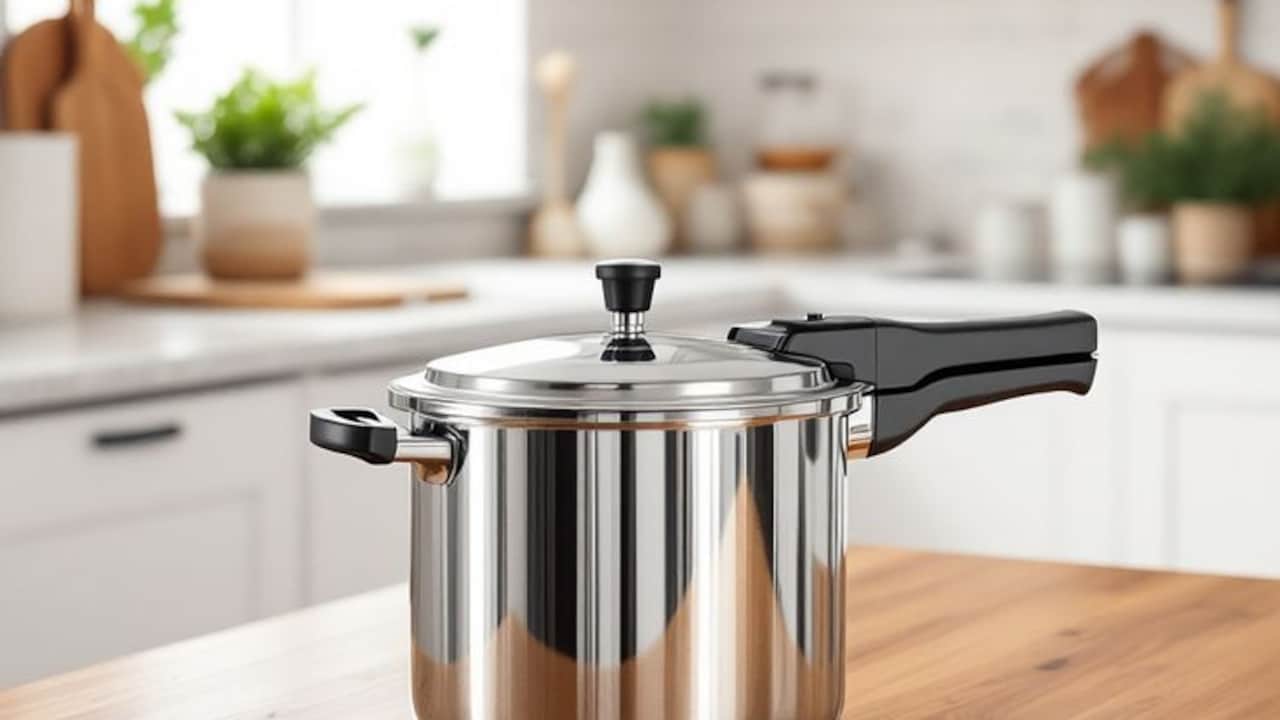
Pressure Cooker Size Guide: Does A 5-Litre Cooker Really Hold 5 Litres?
Pressure cooker shopping can look surprisingly simple. Pick a familiar brand, choose a capacity, check the handle, compare the price, and head home. Then comes the first Sunday lunch. The new 5-litre cooker goes on the hob with enough rajma for a family gathering. A little extra water goes in because nobody wants dry beans. Tomatoes, onions and spices follow. Suddenly, the cooker that appeared enormous in the shop seems rather less generous. The lid may close, but filling it to the brim would be a terrible idea. That is where one of the biggest pressure-cooker misunderstandings begins. A cooker's stated capacity describes the approximate volume of the vessel, not the amount of food that should safely cook inside it. And that is only one myth. Cooker size affects meal quantity, cooking performance, handling, storage, and even how comfortably a recipe behaves under pressure. Choosing the right capacity therefore requires more than counting family members or assuming bigger always means better. Here are ten pressure cooker size myths that deserve a proper reality check.
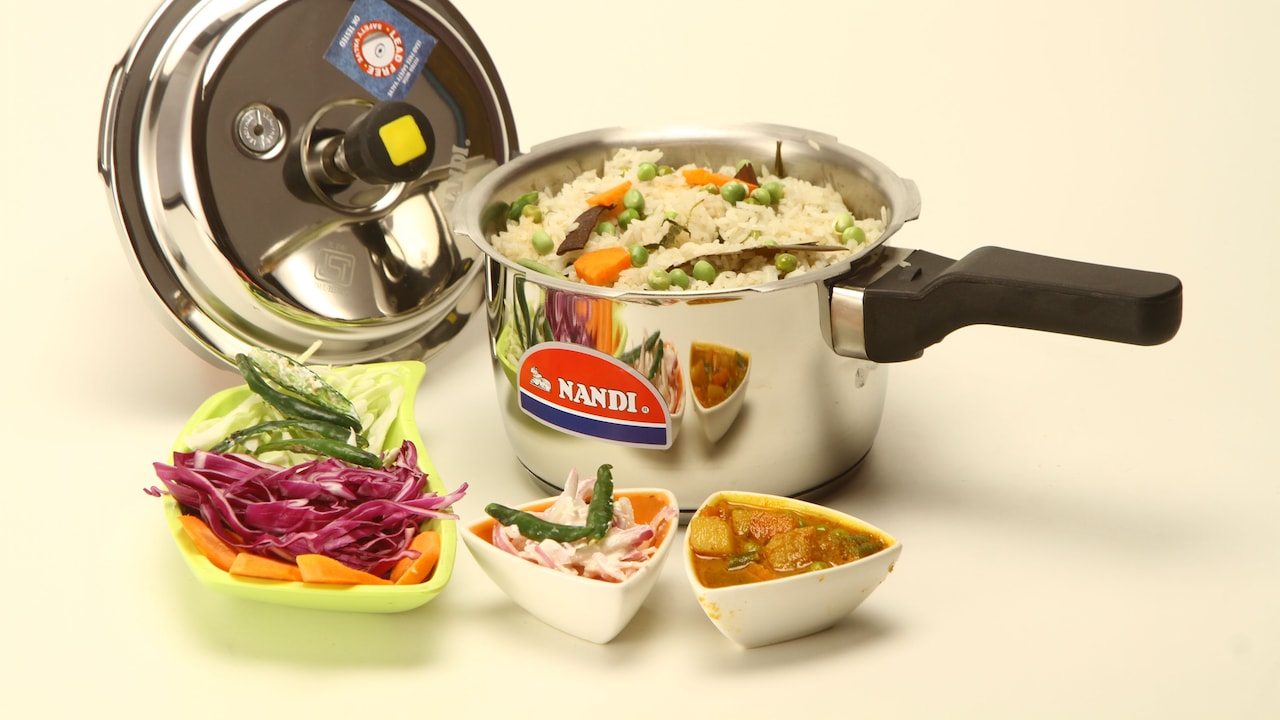
Pressure Cooker Size Guide: Does A 5-Litre Cooker Really Hold 5 Litres?; Photo Credit: Pexels
Pressure Cooker Capacity: What The Litre Rating Really Means
1. A 5-Litre Cooker Can Safely Cook 5 Litres Of Food
The 5-litre marking refers to the vessel's total capacity, not its usable cooking capacity.
A pressure cooker needs breathing room. Steam must form above the food before pressure can build properly. Fill the vessel right to the top and that crucial space disappears. Food may also rise, foam or expand while cooking.
For many everyday dishes, keeping the cooker around two-thirds full is a sensible working rule. Foods that swell or froth considerably, such as dal, beans and rice, often need even more empty space.
That means a 5-litre cooker may offer roughly 3 to 3.3 litres of practical room for many dishes, and sometimes less for ingredients that expand heavily.
Think of the capacity label like the maximum seating in a tiny city lift. Technically, a certain number of people may fit. Whether everyone wants to spend the journey pressed against the door is another matter entirely.
The empty section inside a cooker is not wasted space. It plays an active role in pressure cooking. Treating every centimetre as food storage defeats the basic design of the appliance.
Also Read: Top 5 Pressure Cookers For Faster And Easier Everyday Cooking
2. Cooker Capacity And Food Quantity Mean The Same Thing
A litre measures volume, while recipes usually involve ingredients that change volume dramatically during cooking.
One litre of water stays close to one litre. One litre of uncooked rice certainly does not. Rice absorbs water and swells. Chickpeas grow plumper. Dal can foam. Vegetables soften and settle. Meat may release its own juices.
So a 3-litre cooker cannot simply be interpreted as holding “three litres of dinner”.
Take khichdi as an everyday example. Rice and dal may look modest while sitting dry in a bowl. Add water, vegetables and seasoning, then allow enough space for bubbling and expansion, and the cooker suddenly has a much bigger job.
This is why comparing cookers solely by the amount of raw food they appear to hold can be misleading.
A useful habit is to think in terms of finished meal volume rather than dry ingredients alone. A couple cooking two portions of sabzi may have completely different capacity needs from a couple preparing chole for meal prep.
The number printed on the box is a starting point. What regularly goes inside the cooker matters far more.
3. A Bigger Pressure Cooker Is Always More Useful
A giant cooker feels reassuring in a showroom. There is space for guests, festive meals and that imaginary day when twelve relatives arrive without warning.
Then everyday life returns.
If most meals involve dal for two, potatoes for three or a small portion of chicken curry, an oversized cooker can feel clumsy. It takes up more cabinet space, weighs more and may be less convenient to wash after a quick weekday meal.
Large cookers certainly earn their place in busy households. They are excellent for batch cooking, family gatherings, stock, large quantities of legumes and recipes where ingredients need generous room.
But usefulness comes from matching capacity to routine.
Someone cooking for two people may use a 3-litre cooker almost every day while the impressive 8-litre vessel gathers dust above the fridge beside old steel dabbas and forgotten serving bowls.
The better question is not, “What is the biggest cooker within the budget?” It is, “What size will come off the shelf most often?”
Kitchen equipment earns its keep through frequency, not grandeur.
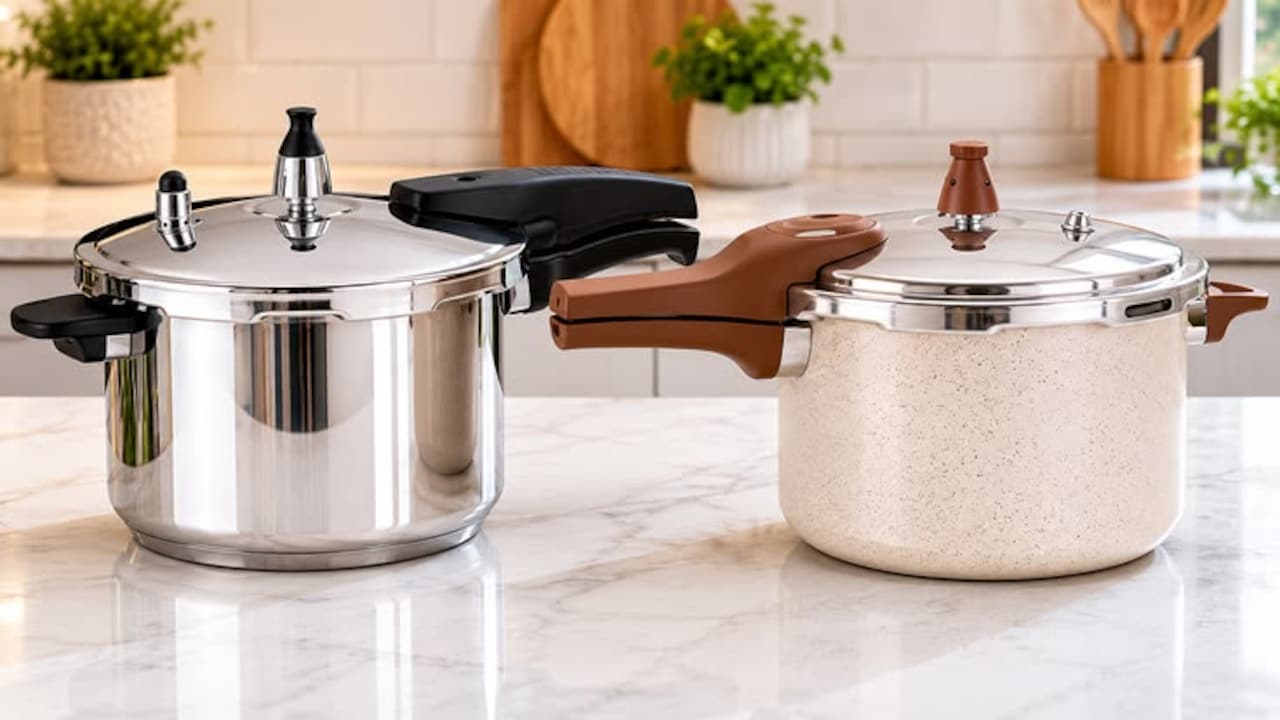
Pressure Cooker Size Guide: Does A 5-Litre Cooker Really Hold 5 Litres?; Photo Credit: Pexels
4. One Cooker Size Works Perfectly For Every Recipe
This would certainly make kitchen cupboards easier to organise, but recipes rarely cooperate.
A small cooker may handle potatoes beautifully yet struggle with a full biryani recipe. A large cooker can manage mutton curry for eight but may feel excessive for steaming two portions of vegetables.
Different foods also behave differently under pressure. Dal and beans need room for expansion. Meat dishes may require less liquid. Pulao needs enough space for grains to cook without turning into a tightly packed mass.
Then there is pot-in-pot cooking. Placing a smaller container inside the cooker creates another layer of space requirements. A vessel that looks large enough on paper may suddenly feel cramped once a trivet and inner bowl enter the picture.
This explains why many busy kitchens eventually settle into two cooker sizes rather than one enormous all-purpose model.
A smaller cooker handles daily meals. A larger one appears for weekend batches, guests and special dishes.
There is no need to collect cookers like cricket memorabilia. But expecting one capacity to feel equally convenient for every recipe can create more frustration than cupboard savings.
5. Family Size Alone Determines The Cooker Size You Need
“Four people means a 5-litre cooker” sounds neat. Real households are rarely that predictable.
Two people who batch-cook rajma, chana and chicken twice a week may need more cooker space than a family of four preparing fresh, modest portions every day.
Eating habits matter too. A household serving rice, dal, vegetables and a protein together may use the cooker differently from one where rotis accompany a single sabzi.
Guests also change the calculation. Some homes regularly have parents, cousins or neighbours joining meals. Others can predict dinner portions with spreadsheet-level precision.
Age matters as well. Four adults may consume considerably more than two adults and two small children.
So family size works best as an initial clue, not a final formula.
Consider the largest regular meal rather than the number of chairs around the dining table. If Sunday lunch normally means six portions even though only four people live at home, size the cooker around Sunday rather than Tuesday.
Buying based purely on household headcount is a little like choosing a fridge by counting people without asking how often anyone actually shops.
6. The Maximum Fill Line Means Every Food Can Reach It
Many modern cookers include a maximum fill indication, which is useful. It should not be mistaken for permission to take every recipe right up to that mark.
Foamy and expanding foods need greater caution.
Dal, dried beans, chickpeas, grains and some starchy foods can create froth during pressure cooking. That foam may rise towards the vent or pressure-control components if the cooker becomes too full.
Rice also expands enough to turn an innocent-looking quantity into a crowded pot.
By contrast, a meat curry with relatively little liquid may behave differently.
The important point is that usable capacity changes with the recipe. There is no single fill level that suits every ingredient.
This catches people out because the food often looks harmless before heating. Half a bowl of dry beans hardly appears capable of causing trouble. Give those beans water, heat and pressure, however, and they become enthusiastic tenants demanding more floor space.
Leaving extra room may feel unnecessarily cautious until the lid opens to perfectly cooked food instead of a kitchen clean-up operation.
When ingredients swell, the space above them becomes part of the recipe.
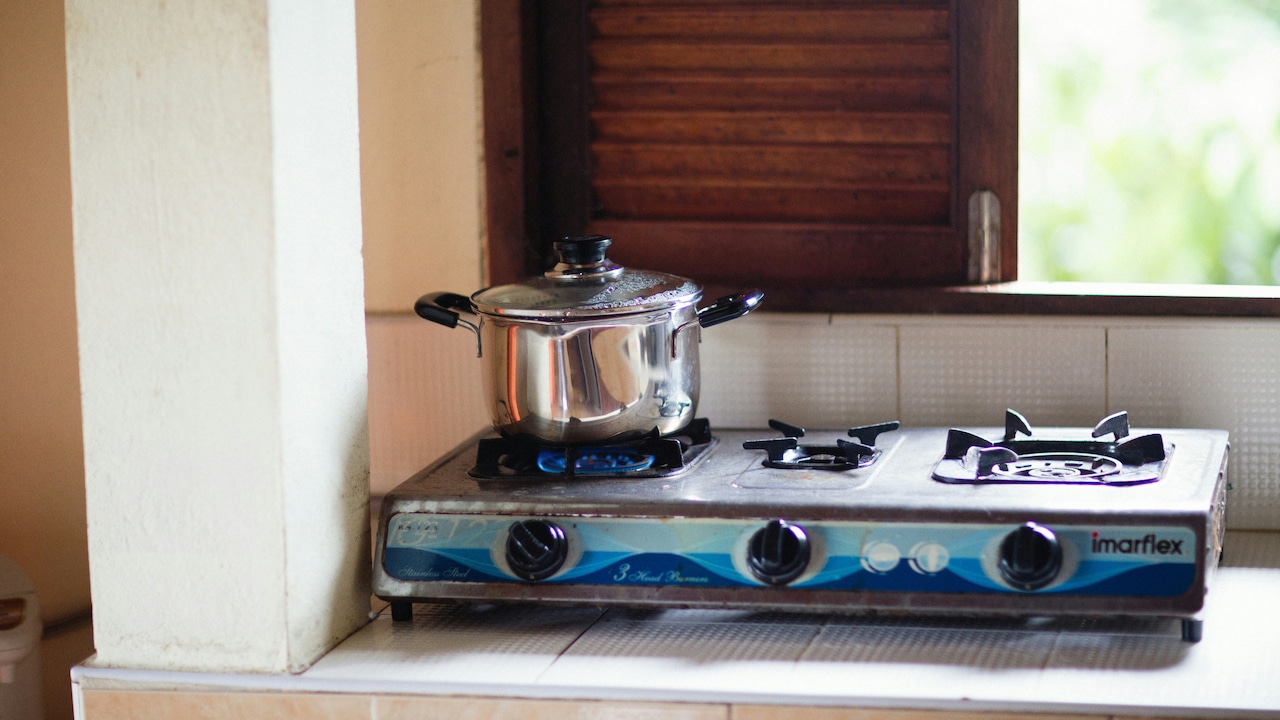
Pressure Cooker Size Guide: Does A 5-Litre Cooker Really Hold 5 Litres?; Photo Credit: Pexels
7. A Small Cooker Cannot Handle Serious Cooking
Small cookers sometimes get dismissed as tea-stall-sized appliances suitable only for boiling a few potatoes.
That sells them short.
A 2-litre or 3-litre pressure cooker can be remarkably practical for smaller households. It can handle modest portions of dal, steamed vegetables, rice, eggs, small curries and plenty of quick everyday jobs.
Its biggest advantage is convenience.
A compact cooker is easier to lift, wash and store. It also feels less dramatic when the task involves only two portions. Nobody wants to wrestle with a huge vessel merely to cook a cup of dal after a long workday.
Smaller cookers can also make useful secondary vessels in larger homes. While the big cooker tackles chole, the small one can deal with potatoes or another component of the meal.
Naturally, capacity limits remain real. Cramming a family-sized biryani into a tiny cooker will not produce clever space efficiency. It will produce regret.
But “small” does not mean “toy”. In the right kitchen, a compact pressure cooker may become the hardest-working vessel of the lot.
8. A Large Cooker Automatically Cooks Food Faster
Pressure cooking feels synonymous with speed, so it is easy to assume that a bigger cooker must somehow work faster.
Capacity alone does not create speed.
A larger vessel may take longer to heat when it contains a larger quantity of food and liquid. It must generate enough steam to reach working pressure, and a heavy pot full of curry does not ignore basic physics just because dinner is running late.
Cooking time after pressure is reached may remain similar for certain foods, but the overall journey can still be longer because heating and cooling larger quantities takes time.
Using an oversized cooker for a tiny portion does not offer a magical shortcut either.
The real time-saving power of pressure cooking comes from pressure, temperature and recipe technique rather than litres printed on the base.
There is also the practical side. A cooker large enough for ten portions may save time through batch cooking. One session can cover several meals. That is a genuine efficiency benefit, but it is different from saying the cooker itself cooks each portion faster.
Bigger can mean more productive. It does not automatically mean quicker.
9. Cooker Shape Does Not Matter If The Capacity Is The Same
Two pressure cookers can both say 5 litres and still feel surprisingly different in daily use.
One may be tall and narrow. Another may be broader and shallower. Their total volume can be similar while their cooking personalities differ.
A wider base gives more room for sautéing onions, browning meat or spreading ingredients across the bottom. That can be useful for dishes where the cooker doubles as a cooking pot before the lid goes on.
A taller model may take up less horizontal hob space and suit certain storage arrangements better.
Shape can also affect how comfortably larger food pieces fit. Corn on the cob, certain cuts of meat or stacked steaming containers may sit more naturally in one design than another.
Then comes cleaning. A hand that reaches comfortably into a broad cooker may find a narrow vessel slightly awkward.
Capacity labels cannot communicate any of this.
When comparing cookers in a shop, looking inside can be as useful as reading the box. Imagine the onions being sautéed, the ladle moving around and the serving spoon scraping the last bit of masala from the bottom.
Litres tell the volume. Shape tells the experience.
10. Buying Extra Capacity Is Always The Smartest Long-Term Choice
Buying “one size bigger for the future” sounds sensible. Sometimes it is.
A growing household, frequent entertaining or regular bulk cooking can justify choosing extra capacity. The difference between replacing a cooker in two years and buying one suitable for longer use may certainly matter.
But excessive future-proofing can turn into present-day inconvenience.
Someone living alone may buy an enormous cooker while imagining future family meals. For several years, that person still has to store, lift and wash the oversized vessel after cooking two portions of dal.
Price matters as well. Larger cookers can cost more, and higher-capacity models may encourage spending money on features that rarely get used.
Long-term value comes from a balance between present needs and realistic future use.
A modest step up can make sense. Jumping several sizes “just in case” often does not.
Think of cooker capacity the way one might think about buying dining furniture. A table with one or two extra seats is practical. Buying banquet furniture for guests who visit twice a year may leave everyone squeezing around it for the other 363 days.
Good kitchen choices should make ordinary meals easier, not merely hypothetical ones possible.
Products Related To This Article
1. Hawkins 2 Litre Ceramic Nonstick Pressure Cooker
2. Bergner Argent Elements Triply Stainless Steel 6.5 L Outer Lid Pressure Cooker
3. Stahl Xpress Cooker Triply Pressure Cooker Broad, Induction Cooker
4. Prestige 2 Litre + 3 Litre + 5 Litre Aluminium Popular Max Outer Lid Pressure Cooker Combo with 2 Lids
5. Milton Pro Cook Induction Cookware & Gas Stove Friendly Triply Stainless Steel Curve Pressure Cooker with Inner Lid 2 Litre
6. Prestige 10 Litre Stainless Steel Deluxe Alpha Svachh Outer Lid Pressure Cooker
7. Prestige 3 Litre Aluminium Nakshatra Duo Inner Lid Pressure Cooker
A pressure cooker's litre rating looks wonderfully precise, but real cooking capacity is more complicated.
A 5-litre cooker does not mean five litres of dal can safely bubble away inside it. Steam needs room, ingredients expand and different recipes demand different fill levels. Family size matters, but so do eating habits, batch cooking, vessel shape and the sort of food cooked most often.
The best cooker is therefore not automatically the largest one on the shelf.
For many kitchens, the sweet spot lies in choosing enough space for regular meals with a sensible margin rather than chasing maximum capacity. Some households will genuinely benefit from a large vessel. Others may find a smaller cooker quicker to reach for, easier to clean and far more useful on an ordinary Wednesday evening.
That humble litre number deserves to be read as a vessel measurement, not a dinner guarantee.
Once that distinction becomes clear, pressure cooker shopping gets much easier. And, thankfully, nobody has to discover the difference while staring at an overfilled pot of foaming dal.
(Disclaimer: This article may include references to or features of products and services made available through affiliate marketing campaigns. NDTV Convergence Limited (“NDTV”) strives to maintain editorial independence while participating in such campaigns. NDTV does not assume responsibility for the performance or claims of any featured products or services.)