Does Turning Up The Volume Fix Weak Outdoor Bass? 10 Speaker Myths Explained
Find out why turning up the volume cannot fix weak outdoor bass. We debunk 10 common speaker myths about wattage, bass boost, placement, Bluetooth range, waterproofing and sound quality.
Does More Volume Mean Better Bass? 10 Outdoor Speaker Myths Debunked
A speaker playing indoors has walls, a ceiling and furniture helping it along. Take the same speaker outside and the situation changes completely. Sound suddenly has far more space to escape into. The deep thump that filled the living room may feel as if somebody quietly removed half the music. That difference creates plenty of confusion. Weak bass gets blamed on low volume. Bigger speakers get treated as automatically better. High wattage becomes a shortcut for judging loudness. Meanwhile, waterproof labels inspire confidence that a speaker can survive anything short of a submarine expedition.
Does Turning Up The Volume Fix Weak Outdoor Bass? 10 Speaker Myths Explained
Photo Credit: Pexels
Outdoor sound is more complicated, but not mysterious. Placement, enclosure design, amplifier power, listening distance and the surrounding environment all influence what reaches the ears. Understanding a few basic principles can save money, prevent damaged equipment and make everything from a Sunday barbecue to a terrace birthday party sound far more enjoyable. Here are ten speaker myths worth turning down.
10 Outdoor Speaker Myths That Could Be Ruining Your Sound
1. Turning Up The Volume Will Fix Weak Bass
It sounds logical. If the bass feels weak, increase the volume until the beat finally arrives. Unfortunately, volume controls do not work like bass rescue buttons.
Turning up a speaker raises the entire signal. Vocals become louder, cymbals become sharper and mid-range frequencies gain energy alongside the bass. If the speaker already struggles to reproduce low frequencies outdoors, extra volume may simply make everything else louder while the bass remains disappointing.
Push things too far and distortion joins the party. Small drivers begin working beyond their comfortable limits, amplifiers may clip, and the result can sound harsh rather than powerful.
Outdoor bass disappears easily because low frequencies spread widely and receive little reinforcement from nearby walls. Indoors, a corner can make a modest speaker sound surprisingly rich. On an open lawn, that support vanishes.
Better solutions include moving the speaker closer to a wall, using a larger enclosure designed for stronger low-frequency output or adding a dedicated outdoor subwoofer. Sometimes a small adjustment in placement produces more improvement than another five enthusiastic presses of the volume button.
2. More Watts Always Mean A Louder Speaker
Wattage attracts attention because it gives shoppers a neat number to compare. A 300-watt speaker must surely crush a 100-watt model, right? Not necessarily.
Speaker loudness depends on far more than amplifier power. Sensitivity matters enormously. A highly efficient speaker can produce impressive volume with relatively modest power, while an inefficient model may require considerably more wattage to reach the same sound level.
The type of watt figure matters too. Continuous or RMS power gives a more useful indication of sustained capability than an eye-catching peak rating. Packaging sometimes highlights enormous peak numbers that describe brief bursts rather than realistic everyday performance.
There is also a mathematical catch. Doubling amplifier power does not make a speaker sound twice as loud. Human hearing simply does not respond that way.
For a terrace gathering, therefore, choosing between models purely on wattage can be misleading. Look at sensitivity, driver design, cabinet size and recommended coverage area as well.
A speaker is closer to a pressure cooker than a motorbike. One number on the label tells only part of the story.
3. Bigger Woofers Automatically Produce Better Bass
A large woofer certainly looks convincing. Put a chunky driver behind a metal grille and the speaker immediately appears capable of rattling every steel plate in the neighbourhood.
Driver size does matter, but it does not decide bass quality on its own.
A larger woofer can move more air, which helps with deep frequencies and higher output. However, cabinet design, driver excursion, tuning, amplifier control and crossover settings are equally important. A badly designed large woofer can sound loose and muddy, while a well-engineered smaller driver can deliver surprisingly clean and punchy bass.
Outdoor conditions make the comparison even trickier. Deep bass needs significant air movement, especially when there are no nearby boundaries to reinforce it. That means a compact speaker may sound excellent near a balcony wall but noticeably lighter in the middle of a garden.
Quality also matters more than sheer boom. Bass should have definition. A tabla stroke, bass guitar note or electronic kick should sound distinct rather than merging into one continuous rumble.
So yes, woofer size deserves attention. Just do not treat centimetres as a guarantee of musical greatness.
4. Waterproof Speakers Can Be Left Outside Forever
Outdoor speakers often carry labels such as water-resistant, weather-resistant or waterproof. Those descriptions are useful, but they are not permission slips for permanent neglect.
Ingress Protection ratings, usually written as IP followed by two numbers, indicate resistance to dust and water under specific test conditions. A speaker rated for rain exposure may still dislike prolonged moisture, standing water, intense sunlight or repeated seasonal abuse.
Heat deserves particular attention. A speaker sitting on an exposed terrace can face scorching afternoon temperatures. Plastic housings may fade, rubber surrounds can deteriorate and internal batteries can age faster when constantly exposed to heat.
Monsoon conditions introduce another issue: humidity. Moisture can work its way into connectors, charging ports and mounting hardware even when the main enclosure handles splashes well.
Portable speakers should ideally come indoors after use. Permanently installed outdoor models need suitable weather ratings, proper mounting and sheltered positioning where possible.
A ₹20,000 weather-resistant speaker is still electronic equipment, not a garden stone. Treating it with a little care can add years to its useful life.
5. One Powerful Speaker Can Cover Any Outdoor Space
A single loud speaker seems like the simplest solution. Place it near the house, turn it up and expect everyone across the lawn to hear the same thing.
That approach usually creates two completely different listening experiences. People close to the speaker get blasted. People farther away hear thin, distant sound.
Sound loses energy as distance increases. Outdoors, there are fewer reflections to help redistribute it, so the drop becomes especially noticeable. Increasing volume at one location does not solve the coverage problem gracefully.
Several speakers placed strategically around a large space can produce much more even sound. Each unit works at a comfortable level, listeners receive clearer audio, and nobody has to shout over a speaker positioned three feet from the snack table.
For example, a long terrace may sound better with two moderate speakers at opposite ends than one huge model near the door. Larger lawns may benefit from several weather-resistant units aimed towards the listening area.
Outdoor audio is often about distribution rather than brute force. Sometimes four sensible speakers beat one heroic box screaming into the night.
Also Read: Upgrade On The Go: Top 10 Handpicked Deals On Mobile Speakers
6. Bluetooth Range Is The Same Outdoors And Indoors
Bluetooth specifications often quote impressive operating distances. Those figures can create the impression that a phone may be carried anywhere within that radius without interruption.
Reality enjoys adding obstacles.
Outdoor Bluetooth performance can actually improve when there are fewer walls between the phone and speaker. However, range still depends on the Bluetooth version, antenna design, device quality, nearby wireless traffic and physical barriers.
A person standing between the phone and speaker can sometimes weaken the signal. Metal railings, thick concrete structures and neighbouring wireless equipment can also cause trouble. At crowded events, numerous active devices may make the environment even less predictable.
Then there is the wonderfully common terrace problem: the phone controlling the music disappears inside with the person carrying it. The speaker begins stuttering just as everyone recognises the chorus.
Keeping the source device reasonably close remains the safest option. For larger outdoor installations, Wi-Fi streaming, wired connections or dedicated wireless audio systems may offer greater reliability.
Bluetooth is convenient, but convenience should not be mistaken for unlimited range.
Does Turning Up The Volume Fix Weak Outdoor Bass? 10 Speaker Myths Explained
Photo Credit: Pexels
7. Bass Boost Always Makes Outdoor Music Sound Better
Many speakers and apps include a Bass Boost button, and the temptation is obvious. Outdoor bass feels thin, so switch on the setting and let software fix everything.
Sometimes it helps. Sometimes it makes the speaker sound like it has been stuffed into a cardboard box.
Bass enhancement usually increases selected low frequencies through equalisation. If the speaker has enough driver capability and amplifier headroom, the result may feel warmer and fuller. If it is already operating near its limits, heavy bass boost can create distortion and reduce clarity.
The effect also depends on the music. A light boost may suit electronic tracks or film soundtracks, while acoustic music may become bloated. Vocals can lose definition when exaggerated bass begins masking nearby frequencies.
There is another practical issue: battery life. Asking a portable speaker to produce stronger low frequencies requires more energy, especially at high volume. Runtime may therefore fall.
Use bass boost like extra chilli on chaat. A little can transform the experience. Too much can make every other flavour disappear.
Start gently, listen carefully and adjust according to the space rather than trusting the most dramatic preset.
8. Placing Speakers Higher Always Improves Sound
Mounting outdoor speakers higher can improve coverage, particularly when people, furniture or plants would otherwise block the sound. That does not mean higher is always better.
A speaker mounted too far above the listening area may send much of its energy over people's heads. High frequencies are especially directional, so poor aiming can make music sound dull even when the volume seems adequate.
Bass behaves differently because lower frequencies spread more broadly. Yet placement near walls, floors and corners can still affect how strong that bass feels.
The goal is not simply height. It is useful height combined with correct direction.
Wall-mounted speakers on a balcony often work well when angled towards the seating area. Garden speakers may benefit from being placed closer to ear level, depending on their design. Even portable speakers should avoid unstable ledges or hollow metal tables that introduce annoying vibration.
Imagine lighting a dinner table. Mounting a lamp ten metres overhead would technically illuminate the area, but probably not very well. Speakers deserve similar thinking.
Position them where their sound actually meets the audience.
9. Expensive Speakers Will Sound Great Wherever They Are Placed
Premium audio equipment can offer better drivers, stronger cabinets, cleaner amplification and superior weather protection. None of that grants immunity from bad placement.
A costly speaker shoved into a corner behind a large planter may sound worse than a modest unit placed intelligently. Likewise, a high-end portable speaker sitting directly on a vibrating glass table can produce unpleasant resonance that has nothing to do with manufacturing quality.
Outdoor acoustics reward experimentation. Moving a speaker half a metre closer to a solid wall can strengthen bass. Rotating it slightly towards the seating area can improve vocal clarity. Raising it from floor level may help sound travel beyond furniture.
Before buying more expensive equipment, therefore, test the current setup. Walk around while music plays. Notice where bass suddenly becomes stronger or where vocals lose clarity. Small changes can reveal surprisingly large differences.
Price still matters when build quality and performance matter. Yet spending ₹40,000 on a speaker does not purchase perfect acoustics.
Good equipment needs a good location. Even a brilliant singer sounds disappointing when performing from behind a closed kitchen door.
10. Loud Outdoor Sound Means Good Outdoor Sound
This may be the biggest myth of all.
Outdoor systems often get judged by how far away they can be heard. If the music reaches the gate, the terrace and possibly three floors above, the setup gets labelled powerful.
But good sound is not a volume contest.
A balanced system should reproduce vocals clearly, keep bass controlled and remain comfortable during long listening sessions. Excessive volume can introduce distortion, fatigue listeners and annoy everyone nearby who did not sign up for an accidental concert.
Clarity matters particularly outdoors because background noise already competes with the music. Traffic, conversations, ceiling fans, generators and passing vehicles all fight for attention. Simply turning the system louder can make the entire environment more chaotic.
Better speaker positioning and wider coverage usually improve intelligibility more effectively than extreme volume.
There is also the social side. A rooftop gathering feels far more relaxed when guests can enjoy music without yelling across the table.
The best outdoor system is not the one heard from the next lane. It is the one that sounds rich, clear and effortless where people are actually sitting.
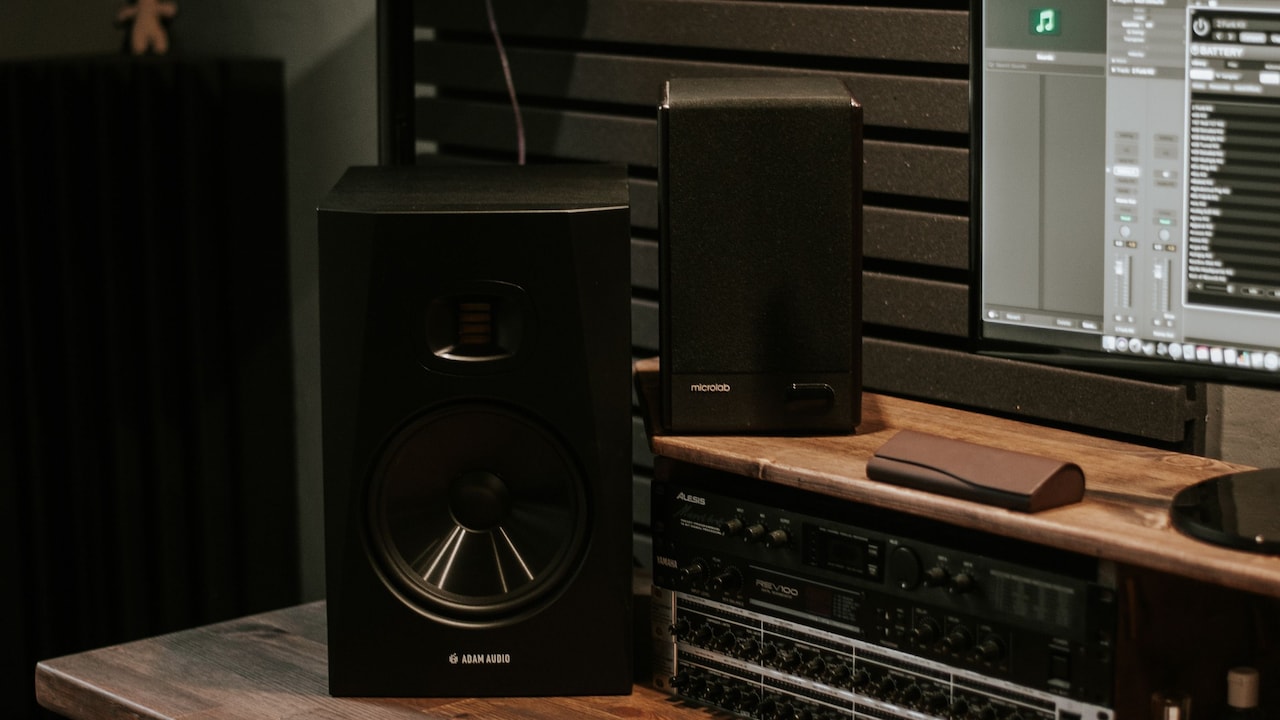
Does Turning Up The Volume Fix Weak Outdoor Bass? 10 Speaker Myths Explained
Photo Credit: Pexels
Products Related To This Article
1. Tribit XSound Go Bluetooth Speaker, 16W
2. Dubstep Pop 1200 Portable Bluetooth Speaker
3. boAt Stone 352 Pro/Stone 358 Pro w/ 14W Signature Sound
4. HAMMER Drop X1 5W Bluetooth Speaker with Twin Pairing
5. Mivi SuperBox Classic 120W Portable Bluetooth Speaker
6. PHILIPS Audio TAS1400BL Wireless Bluetooth Speaker with Deep Bass
7. Zebronics 2026 Launch Portable Bluetooth Speaker
Turning up the volume can make weak outdoor bass louder, but it rarely fixes the real reason the bass feels weak. Outdoor audio depends on placement, speaker design, coverage, power, distance and the physical environment around the listener.
The same lesson applies to most speaker myths. Bigger does not automatically mean better. More watts do not guarantee dramatically higher volume. Waterproof does not mean indestructible. Expensive equipment cannot rescue poor positioning.
Good outdoor sound comes from matching the system to the space rather than chasing impressive numbers on a specification sheet.
Before replacing a speaker, experiment. Move it closer to a wall. Change its height. Adjust the equaliser gently. Listen from different parts of the terrace or garden. For larger areas, consider spreading sound across several speakers instead of forcing one unit to do everything.
A little understanding often improves outdoor audio more effectively than another twist of the volume knob. And, as a bonus, the neighbours may remain considerably friendlier.
(Disclaimer: This article may include references to or features of products and services made available through affiliate marketing campaigns. NDTV Convergence Limited (“NDTV”) strives to maintain editorial independence while participating in such campaigns. NDTV does not assume responsibility for the performance or claims of any featured products or services.)