10 Reasons High-Waisted Jeans Gap At The Back And How To Find A Better Fit
Discover why high-waisted jeans gap at the back, from poor waist-to-hip proportions to stretch and rise issues, plus practical tips to find a pair that fits comfortably and sits smoothly.

How to find the right high waist jeans size and fit
There is a very specific kind of disappointment that arrives in a fitting room. The jeans glide over the hips, the legs look great, the length works with both flats and trainers, and then comes the side turn in the mirror. There it is: a noticeable gap between the waistband and the lower back. High-waisted jeans are supposed to feel secure, flattering and easy. Yet for many shoppers, the waistband fits more like a loose lid than a snug finish. Tightening a belt can help, but it often creates bunching elsewhere. Going down a size may solve the waist problem only to make sitting, walking or breathing far less enjoyable.

Why do some high waist jeans have gap in the back
Photo Credit: Pexels
The good news is that waistband gaping usually has a practical explanation. Denim brands build jeans around standardised measurements, while real bodies come with far more variety. Understanding where that mismatch happens makes shopping considerably easier.
Also Read: The Denim Upgrade: Statement Jeans With Lace, Rhinestones, And More Detailing
Why High-Waisted Jeans Gap At The Back And What You Can Do About It
1. Your Waist-To-Hip Ratio Does Not Match The Jeans
One of the most common reasons for a back gap is a simple difference in proportions. A pair of jeans may fit perfectly around the hips and thighs while still being several centimetres too roomy at the waist.
This often happens when the difference between the waist and hip measurements is greater than the pattern used by the brand. Standard jeans usually assume a fairly fixed relationship between those two areas. Bodies, naturally, ignore such neat calculations.
Sizing down rarely solves the issue well. The waistband may improve, but the hips can become uncomfortably tight, especially when sitting through a long commute or settling into a café chair.
Instead, look for jeans labelled “curvy fit”, “curve fit” or similar. These styles usually offer extra room through the hips with a comparatively smaller waistband. Checking the garment measurements rather than relying only on a familiar size number can also prevent several frustrating fitting-room experiments.
2. The Waistband Has Been Cut Too Straight
Not every waistband follows the natural curve of the body. Some high-waisted jeans use a relatively straight strip of denim around the top, which can create space at the back even when the rest of the jeans fits beautifully.
A contoured waistband works differently. It is shaped to narrow towards the waist, helping the denim sit closer against the lower back instead of standing away from it.
This small construction detail can make a surprisingly large difference. Two pairs marked the same size may feel completely different simply because one follows the body's curves more closely.
When shopping, look at the waistband before trying the jeans on. If it appears very straight when laid flat, it may be more prone to gaping on a defined waist. Jeans with curved seams, shaped waistbands or darts at the back often provide a closer fit. These details are far more useful than trusting a glamorous product name promising the “perfect sculpt”.
3. The Rise Is Too High For Your Torso
High-waisted does not mean universally flattering at one fixed height. A rise that looks elegant on one person can sit awkwardly on another because torso lengths differ.
If the waistband climbs beyond the narrowest part of the waist, it may land on an area where the body begins to widen again. That can cause the back of the waistband to lift away rather than lie flat.
This is particularly noticeable when sitting. A pair may look acceptable while standing, then suddenly develop enough space at the back to hide a small handkerchief.
Trying a slightly lower rise can make a major difference. Look for jeans described as mid-rise or regular high-rise rather than ultra-high-rise. Pay attention to where the waistband naturally settles rather than chasing a particular trend. The most flattering rise usually sits comfortably around the body's narrow point without digging into the ribs or shifting whenever movement enters the picture.
4. The Denim Contains Too Much Stretch
Stretch denim can feel wonderful during the first few minutes of wear. It bends easily, hugs the hips and makes climbing stairs far less dramatic. Unfortunately, some highly elastic fabrics lose their shape as the day goes on.
A waistband that felt neat at breakfast may feel noticeably looser by evening, especially when the jeans contain a generous percentage of elastane or other stretchy fibres.
This does not mean stretch denim should be avoided altogether. A little elasticity improves comfort and movement. The trick is finding fabric with enough structure to recover after stretching.
Check the fabric composition on the care label. Jeans made predominantly from cotton with a modest amount of stretch often hold their shape better than very soft, jegging-like denim. Trying the jeans on and sitting for several minutes can also reveal how quickly the waistband relaxes. If it already starts shifting in the fitting room, a full day of wear is unlikely to improve matters.
5. The Jeans Are Too Large Overall
Sometimes the simplest explanation gets overlooked because the jeans appear to fit in most places. Relaxed silhouettes, wide legs and roomy thighs can make an oversized pair seem intentional, while the loose waistband quietly gives the game away.
High-waisted jeans need some stability around the waist. If the entire garment is slightly too large, the waistband has nothing to anchor it and may slide down or stand away from the back.
Before assuming the cut is wrong, try the next size down. The goal is not to squeeze into the smallest possible number. Jeans should still allow comfortable movement, bending and sitting.
Pay particular attention to the crotch, hip and waistband areas. Excess fabric around all three usually signals that the size is too generous. Size labels also vary considerably between brands, so loyalty to one particular number can become unnecessarily stressful. Fit deserves far more attention than the digit stitched inside the waistband.
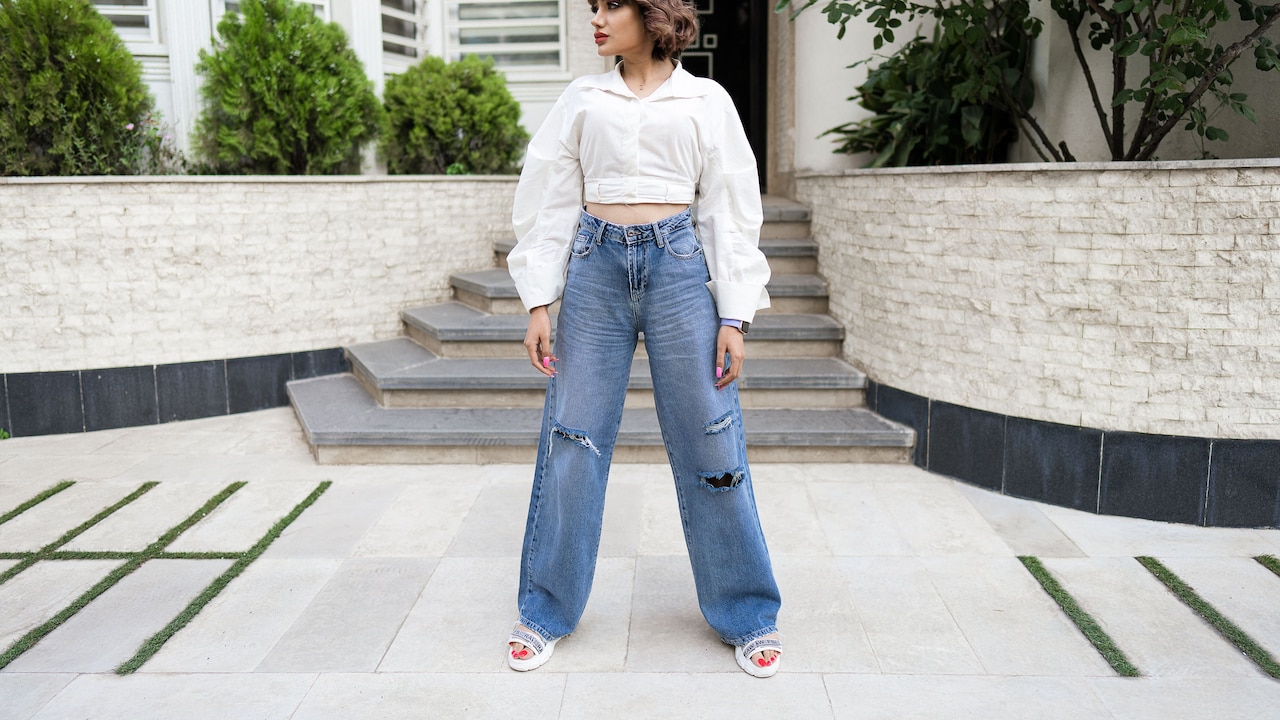
Extremely oversized jeans can also create an unflattering gap in the back
Photo Credit: Pexels
6. The Back Rise Does Not Suit Your Shape
Jeans have a front rise and a back rise, and the difference matters more than many shoppers realise. The back rise needs enough length and shaping to follow the body from the crotch up towards the waist.
When that proportion is wrong, the waistband can pull away, slide down or create an odd pocket of space above the hips.
People with fuller seats may need a longer or more carefully curved back rise, while others may find excess fabric collecting around the lower back when the rise is too generous.
This is one reason jeans that look almost identical on a hanger can behave completely differently once worn. When trying a pair, walk, sit and bend rather than relying on a motionless mirror check. If the waistband changes position dramatically with movement, the back rise may not suit your proportions. Trying another cut within the same brand can often work better than simply changing the size.
7. Your Hips And Seat Need More Room
A waistband gap can sometimes begin lower down. If the hips or seat need more space than the jeans provide, the fabric may pull tightly across those areas and push the waistband away from the body.
The result can be confusing. The waist looks too large, yet the rest of the jeans feels almost too tight.
Look for horizontal pulling lines, strained pockets or fabric that feels stretched across the seat. These are useful clues that the problem is not actually excess room at the waist alone.
A curvier cut, roomier hip measurement or different denim pattern may solve the issue far better than tightening a belt. Jeans should follow the shape of the body rather than force it into a predetermined silhouette. A comfortable seat also matters during everyday life, whether that means sitting through office hours, riding the Metro or spending a leisurely Sunday afternoon over chai and snacks.
8. The Waistband Has Stretched Out With Wear
A favourite pair of jeans can develop a gap even if it fitted perfectly when new. Waistbands take plenty of strain from sitting, bending, washing and repeated wear, especially when the denim contains stretch fibres.
Over time, those fibres may stop snapping back as effectively. The waistband gradually becomes looser while the rest of the jeans still looks perfectly wearable.
Washing according to the care instructions can sometimes help the denim recover temporarily. Avoid excessive heat unless the label allows it, as high temperatures can damage elastic fibres rather than rescue them.
If the jeans remain a favourite, alteration may be more sensible than replacement. A local tailor can often take in the waistband at the centre back or side seams while preserving the fit elsewhere. Depending on the alteration and location, a straightforward adjustment may cost a few hundred rupees, which can be far more appealing than retiring an otherwise excellent pair.
9. The Back Pockets And Yoke Affect The Fit
The small V-shaped section above the back pockets is called the yoke, and it plays a major role in how jeans curve around the body. Its angle, depth and seam placement can influence whether the waistband sits neatly or gaps.
A more sharply angled yoke often creates additional shaping through the seat and lower back. A straighter yoke may suit some body types but feel boxy on others.
Back pockets matter too. Their placement can subtly change how fabric sits and stretches across the seat, affecting the tension that reaches the waistband.
These details are easy to miss when shopping online, where attention naturally goes towards colour, leg shape and styling. Looking closely at product photographs from the back can offer useful clues. When trying jeans in person, assess the rear view just as carefully as the front. Denim engineering may not sound particularly glamorous, but a well-designed yoke can do more for fit than any clever marketing slogan.
10. The Jeans Simply Need Tailoring
Sometimes a pair of jeans gets almost everything right. The length is perfect, the wash works with half the wardrobe, the hips feel comfortable and the legs fall exactly as hoped. Only the waistband refuses to cooperate.
In that situation, tailoring may be the most practical answer.
Taking in a waistband is a common denim alteration. A skilled tailor can remove excess fabric from the back or sides, reshape the waistband and create a closer fit without dramatically changing the rest of the garment.
This option becomes especially worthwhile for premium denim or a pair bought at a good discount. A ₹3,000 pair that looks exceptional after a modest alteration may offer better value than repeatedly buying cheaper jeans that never sit properly.
Before handing them over, wear the jeans for a short while so any natural stretching becomes clear. Pinning them immediately after washing could lead to an overly tight result. The aim is comfortable shaping, not a waistband that turns lunch into a test of endurance.
Products Related To This Article
1. Aadvi Fashion Women Jean Relaxed Fit High-Rise Jeans
2. Roadster The Life Co. Women Wide Leg High-Rise Stretchable Jeans
3. Miss Chase Women Garden Phlox Wide Leg High-Rise Light Fade Stretchable Jeans
4. DOLCE CRUDO Women Straight Fit High-Rise Stretchable Jeans
5. SASSAFRAS BASICS Women Comfort Wide Leg High-Rise Jeans
6. Vero Moda Women Skinny Fit High-Rise Stretchable Jeans
7. DOLCE CRUDO Women's Wide-Leg High-Rise Clean-Look Stretchable Shaping Denim Jeans
A gap at the back of high-waisted jeans is usually less mysterious than it looks. Waist-to-hip proportions, rise length, stretch levels, waistband construction and even the angle of the back yoke can all influence how denim sits.
The best approach is to treat jeans shopping as a search for the right pattern rather than the right size alone. Try different rises, compare cuts, inspect fabric composition and move around before deciding. When everything works except the waistband, tailoring can bridge the final gap quite literally.
The perfect pair should not require constant tugging, strategic belts or suspiciously long tops to hide an awkward fit. Good jeans should feel secure while standing, sitting, walking and reaching for the last samosa on the plate. Once the right cut turns up, that annoying waistband gap can finally become someone else's fitting-room problem.
(Disclaimer: This article may include references to or features of products and services made available through affiliate marketing campaigns. NDTV Convergence Limited (“NDTV”) strives to maintain editorial independence while participating in such campaigns. NDTV does not assume responsibility for the performance or claims of any featured products or services.)