Common Curling Wand Mistakes That Cause Uneven Curls And How To Fix Them
Uneven curls often come down to small styling mistakes. From wand angle and section size to heat and curl direction, these common errors can make one side look tighter, flatter or less defined.
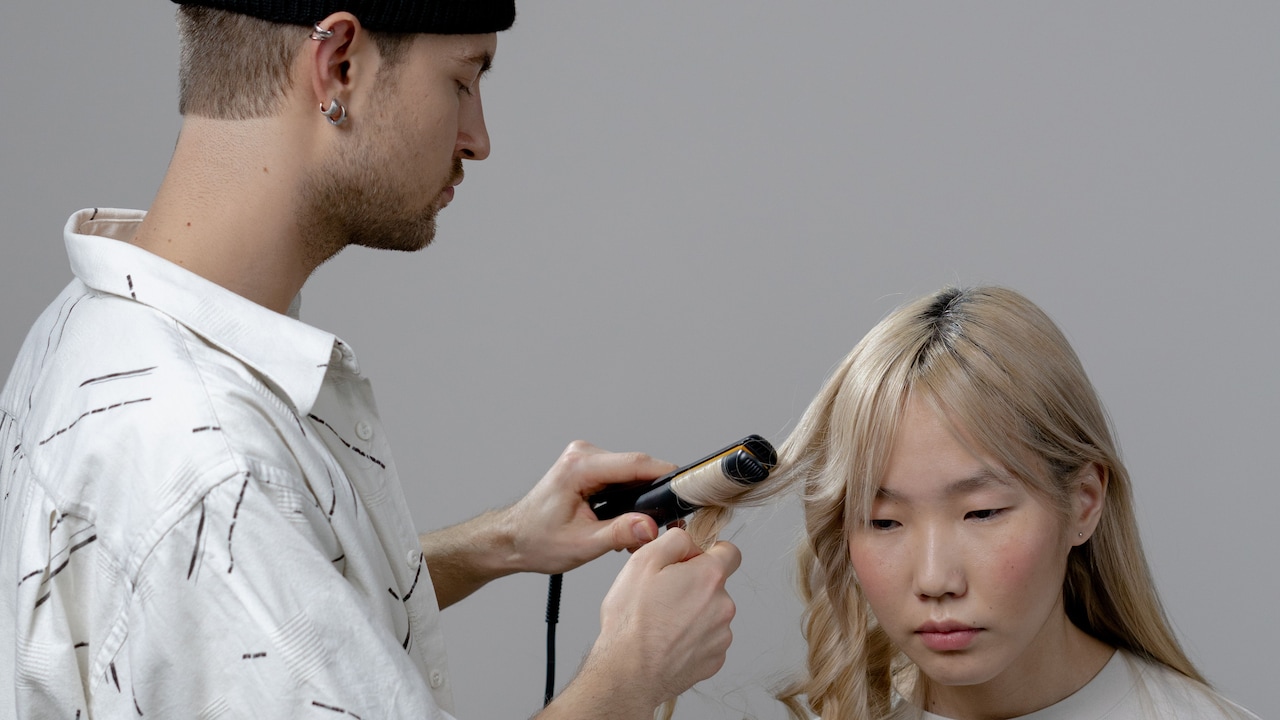
10 Curling-Wand Mistakes That Make Your Curls Look Uneven
Curling hair sounds straightforward until symmetry enters the picture. Wrap a section around the wand, hold it for a few seconds, release it and repeat. Yet somewhere between the first curl and the last, things can go unexpectedly wonky. Perhaps the right side forms soft, expensive-looking waves while the left develops tiny ringlets. Maybe one half has lift near the roots while the other clings to the head as though humidity has already won. It is the sort of styling mystery that becomes particularly annoying when getting ready for a wedding, a hairstyle for a festive dinner, or an evening out and the cab is already downstairs. The good news is that naturally uneven hair rarely deserves all the blame. Curling requires different wrist movements on opposite sides of the head, so technique can shift without being obvious. Dominant-hand control, sectioning and even the angle of the wand can create surprisingly visible differences. Before reaching for another hot tool and starting again, check these ten common curling-wand mistakes.
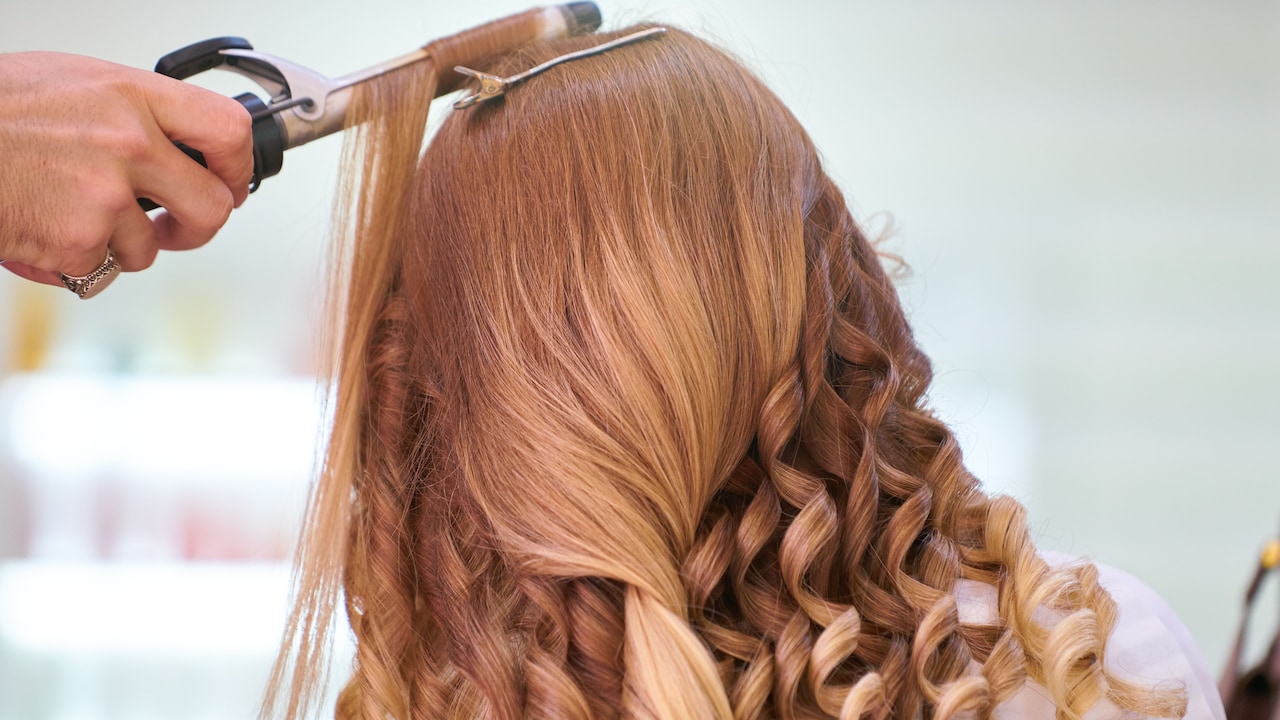
10 Curling-Wand Mistakes That Make Your Curls Look Uneven; Photo Credit: Pexels
Why Your Curls Look Uneven From One Side To The Other
1. Holding The Wand At Different Angles
Wand angle plays a much bigger role than it appears to. Hold the barrel vertically on one side and slightly horizontally on the other, and the resulting curls can have completely different personalities. A vertical wand usually encourages longer, softer curls, while a more horizontal position can create extra lift and a rounder, tighter shape.
The problem often happens because one side feels naturally easier to style. A right-handed person, for example, may comfortably hold the wand upright while working on one side, then tilt it awkwardly when reaching across the head. The difference feels tiny in the moment but becomes obvious once the curls cool.
Use the mirror to check the barrel rather than concentrating only on the hair wrapped around it. Try to keep roughly the same angle throughout each side.
Think of it like applying winged eyeliner. A millimetre seems insignificant until one wing is heading towards the temple and the other towards the eyebrow. Consistency, rather than absolute perfection, makes the finished result look balanced.
Also Read: Top 5 Hair Stylers Every College Student Should Own Under ₹3,000
2. Taking Unequal Sections On Each Side
Section size controls curl size. It sounds obvious, yet this remains one of the easiest mistakes to make when styling quickly.
On the comfortable side, neat sections may naturally stay around the same width. Move to the less convenient side and suddenly larger chunks start getting wrapped around the barrel. Those bigger sections receive heat less evenly and usually produce looser, less defined curls. Meanwhile, smaller sections on the opposite side form tighter spirals.
The difference becomes even more noticeable on thick or layered hair. A section that looks narrow from the front may contain far more hair underneath.
Instead of estimating every piece by sight, use the first few sections as a rough guide. Feel their thickness between the fingers before wrapping them. Sections do not need to resemble geometry homework, but they should contain a similar amount of hair.
When getting ready in a rush, resisting the temptation to grab increasingly large sections can save time later. Re-curling half a hairstyle five minutes before leaving home is rarely the shortcut it first appears to be.
3. Wrapping Hair More Tightly Around One Side
How firmly the hair sits around the barrel can change a curl dramatically. Pull one section taut against the wand and it may emerge compact and springy. Wrap another with a relaxed hand and the result can look softer and more stretched.
This usually happens because the dominant hand has better control. On one side, the fingers naturally maintain steady tension. On the other, the grip becomes either too tight or unexpectedly loose while the wrist tries to navigate behind the head.
Try paying attention to tension before switching sides. The hair should sit securely against the barrel without being aggressively stretched. Imagine wrapping a ribbon around a gift rather than tying luggage onto the roof of a car.
Also avoid repeatedly tightening the strand once it is already on the wand. That can concentrate the hair in one area of the barrel and create an oddly sharp bend.
Balanced tension helps both sides cool into similar shapes. It can also make curls look smoother because the strand sits more evenly instead of bunching or twisting unpredictably.
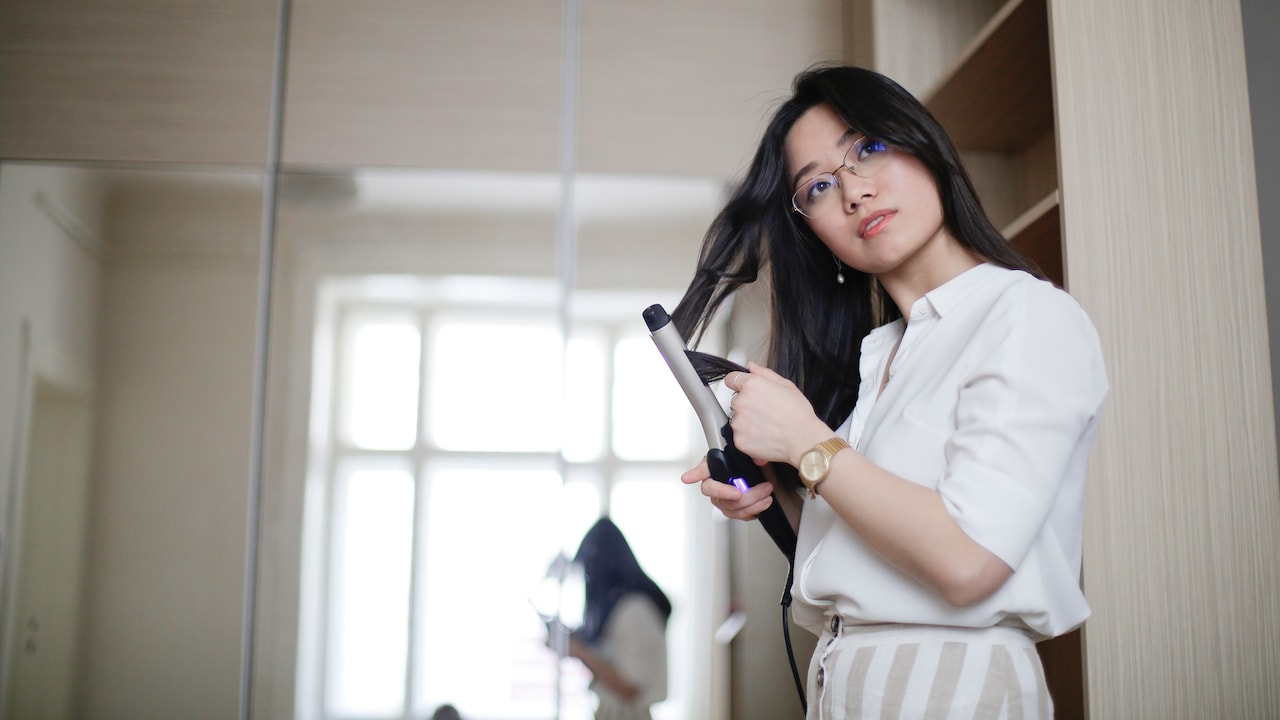
10 Curling-Wand Mistakes That Make Your Curls Look Uneven; Photo Credit: Pexels
4. Curling One Side Towards The Face
Curl direction can completely alter how two sides frame the face. When the front sections move away from the face on one side but towards it on the other, the hairstyle can immediately seem mismatched.
The inward-curled side may look tighter or heavier because the hair falls towards the cheek. The outward-curled side tends to open the face and often appears fuller.
Confusion is common because “away from the face” requires opposite wrapping directions on the left and right. Following exactly the same wrist movement on both sides does not produce matching curls; it produces mirrored technique in the wrong direction.
Check the front section before committing to the rest. If the curl opens away from the cheekbone, use that direction as the reference for the corresponding section on the opposite side.
For a relaxed finish, alternate directions through the lengths while keeping the face-framing pieces turned outwards. This prevents the entire hairstyle from merging into one enormous pageant curl while still giving both sides a deliberately balanced shape.
5. Leaving One Side On The Heat Longer
Those extra two or three seconds matter. Heat changes the temporary bonds that allow hair to hold a new shape, so inconsistent timing often creates inconsistent curls.
The first side may receive careful attention while every section gets a measured few seconds. By the second half, impatience can creep in. Alternatively, the more awkward side may stay wrapped around the wand longer because releasing it smoothly takes extra effort.
The result is often one side with firm, defined curls and another with looser waves.
Develop a simple rhythm. Count quietly or use roughly the same mental beat for each section. Hair texture, barrel temperature and section thickness affect the ideal timing, so there is no universal magic number. What matters here is consistency.
Keep heat sensible as well. Turning the wand unnecessarily high will not solve uneven technique and may simply increase damage.
A curling wand should style the hair, not recreate the atmosphere beside a tandoor. Consistent temperature, section size and timing usually give far better control than maximum heat ever will.
6. Starting At Different Heights Near The Roots
Curl placement determines volume. Begin wrapping close to the roots on one side and halfway down the lengths on the other, and one half can look dramatically fuller.
This often occurs around the back of the head where visibility becomes limited. The wand may naturally sit closer to the scalp on the easy side, while caution causes it to start lower on the opposite side.
The mismatch becomes particularly noticeable in photographs. One side appears lifted and shaped from the crown; the other can look flat near the roots before suddenly curling around ear level.
Before wrapping, notice where the barrel first meets each section. Matching that starting point on the opposite side creates more even volume.
There is no need to push a hot wand dangerously close to the scalp. A small gap is sensible. The goal is simply to keep that gap reasonably consistent.
For softer modern waves, leaving the roots slightly straighter can look lovely. Just make the choice intentional on both sides rather than allowing hand position to decide the hairstyle.
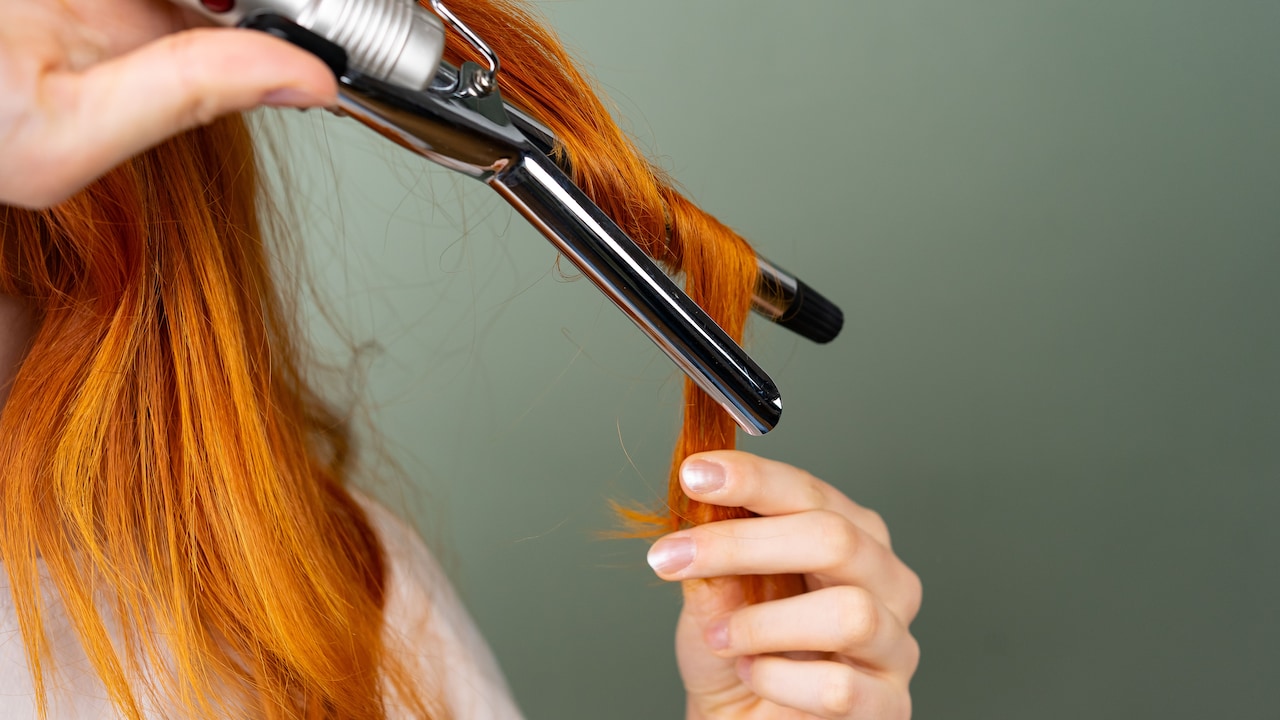
10 Curling-Wand Mistakes That Make Your Curls Look Uneven; Photo Credit: Pexels
7. Twisting The Hair Before Wrapping It
There is a subtle difference between wrapping a section flat around a wand and twisting it into a rope first. The two techniques produce noticeably different curls.
Flat wrapping allows more of the hair surface to touch the barrel, creating a smoother and often fuller curl. Twisted sections tend to produce narrower, more textured spirals. Accidentally using one technique on the left and another on the right can easily explain why one side looks tighter.
This mistake often appears when reaching around the head. Fingers automatically rotate the strand while trying to control it, and by the time it reaches the wand it has already become twisted.
Watch the first turn around the barrel. If the strand begins folding over itself, gently flatten it before continuing.
Neither technique is wrong. In fact, deliberately mixing flat and twisted sections can create wonderfully natural texture. The trouble begins when the difference follows a strict left-versus-right pattern.
Hair can handle a little creative chaos. Symmetrical accidental chaos is usually less forgiving, especially once someone decides it is group-photo time.
8. Brushing One Side More Than The Other
Sometimes the curling is perfectly balanced and the finishing technique ruins it.
Fresh curls usually look tighter than the final hairstyle because they relax as they cool and get separated. If one side receives ten enthusiastic passes with a brush while the other gets two gentle strokes, they will naturally end up looking different.
The more brushed side can appear flatter, wider and less defined. The less disturbed side may retain tighter individual curls.
Wait until both sides have cooled before breaking them up. Then use the same method throughout, whether that means fingers, a wide-tooth comb or a soft brush. Work gradually rather than attacking every curl as though detangling hair after a windy auto-rickshaw ride.
If one section remains too tight, loosen that individual curl rather than brushing the entire side again.
Finishing products can also exaggerate differences. Applying serum heavily to one half may weigh it down, while extra hairspray on the other can preserve more definition. Even distribution matters after the heat styling has finished.
9. Ignoring Natural Differences In The Hair
Perfectly matching technique does not always produce perfectly matching results because hair itself can vary across the head.
One side may have more layers, greater density, stronger natural waves or slightly more damage. Even everyday habits matter. Sleeping mainly on one side, tucking the same section behind an ear or exposing one area to more friction can affect how readily the hair holds a curl.
Rather than forcing identical treatment regardless of texture, make tiny adjustments where necessary. A stubborn section might need slightly smaller subsections. A naturally curly area may require less time on the wand. Hair that loses shape quickly could benefit from a light styling product before curling.
The important distinction is between adapting and overcorrecting. Turning up the heat dramatically on one side usually creates another problem instead of solving the first.
Think of both sides as siblings rather than identical twins. They can reach the same overall look through slightly different handling. Matching the finished shape matters more than following a rigid formula that ignores what the hair naturally wants to do.
10. Switching Technique When Changing Hands
This is the mistake behind many mysterious uneven-curl situations. The wand moves from one hand to the other, and without realising it, the entire technique changes.
The wrist rotates differently. The barrel angle shifts. Sections get wrapped from another direction. Tension changes. Suddenly one side has loose, glossy waves while the other looks ready for a completely different occasion.
There is no rule saying the wand must switch hands. Some people achieve better consistency by holding it in their dominant hand throughout and changing body position instead. Others find switching hands more comfortable. Either method can work.
The useful approach is to practise the awkward side when there is no deadline. Standing in front of the mirror twenty minutes before a reception is not an ideal moment to discover that the left wrist has no idea what the right wrist has been doing.
Slow down and copy the important elements: barrel angle, wrapping direction, tension, starting height and timing.
Muscle memory improves surprisingly quickly. Once both sides follow the same pattern, styling becomes faster and far less dependent on emergency touch-ups.
Products Related To This Article
1. VGR V-583 Professional Automatic Hair Curler for Women
2. VEGA I-Curl Hair Curler For Women With Ceramic Coated 0.5 Inch-1 Inch Barrel
3. Urban yog MakeMeeBold Automatic Hair Curler
4. VEGA PROFESSIONAL Pro Cera Curls 19mm Hair Curler for Women
5. AGARO Round Chopstick Curler, With 9 MM Barrel
6. Dealsure Hair Curler Machine
7. IKONIC CURLING TONG- 28MM (BLACK) Hair Curler
Uneven curls rarely mean the curling wand has developed a personal grudge against one side of the head. More often, tiny differences in technique create the contrast: larger sections here, stronger tension there, a tilted barrel or an extra few seconds of heat. Hair curling tongs: The easiest fix is to stop chasing perfect individual curls and look for consistency instead. Match section sizes, starting points and wand angles. Keep face-framing directions balanced, allow curls to cool properly and finish both sides with the same amount of brushing and product.
Natural texture may still give each side a slightly different character, and that is perfectly normal. Hair is not manufactured in matching panels.
What matters is whether the overall shape looks intentional. Once the hands learn to mirror each other rather than simply repeat the same movement, those frustrating “tight on one side, flat on the other” mornings become much less common. And that means fewer last-minute battles with a hot wand, one shoe on, phone ringing and everyone asking whether it is finally time to leave.
(Disclaimer: This article may include references to or features of products and services made available through affiliate marketing campaigns. NDTV Convergence Limited (“NDTV”) strives to maintain editorial independence while participating in such campaigns. NDTV does not assume responsibility for the performance or claims of any featured products or services.)