Can An Air Fryer Brown Food Without Any Oil? 10 Cooking Myths Explained
Can an air fryer really brown food without oil? From preheating and overcrowding to crispiness and cooking time, here are 10 common air fryer myths explained with practical facts.
Can An Air Fryer Brown Food Without Any Oil? 10 Cooking Myths Explained
Few kitchen appliances have inspired as much excitement, suspicion and enthusiastic experimentation as the air fryer. One person swears it makes the crispiest potato wedges imaginable. Another complains that their pakoras came out looking pale and emotionally defeated. Somewhere in between sits the truth. An air fryer is essentially a compact convection oven that circulates very hot air rapidly around food. That sounds simple, yet the way heat, moisture, oil and ingredients interact can produce surprisingly different results. It also explains why some popular air fryer advice works beautifully while other tips belong in the same cupboard as old cooking folklore.

Can An Air Fryer Brown Food Without Any Oil? 10 Cooking Myths Explained
Photo Credit: Pexels
The biggest confusion often surrounds oil. The appliance has been marketed so closely with “oil-free cooking” that many people expect anything placed inside the basket to emerge deeply browned and crunchy without a drop of fat. Sometimes that happens. Sometimes it absolutely does not.
So, before declaring the air fryer magical, disappointing or merely an expensive place to warm yesterday's samosas, it helps to separate fact from fiction.
10 Common Air Fryer Myths That Need Clearing Up
1. Air Fryers Cannot Brown Food Without Oil
This myth sounds logical because oil plays such an important role in traditional frying. Yet an air fryer can certainly brown some foods without added oil.
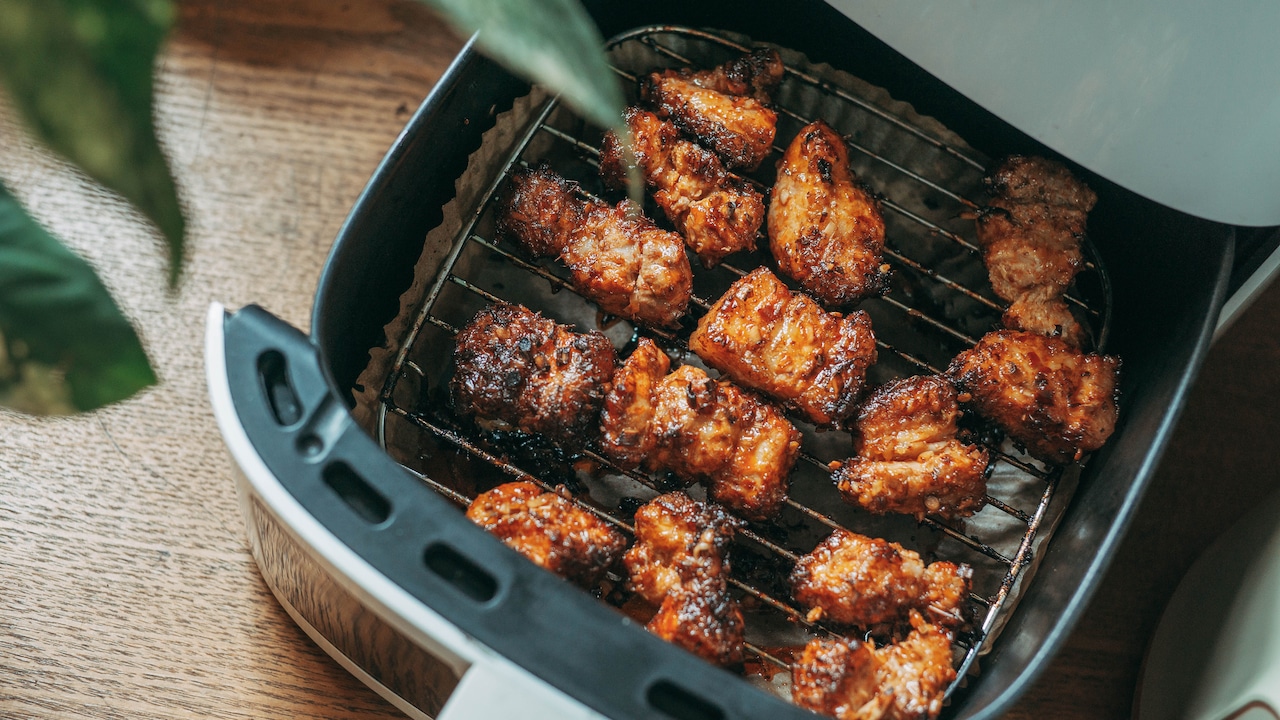
Browning happens largely through the Maillard reaction, a process in which proteins and sugars react under heat and create deeper colour, aroma and flavour. Foods that already contain some natural fat, such as chicken skin or certain frozen snacks, can brown beautifully without extra oil.
Even vegetables may develop attractive roasted edges when exposed to sufficiently high heat. Cauliflower, mushrooms and corn are good examples.
The catch is that “brown” and “fried” are not identical. A completely oil-free potato wedge may turn golden at the edges, but it probably will not have the same glossy crunch as one coated with a teaspoon of oil.
A tiny amount of fat often improves colour and texture dramatically. Think of it less as deep-frying and more as giving the hot air a helping hand. The air fryer can do plenty alone, but sometimes it appreciates a useful colleague.
2. Air Fryer Food Is Always Healthier
The air fryer has acquired a glowing health halo, but the appliance cannot magically transform every ingredient placed inside it.
Cooking with less oil can reduce the amount of added fat compared with deep-frying. That makes air frying useful for foods such as potato wedges, cutlets, kebabs or homemade vegetable bites. Instead of submerging them in a kadai full of oil, a light coating may be enough.
However, the ingredient still matters.
A heavily processed frozen snack does not suddenly become a bowl of salad because it spent 12 minutes surrounded by circulating hot air. It may already contain considerable salt, refined flour, saturated fat or other ingredients worth considering.
Portion size matters too. Eating twice as many fries because they were air-fried rather defeats the point.
The best way to think about an air fryer is as a cooking method, not a nutrition certificate. It can help reduce oil use and make certain cooking habits lighter, but health still begins with what goes into the basket.
3. You Never Need To Preheat An Air Fryer
Skipping preheating is tempting. After all, one great appeal of an air fryer is speed. Why add another step?
For many everyday foods, preheating is not essential. Vegetables, reheated leftovers and some frozen snacks can go straight into a cold basket with perfectly acceptable results.
But preheating can make a noticeable difference when quick browning matters.
Imagine placing marinated paneer tikka into an already hot air fryer. The exterior begins cooking immediately, helping create those appetising browned patches before the inside loses too much moisture. Put the same paneer into a cold appliance and the gradual rise in temperature may leave it slightly drier by the time the surface colours.
The same principle applies to foods such as chicken pieces, breaded cutlets and homemade fries.
Fortunately, air fryers generally preheat quickly. A few minutes is often enough.
So preheating is neither compulsory nor pointless. Treat it as a useful technique rather than a sacred rule. When crisp edges and fast searing matter, starting hot can give dinner a small but worthwhile advantage.
4. More Oil Makes Food Much Crispier
Once people discover that a little oil improves air-fried food, the next temptation is predictable: surely more oil means more crunch.
Not necessarily.
Air fryers depend on strong air circulation. If food becomes heavily coated in oil, the surface can turn greasy rather than crisp. Excess oil may also drip into the lower tray, producing unnecessary smoke or leaving the food with an unpleasant oily finish.
For many vegetables, fries and breaded snacks, a light coating works better than a generous pour.
A teaspoon or two spread across an entire batch can often be enough. Spraying or brushing oil may help distribute it more evenly, although pouring a measured amount into a bowl and tossing the ingredients works just as well.
There is another advantage. Spices stick better to lightly oiled food. That matters when making masala potatoes or cauliflower coated with chilli, turmeric and cumin.
The goal is not to recreate deep-frying inside a smaller machine. Air frying works best when oil supports browning instead of drowning the ingredients. The basket needs airflow more than it needs an oil slick.
5. You Can Fill The Basket To The Top
An air fryer basket looks roomy, especially when hungry people are waiting nearby. Naturally, the urge to squeeze in one more handful of fries can become powerful.
Unfortunately, overcrowding is one of the fastest ways to get uneven results.
Hot air needs space to move around the food. When ingredients are piled into a dense heap, the pieces trapped underneath receive less direct heat. Instead of crisping, they may steam in the moisture released by neighbouring food.
This explains the classic air fryer mystery: beautifully browned potatoes on top and pale, soft ones hiding below.
Some foods tolerate mild overlapping better than others. Chicken wings, chunky vegetables and frozen snacks can often cook in a reasonably full basket if shaken during cooking. Delicate breaded foods usually benefit from a single layer.
Cooking two batches may feel inconvenient, but each batch can cook faster and more evenly.
Consider the air fryer basket like a busy Mumbai local platform. Everyone technically fits until nobody can move. Give the ingredients some breathing room and the hot air can actually do the job it was designed to do.
Also Read: Top Deals On Kitchen Appliances For Faster, Smarter Everyday Cooking
6. Opening The Basket Ruins The Cooking Process
Traditional ovens lose a noticeable amount of heat when the door opens, so many people assume an air fryer should remain firmly closed until the timer rings.
Thankfully, air fryers are far less dramatic.
Opening the basket briefly to check, turn or shake food is usually not a problem. In fact, doing so often improves the final result.
Fries, roasted makhana, potato cubes and vegetable pieces can benefit from a shake halfway through cooking. Turning cutlets or paneer pieces can help both sides brown evenly. A quick inspection also prevents the familiar disappointment of discovering that something went from “almost done” to “charcoal with seasoning” during the final few minutes.
Air fryers have small cooking chambers and powerful heating elements, so they generally recover heat quickly after the basket closes again.
Of course, opening it every 30 seconds will slow things down. Curiosity has limits.
One or two sensible checks, however, will not destroy dinner. The air fryer is a kitchen appliance, not a soufflé competition. Open the basket when necessary, make the adjustment and carry on cooking.
Can An Air Fryer Brown Food Without Any Oil? 10 Cooking Myths Explained
Photo Credit: Pexels
7. Everything Cooks Faster In An Air Fryer
Air fryers have a reputation for speed, and often they deserve it. Their compact chambers heat quickly, while powerful circulating air can cook food faster than a large conventional oven.
But “faster” does not mean everything cooks in record time.
A tray of frozen nuggets may finish quickly. Thick chicken pieces, whole vegetables or dense baked dishes can still take patience. Some recipes may even need similar cooking times to oven versions, particularly when the food is packed closely together.
Preparation also affects speed. Thin potato wedges cook faster than thick ones. Small cauliflower florets brown sooner than large chunks. Room-temperature ingredients may behave differently from food taken directly from the refrigerator.
Then there is batch cooking. Preparing three small air fryer batches can take longer overall than placing one large tray in a full-sized oven.
The air fryer wins most convincingly when cooking modest quantities. A quick evening snack for two? Excellent. Food for a large family gathering? The oven may suddenly look much more attractive.
Speed depends on the portion, ingredient and desired texture, not merely the appliance.
8. Air Fryers Are Only Good For Frozen Snacks
Frozen fries and nuggets may be air fryer celebrities, but treating the appliance as a glorified snack heater wastes much of its potential.
Fresh vegetables roast particularly well because intense circulating heat encourages browning. Try cauliflower, baby potatoes, beans, carrots, mushrooms or corn with spices and a light coating of oil.
The appliance can also handle paneer tikka, chicken kebabs, fish fillets, toasted sandwiches and reheated pizza. Even small cakes, muffins and baked dishes can work when the correct tin fits safely inside the basket.
Leftovers deserve special mention. Foods that turn disappointingly soft in a microwave often recover nicely in an air fryer. Yesterday's samosa can regain some crunch instead of emerging hot but limp.
That does not mean every recipe belongs inside one. Large curries, soups and dishes requiring constant stirring obviously have better homes on the hob.
Still, the air fryer is far more versatile than its frozen-food reputation suggests. Think of it as a small, energetic oven rather than a machine built solely to rescue packets from the freezer.
9. Wet Batter Works Just Like Deep-Frying
This is one myth that has caused plenty of messy baskets.
Loose wet batter behaves very differently in an air fryer because there is no hot oil surrounding it instantly. In deep-frying, the batter begins setting as soon as it touches the oil. In an air fryer, strong circulating air can blow uncooked batter around before it has a chance to firm up.
The result may be patchy coating, bare spots and a basket decorated with dried batter droplets.
Traditional pakora batter, for example, usually performs better when it is thick enough to cling firmly to the ingredient. Even then, the texture will differ from deep-fried pakoras.
Breaded coatings tend to work more reliably. Flour, egg and breadcrumbs can create a crisp shell because the coating stays attached while hot air circulates around it.
Some recipes designed specifically for air fryers adjust batter thickness or use moulds to keep mixtures contained.
So yes, battered foods can work, but simply transferring a deep-frying recipe unchanged often leads to disappointment. The appliance follows different physics, and unfortunately it has never been persuaded by family recipe nostalgia.
10. An Air Fryer Makes Deep-Fried Food Taste Exactly The Same
Air-fried and deep-fried food can both be delicious, but expecting identical results sets the appliance an impossible challenge.
Deep-frying surrounds food completely with hot oil. Heat reaches every part of the surface rapidly, producing a distinctive crisp crust, rich flavour and particular mouthfeel.
An air fryer relies mainly on circulating hot air, with perhaps a thin layer of oil on the food. That can create excellent browning and crunch, but the texture is often lighter and drier.
Take French fries. Properly prepared air fryer fries can be crisp outside and fluffy within. Yet they rarely have exactly the same richness as fries lifted from bubbling oil.
That difference is not necessarily a disadvantage.
For regular home cooking, many people may prefer the lighter result, especially when it avoids handling a pan full of hot oil and cleaning splatters from the stove afterwards.
The mistake is treating the air fryer as a perfect deep-fryer replacement. It is better viewed as a different cooking technique with its own strengths. Once expectations change, the results become much easier to appreciate.
Can An Air Fryer Brown Food Without Any Oil? 10 Cooking Myths Explained
Photo Credit: Pexels
Products Related To This Article
1. Ninja Air Fryer MAX PRO, 6.2L Air Fryer Oven 2-Year Warranty
2. Nutricook 4.5L Air Fryer Essential, 2026 New Launch
3. PHILIPS Air Fryer NA120/00, 4.2 Litre
4. Ninja Combi 14-in-1 Multi-Cooker, Oven, & Air Fryer
5. Nutricook 4.5L Air Fryer Essential, 2026 New Launch
6. KENT Digital Air Fryer 8L
7. SOLARA Air Fryer For Home 4.5L with See Through Window
The air fryer deserves enthusiasm, but perhaps not mythology. It can brown food without added oil, although a small amount often improves colour and crispness. It can reduce oil use, but it cannot make every ingredient automatically healthy. It cooks many foods quickly, yet overcrowding, wet batter and unrealistic expectations can still produce disappointing results.
What makes the appliance genuinely useful is not magic but convenience. It heats quickly, handles small portions well and gives leftovers a second chance at crunchiness. It also offers an easy route to roasted vegetables, kebabs, cutlets and weekday snacks without turning the kitchen into a cloud of frying fumes.
The best results come from understanding how the machine actually works. Leave room for airflow, use oil thoughtfully, shake the basket when needed and accept that air-fried food has its own texture rather than pretending to be deep-fried.
And if the first batch of potato wedges comes out pale? No kitchen legend needs to be invented. A little more heat, a little less crowding and perhaps that teaspoon of oil may be all that stands between disappointment and dinner.
(Disclaimer: This article may include references to or features of products and services made available through affiliate marketing campaigns. NDTV Convergence Limited (“NDTV”) strives to maintain editorial independence while participating in such campaigns. NDTV does not assume responsibility for the performance or claims of any featured products or services.)