10 Care Mistakes That Leave Comforters Lumpy In Some Areas And Flat In Others
A comforter that feels fluffy at one end and strangely flat at the other may not be worn out. From rough washing to poor drying and storage habits, everyday care mistakes can push filling into clumps and leave frustrating empty patches.

Why Comforters Turn Lumpy And Flat: 10 Care Mistakes To Avoid
A comforter can look perfectly respectable when spread across the king-sized bed and still behave like a bag of clouds that have fallen out with each other. One corner feels wonderfully plush, the centre has developed a mysterious hill, and another section seems to contain almost no filling at all. It's tempting to blame age or poor quality, but uneven filling often begins with something far less dramatic: the way the comforter gets washed, dried, folded and stored. Comforters depend on their internal filling staying evenly distributed inside stitched compartments. Whether that filling consists of down, feathers, polyester fibres or another material, repeated pressure and moisture can encourage it to gather in certain spots. Once fibres stick together, simply smoothing the surface rarely fixes the problem. The good news is that many uneven comforters haven't retired yet. A few changes to everyday care can prevent those strange mountains and valleys from developing in the first place. Here are 10 common mistakes that can leave a comforter lumpy in some areas and disappointingly flat in others.

Why Comforters Turn Lumpy And Flat: 10 Care Mistakes To Avoid; Photo Credit: Pexels
Why Comforters Lose Their Even Fluffiness
1. Stuffing The Comforter Into A Washing Machine That Is Too Small
A comforter needs room to move during washing. When it gets squeezed into a drum that barely accommodates it, water and detergent struggle to circulate evenly. Some sections may receive a thorough wash while tightly compressed areas remain bunched together for most of the cycle.
That compression matters because wet filling naturally becomes heavier. When the comforter cannot tumble freely, the filling gets pushed towards folds, corners and stitched edges. After washing, these compressed clusters can remain together rather than spreading back into their original compartments.
There's also a mechanical problem. A packed drum may twist the comforter into one dense bundle during spinning. By the time the cycle finishes, the filling may have migrated considerably.
If the comforter barely fits into the machine when dry, washing it at home probably isn't the best idea. A larger-capacity machine gives the fabric enough space to lift, drop and move naturally. That extra room isn't wasted space. It's what helps keep the filling distributed instead of turning one corner into a cushion and another into a bedsheet.
Also Read: Enjoy Peaceful Sleep With These Lightweight Comforters For Changing Weather
2. Using Too Much Laundry Detergent
More detergent might sound like the solution for a bulky comforter, particularly after weeks of use. Unfortunately, extra soap can create a different problem inside all that filling.
Comforters contain layers that take longer to rinse than ordinary clothing. When too much detergent enters the wash, some of it may remain trapped around the fibres even after the rinse cycle ends. That residue can make filling sticky, stiff or heavy. Instead of separating into soft individual fibres, it starts bonding into little clusters.
Those clusters may become particularly obvious once the comforter dries. One compartment feels dense and almost padded, while the section beside it seems unusually thin.
Adding yet another wash full of detergent rarely helps. Follow the care label and use an appropriate amount for the load rather than assuming that a bigger item automatically needs a mountain of soap. An additional rinse cycle can also help when the fabric permits it.
Think of detergent as seasoning rather than gravy. Enough does the job. Too much can overwhelm everything and leave you dealing with the aftermath.
3. Choosing An Aggressive Wash Cycle
A comforter doesn't need the washing-machine equivalent of a wrestling match to become clean. Heavy-duty cycles use stronger agitation and faster movement, which may be useful for certain sturdy fabrics but can prove harsh on bulky bedding.
Inside a comforter, filling sits within stitched sections designed to limit movement. Strong agitation can repeatedly force fibres against those seams. Over time, the filling may move towards one side of a compartment or compress into a tight ball.
Synthetic filling can be particularly noticeable when it clumps. Once several damp fibres twist and dry together, they can form a firm lump that refuses to spread simply by pulling at the outer fabric.
Unless the care instructions recommend otherwise, a gentle or bedding-friendly cycle generally gives the comforter enough movement to clean without excessive twisting.
There's no prize for choosing the most dramatic button on the machine. A comforter usually needs water, suitable detergent and controlled movement rather than maximum mechanical force. Treating it more gently can help preserve the loft that makes it comfortable in the first place.

Why Comforters Turn Lumpy And Flat: 10 Care Mistakes To Avoid; Photo Credit: Pexels
4. Leaving A Wet Comforter Sitting In The Machine
Finishing a wash and forgetting about it for a few hours happens easily. There's dinner to make, a doorbell rings, somebody needs the washing machine next, and suddenly the comforter has spent half the afternoon folded into a damp heap.
Unfortunately, wet filling doesn't enjoy waiting.
When a comforter remains compressed after the spin cycle, gravity pulls moisture and filling towards its lowest folds. Damp fibres also stick together more easily than dry ones. The longer those clumps remain compressed, the more stubborn they can become during drying.
There's another unpleasant consequence: trapped moisture can create a musty smell. That may tempt you into rewashing the comforter, adding yet another round of moisture and agitation.
Remove it promptly after the cycle ends. Before drying, give it several firm shakes and gently redistribute any obvious bunches through the fabric. This takes only a minute or two but can make an enormous difference.
Consider it the bedding version of untangling your hair before it dries. Sorting out the mess early is much easier than wrestling with it once everything has set.
5. Drying The Comforter Without Breaking Up Clumps
Drying isn't simply about removing moisture. It's also the stage where the comforter needs to regain its loft.
Wet filling naturally sticks together. If the comforter goes through the entire drying process without any redistribution, those damp clusters may dry exactly where they formed. Once fully dry, they become the familiar hard lumps you can feel through the outer fabric.
When the care label allows tumble drying, periodically pause the cycle and check the comforter. Shake it vigorously, turn it around and gently massage areas where the filling has gathered.
Air-dried comforters need similar attention. Simply hanging one over a line and forgetting about it until evening can allow gravity to pull damp filling downwards. Rotate it regularly and shake it as it dries.
The aim isn't to obsessively rearrange every fibre. You're simply stopping one damp bundle from becoming a permanent resident of the same corner.
A little intervention halfway through drying often produces a much more even result than attempting to rescue hardened clumps afterwards.
6. Putting The Comforter Away Before It Is Completely Dry
The outer fabric can feel dry long before the filling inside reaches the same state. That makes thick comforters deceptively tricky.
If slightly damp bedding goes straight into a cupboard or storage bag, the remaining moisture keeps inner fibres stuck together. Pressure from folding makes the problem worse. When the comforter comes out weeks later, certain areas may feel compressed, hardened or strangely uneven.
Moisture trapped during storage can also create musty odours and, in severe cases, encourage mildew. At that point, uneven filling becomes the least irritating problem.
After drying, check several parts of the comforter rather than testing only the edges. Feel the centre, corners and thicker stitched sections. Any cool or slightly damp area needs more drying time.
For air drying, turning the comforter and allowing airflow around both sides helps considerably.
Cupboard space can feel urgent when a large comforter occupies half the room, but rushing the final stage rarely pays off. Another few hours of drying can save weeks of wondering why your once-fluffy bedding suddenly feels like it contains damp pakoras.
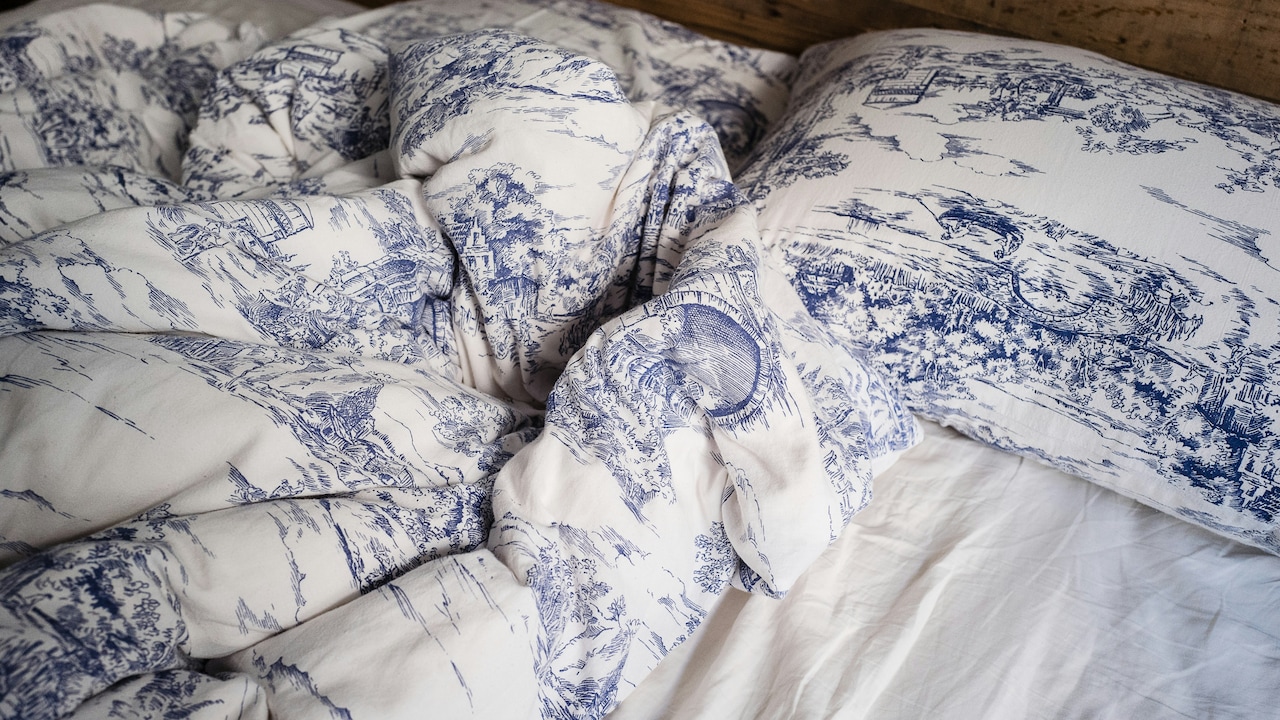
Why Comforters Turn Lumpy And Flat: 10 Care Mistakes To Avoid; Photo Credit: Pexels
7. Folding It The Same Way Every Time
Most households develop a default folding method. The comforter gets folded into halves, then quarters, then squeezed into whichever shelf has enough space. Convenient? Absolutely. Ideal for long-term loft? Not always.
Repeatedly folding along the same lines places pressure on the same sections of filling. Over months, those areas can flatten while neighbouring sections stay thicker. Strong creases may also push filling away from fold lines and towards the centre of each folded section.
This becomes more obvious with bulky comforters that spend several months stored away between seasons.
Changing the fold pattern occasionally helps spread pressure across different areas. Better still, store the comforter loosely when space allows. Avoid placing several heavy blankets, suitcases or storage boxes directly on top.
Think about what happens to a sofa cushion that everybody chooses as their favourite seat. Pressure leaves evidence. Comforters behave similarly, only more slowly.
A storage shelf doesn't have to resemble a luxury bedding showroom. It simply needs enough breathing room to prevent months of compression in exactly the same places.
8. Keeping Heavy Items On Top During Storage
Space inside wardrobes is precious, so bedding often ends up at the bottom of a stack. Then come blankets, winter clothes, storage organisers and perhaps that mysterious bag nobody has opened since three festivals ago.
All that weight gradually squeezes air from the comforter.
Loft depends on tiny spaces between fibres. Continuous pressure collapses those spaces and compresses the filling. Worse, the weight rarely falls evenly. The centre may carry most of the load while edges remain relatively untouched. When the comforter eventually returns to the bed, one area springs back while another stays stubbornly thin.
Long-term compression can prove particularly troublesome for lower-quality synthetic filling because fibres may lose some resilience after staying flattened for extended periods.
If possible, place comforters near the top of a storage area rather than underneath dense items. A breathable storage bag can protect against dust without requiring aggressive vacuum compression.
Vacuum bags are brilliant for saving space, but repeated long-term compression may not suit every comforter. Check its care guidance first.
Saving one wardrobe shelf is useful. Flattening the bedding until it resembles a giant paratha probably isn't.
9. Sitting, Sleeping Or Placing Weight On The Same Area Repeatedly
Not every comforter problem begins in the laundry room. Sometimes everyday habits slowly reshape the filling.
Perhaps someone regularly sits on the edge of the bed while getting ready. Maybe the laptop lives permanently on one section. Children might treat the comforter as a landing mat. Pets, naturally, will locate the fluffiest corner and declare permanent ownership.
Repeated pressure compresses filling in those high-contact areas. Over time, nearby fibres may migrate into less compressed sections, creating visible differences in thickness.
This explains why one side of a frequently used comforter can feel flatter even though it receives exactly the same washing treatment as the other side.
Regularly rotating the comforter can spread wear more evenly. Giving it a vigorous shake while making the bed also helps restore air between fibres and encourages filling to move back into place.
No comforter will remain perfectly cloud-like forever. Bedding gets used. That's its job. But distributing everyday pressure can slow down the transformation from fluffy comforter to suspiciously expensive padded sheet.
10. Ignoring Small Clumps Until They Become Large Ones
A tiny lump doesn't seem urgent. You smooth the comforter, pull the cover over it and forget the problem. A few weeks later, that grape-sized bump has somehow developed into something closer to a potato.
Small filling clumps often become larger because everyday movement encourages nearby loose fibres to join them. Washing can accelerate the process if the existing cluster becomes wet and compacts further.
Addressing uneven filling early makes restoration much easier. Lay the comforter flat and gently work the filling apart through the outer fabric. Massage dense spots between your fingers and gradually guide some of the filling towards thinner areas within the same stitched compartment.
Avoid yanking or aggressively pulling the material, particularly around seams. You're encouraging fibres to separate, not trying to relocate the entire filling in one heroic movement.
Regular shaking helps too. Holding opposite corners and snapping the comforter gently allows fibres to loosen and regain volume.
Think of clumps like knots. The small ones usually cooperate. Ignore them long enough and they start behaving as though they've signed a permanent tenancy agreement.
Products Related To This Article
1. Amazon Brand - Solimo Microfibre Reversible Comforter
2. SleepyCat Luxurious All Season Reversible Comforter-Hotel Like Feel with Down Alternative Lightweight Microfiber Fill
3. VAS COLLECTIONS Cotton AC Blanket for Single Bed
4. BSB HOME Ultrasonic Quilted AC Comforter 220 GSM
5. Cloth Fusion Down Alternative AC Comforter
6. Divine Casa Microfibre 120 GSM All Season Abstract Printed Comforter Single Bed
7. Wakefit Comforter Single Bed | 220 GSM | Quilt AC Blanket for Single Size Bed
A lumpy comforter doesn't automatically mean it's worn out or poorly made. Washing, drying, storage and even everyday pressure can gradually move or compress the filling until some sections feel thick and others almost empty. Giving the comforter enough room, drying it thoroughly, reducing prolonged compression and tackling small clumps early can help preserve a softer, more even feel for much longer.
(Disclaimer: This article may include references to or features of products and services made available through affiliate marketing campaigns. NDTV Convergence Limited (“NDTV”) strives to maintain editorial independence while participating in such campaigns. NDTV does not assume responsibility for the performance or claims of any featured products or services.)