Can Any Metal Pan Work On An Induction Cooktop? 10 Cookware Myths Explained
Can any metal pan work on an induction cooktop? Not quite. From stainless steel and aluminium to cast iron and non-stick pans, discover 10 common cookware myths and what really works on induction.
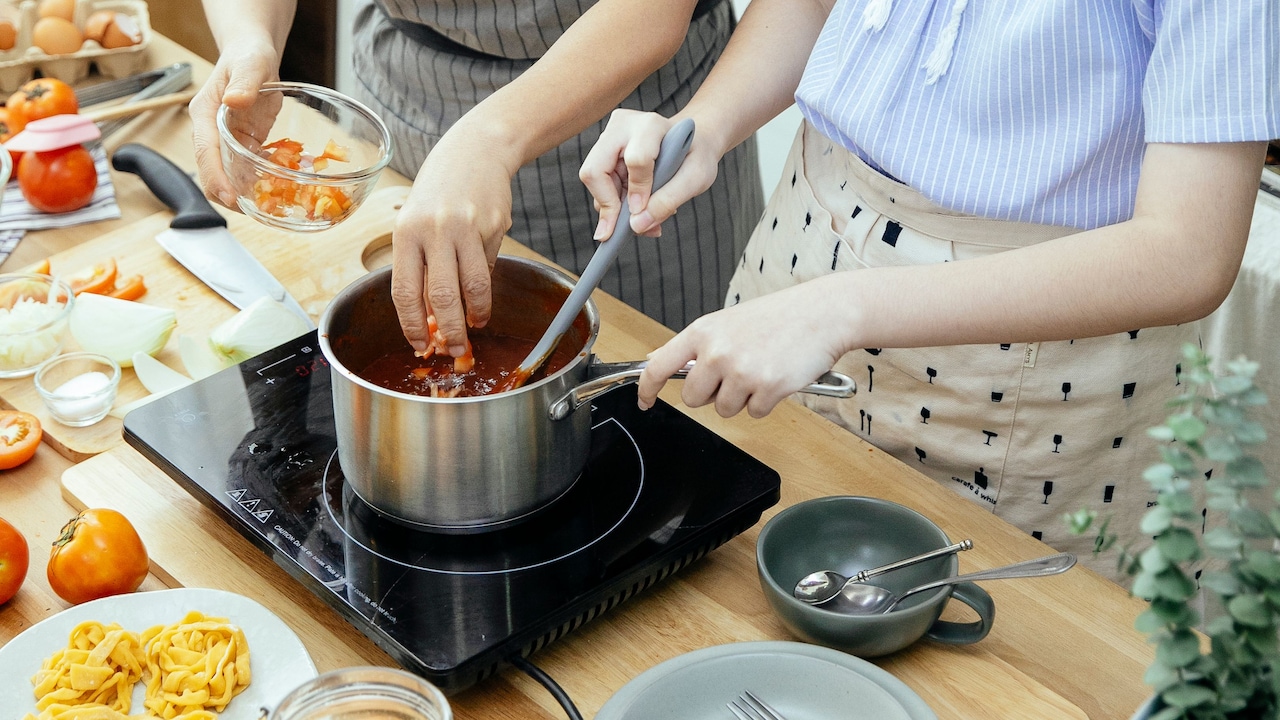
Can Any Metal Pan Work On Induction? 10 Cookware Myths Explained
Induction cooktops have quietly become a familiar sight in modern kitchens. They heat quickly, keep the cooking surface relatively cool and make weeknight meals feel a little less chaotic. There is also no open flame to dodge while reaching for the masala dabba. Yet one question continues to cause confusion: can any metal pan work on an induction cooktop? Not quite. Induction cooking does not heat cookware in the same way as a gas burner or traditional electric coil. Instead, the cooktop creates a magnetic field that reacts with compatible cookware. That difference explains why one steel saucepan may boil water beautifully while another sits stubbornly cold. It also explains the flood of half-truths surrounding induction cookware. Some sound sensible. Others have survived simply because nobody wants to conduct a physics experiment while making dal at 8 pm. From stainless steel and aluminium to cast iron and non-stick cookware, here are ten popular induction myths explained in plain language.
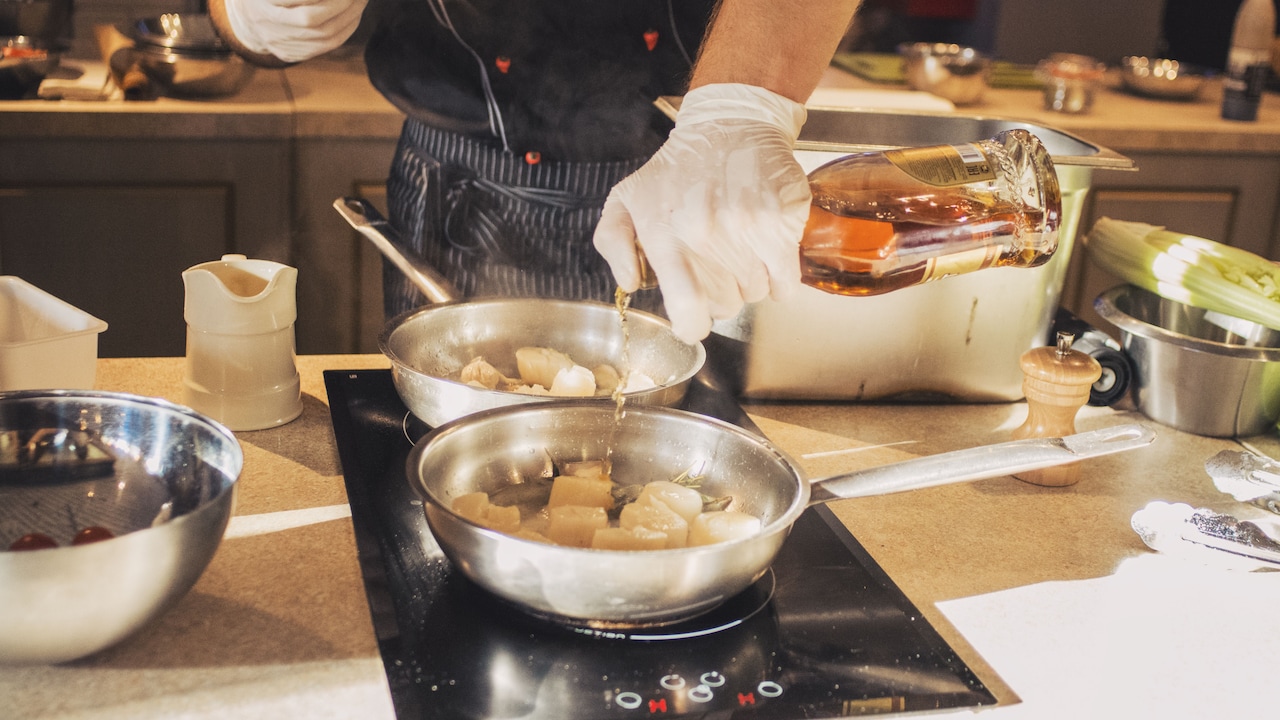
Can Any Metal Pan Work On Induction? 10 Cookware Myths Explained; Photo Credit: Pexels
10 Common Induction Cookware Myths You Should Stop Believing
1. Myth: Any Metal Pan Works On An Induction Cooktop
Metal alone does not make a pan induction-friendly. The important factor is whether the base contains enough ferromagnetic material to interact with the cooktop's magnetic field.
Iron and many types of steel usually work well. Aluminium, copper and glass generally do not work by themselves because they lack the magnetic properties induction cooking needs. However, manufacturers often solve this problem by adding a magnetic stainless-steel layer to the bottom of aluminium or copper cookware.
That is why judging a pan only by its main material can be misleading.
A simple fridge-magnet test gives a useful clue. Place a magnet against the base of the pan. If it sticks firmly, the cookware will probably work on induction. A weak grip may lead to unreliable heating, while no attraction usually means the pan is unsuitable.
Think of induction compatibility as a handshake between the hob and the pan. The right magnetic base completes the greeting. Without it, both sides simply stand there awkwardly.
2. Myth: All Stainless-Steel Cookware Is Induction Compatible
Stainless steel sounds like an obvious choice for induction, but the label does not guarantee compatibility.
Different stainless-steel alloys behave differently around magnets. Some contain enough iron to respond strongly to an induction field, while others contain higher levels of nickel and may show little or no magnetic attraction.
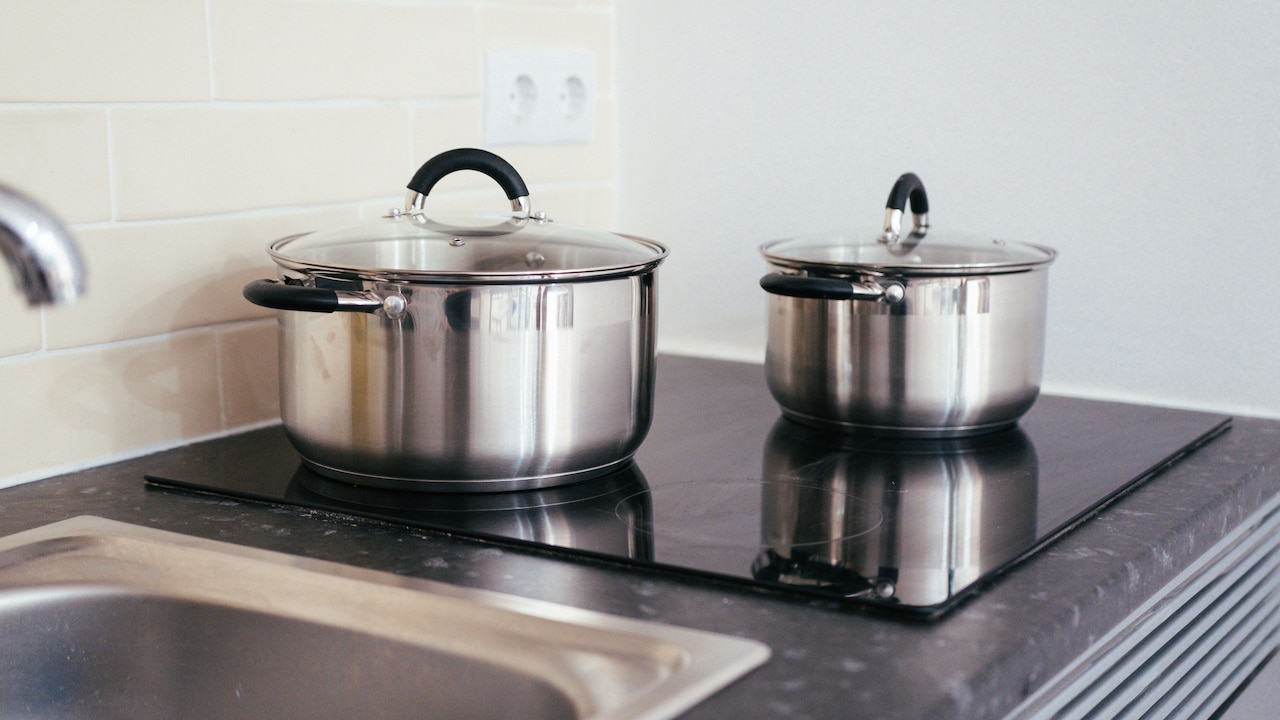
Cookware construction matters too. Many modern stainless-steel pans have layered bases that combine magnetic steel with aluminium or copper. These layers improve heat distribution while keeping the base induction compatible.
So that beautifully polished saucepan inherited from a relative may work perfectly, or it may leave the cooktop flashing an error symbol.
The quickest test remains wonderfully low-tech: reach for a magnet.
If buying new cookware, check for wording such as “induction compatible” or look for the familiar coil-shaped induction symbol on the packaging or base. That tiny mark can save plenty of kitchen frustration and prevent the depressing experience of buying a smart new pan that refuses to heat the first cup of chai.
3. Myth: Aluminium Pans Can Never Be Used On Induction
Plain aluminium does not normally work on induction because aluminium is not ferromagnetic. That does not mean every aluminium pan belongs permanently beside the gas stove.
Many cookware makers now produce aluminium pans with induction-ready bases. These designs usually feature a bonded or encapsulated magnetic steel plate underneath the aluminium body.
The aluminium still performs one of its favourite jobs: spreading heat quickly and evenly. The steel layer simply allows the induction cooktop to recognise and heat the pan.
This combination appears frequently in frying pans, tawas, saucepans and non-stick kadais because it offers practical everyday performance without the weight of solid cast iron.
The catch lies in the base. Two pans may both be labelled aluminium, yet only one may work on induction.
Check the underside before buying. A clearly marked induction symbol offers the safest clue. A magnet test also helps.
So aluminium is not banned from induction cooking. It merely needs the right magnetic footwear before stepping onto the dance floor.
Can Any Metal Pan Work On Induction? 10 Cookware Myths Explained; Photo Credit: Pexels
4. Myth: Cast Iron Is Too Old-Fashioned For Induction Cooking
Cast iron may look like cookware from another era, but induction cooktops happen to love it.
Cast iron contains plenty of iron, making it naturally compatible with induction technology. A sturdy cast-iron skillet, dosa tawa or Dutch oven can heat exceptionally well on an induction hob.
There is one important caution: weight and surface texture.
Traditional cast-iron cookware can be heavy, and some pieces have rough bases. Dragging them across a glass cooktop may cause scratches. Lifting the pan instead of sliding it is a simple habit that protects the surface.
Heat settings deserve attention as well. Cast iron retains heat for a long time, so blasting it immediately at maximum power is rarely necessary. A moderate setting allows the pan to warm steadily and reduces the risk of overheating.
For slow curries, crisp dosas or vegetables that benefit from deep browning, cast iron can be a fantastic induction companion.
Old-fashioned? Perhaps in appearance. Obsolete? Not even close.
5. Myth: Non-Stick Pans Do Not Work On Induction Cooktops
Non-stick refers to the coating inside the pan, not necessarily the material underneath it.
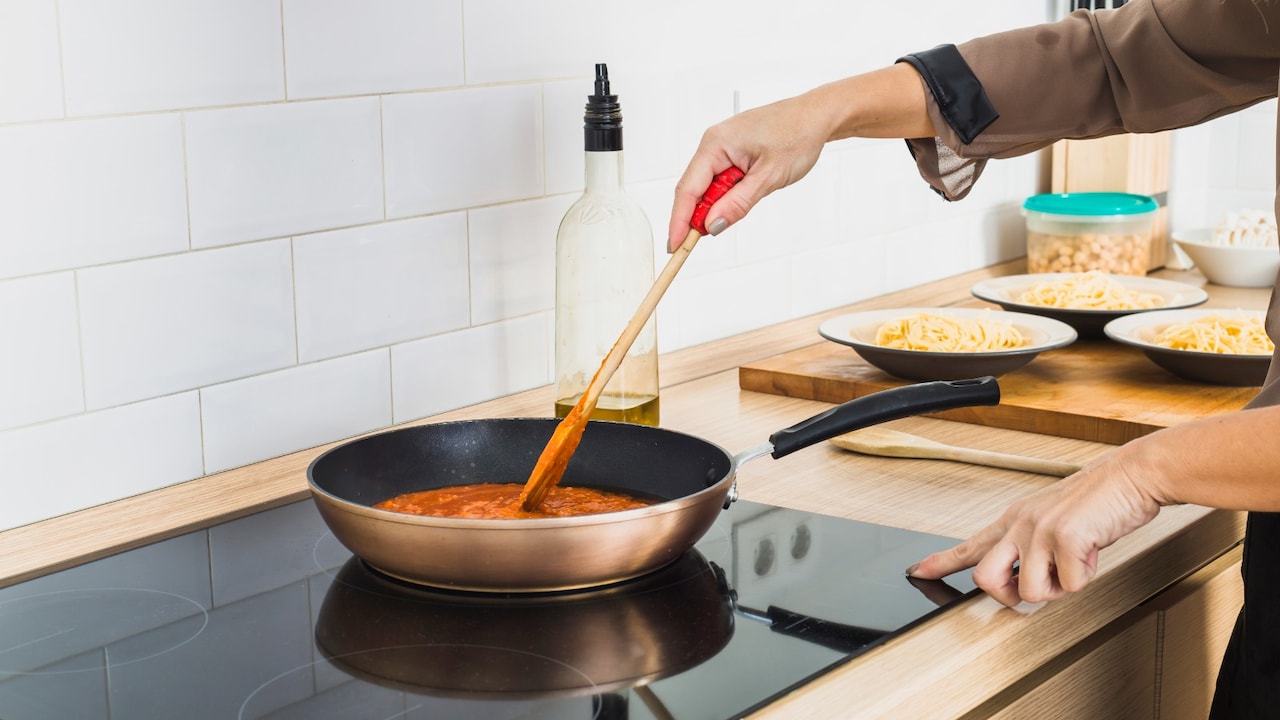
A non-stick frying pan can work perfectly on induction if its base contains magnetic material. Many modern non-stick pans use aluminium bodies for lighter weight and even heating, then add an induction-compatible steel plate underneath.
The coating itself does not determine whether the cooktop can detect the pan.
However, induction's rapid heating creates another issue. Empty non-stick cookware can become extremely hot very quickly. Excessive heat may shorten the coating's useful life, particularly when the pan repeatedly sits on high power with nothing inside.
A gentler approach works better. Start with low or medium heat, add cooking fat or ingredients promptly and avoid treating the boost function like a default setting.
Whether making an omelette, reheating parathas or gently frying paneer, induction-compatible non-stick cookware can be wonderfully convenient.
The key is not avoiding non-stick pans. It is choosing a compatible base and showing the coating a little kindness.
6. Myth: Expensive Cookware Always Performs Better On Induction
A ₹10,000 cookware set does not automatically cook better on induction than a thoughtfully designed pan costing far less.
Price can reflect materials, brand reputation, finish, handle design, durability or manufacturing quality. None of those factors alone guarantees efficient induction heating.
The base matters most.
A good induction pan should have a sufficiently magnetic bottom, stable construction and a broad, flat contact area. Thick multi-layer cookware may distribute heat more evenly, but an affordable pan with a properly engineered base can still perform extremely well.
Likewise, a luxurious copper saucepan without an induction layer may be completely useless on the cooktop.
Shopping becomes easier when performance takes priority over prestige. Check compatibility markings, examine whether the base sits flat and consider how the cookware suits everyday dishes.
There is little joy in owning a glamorous pan that wobbles while tadka gathers on one side.
Induction cooking rewards sensible construction rather than flashy price tags. Good cookware should earn its shelf space through performance, not merely packaging.
7. Myth: If A Magnet Sticks, The Pan Will Definitely Work Perfectly
The magnet test is useful, but it is not an infallible scientific certificate.
A strong magnetic attraction usually indicates good induction potential. Still, cookware can behave differently depending on the amount of magnetic material, the thickness of the base and the design of the cooktop.
Some pans have only a thin magnetic layer. They may technically work but heat slowly, unevenly or only at higher settings. Others may have magnetic sections that cover only part of the base.
Pan size creates another complication. Many induction cooktops require cookware to cover a minimum area before the sensor detects it. A tiny tempering pan, for example, might contain perfectly suitable metal yet remain invisible to a large induction zone.
So the magnet test should be treated as a quick screening method rather than a guarantee.
If a magnet sticks firmly across most of the base, that is encouraging. For a new purchase, combine that test with the manufacturer's induction compatibility mark.
Kitchen science does not need to become complicated, but two clues are better than one.
Can Any Metal Pan Work On Induction? 10 Cookware Myths Explained; Photo Credit: Pexels
8. Myth: Induction Cooktops Heat The Glass Surface Directly
This misunderstanding makes induction cooking seem far more mysterious than it really is.
Traditional electric cooktops heat an element, which then warms the cookware. Induction works differently. The cooktop produces an electromagnetic field that creates heat within compatible cookware itself.
In simple terms, the pan becomes the main source of cooking heat.
The glass surface can still become hot, of course. A scorching pan transfers some of its heat back into the cooktop, so touching the surface immediately after cooking is never wise.
Yet the absence of a glowing heating coil explains why induction responds so quickly when the power level changes. Reduce the setting and heat generation inside the cookware drops almost immediately.
That responsiveness can be especially useful when milk threatens to boil over or a delicate sauce begins behaving dramatically.
It also explains why incompatible cookware stays cold. The cooktop has no suitable magnetic material to excite.
There is no hidden flame beneath the glass. Just clever physics doing remarkably practical kitchen work.
9. Myth: A Warped Pan Works Just As Well As A Flat Pan
Induction does not require physical contact in exactly the same way as a conventional hot plate, but a flat base still matters enormously.
A warped pan may rock, tilt or sit unevenly over the cooking zone. That instability can reduce heating efficiency and produce uneven results. Some cooktops may even struggle to detect cookware if the base sits too far from the glass.
Anyone who has chased a rolling chapati tawa around a smooth cooktop already understands the practical problem.
A flat pan also keeps oil and sauces where they belong. When the centre rises or sinks badly, ghee may collect around the edges while onions brown unevenly in the middle.
Slight imperfections are not always disastrous, but severely warped cookware deserves retirement or reassignment to a stove where it performs better.
When shopping, place the pan on a flat surface and check whether it rocks.
Cookware does not need to resemble laboratory equipment, but a stable base makes induction cooking faster, safer and much less irritating during a busy meal.
10. Myth: Induction Cookware Can Only Be Used On Induction
Induction compatibility is usually an extra feature, not a restriction.
Most induction-ready stainless-steel, cast-iron and multi-layer cookware can also be used on gas burners and conventional electric cooktops. The pan does not suddenly lose its usefulness when removed from an induction surface.
That makes induction cookware particularly practical in homes where cooking methods change over time. A pan bought for an induction hob today may later move to a gas kitchen without needing replacement.
There are exceptions. Always check the manufacturer's instructions, especially for specialised cookware, detachable handles or pans with unusual base constructions.
Flame size also matters on gas. A powerful flame climbing around the sides of a pan can damage handles or exterior finishes even when the cookware itself is technically gas-safe.
Still, the idea that induction pans belong exclusively to induction cooktops is largely a myth.
Think of compatibility as versatility. A well-made induction-ready kadai can move between kitchens, appliances and cooking styles without creating unnecessary drama or another shopping bill.
Products Related To This Article
1. Cadlec CookEase 2000W Induction Cooktop
2. Pigeon by Stovekraft Cruise 1800 watt Induction Cooktop With Crystal Glass
3. Prestige PIC 20 1600 Watts Induction Cooktop
4. Hawkins Futura Dual Hob Induction Cooktop
5. KAFF Infrared Induction Cooktop 2200W
6. IBELL SLIM50 Induction Cooktop, 2000W
7. Hafele Magnechef Induction Cooktop
So, can any metal pan work on an induction cooktop? No. The pan needs a magnetic base that can interact with the cooktop's electromagnetic field.
That simple rule clears up most of the confusion.
Cast iron generally works beautifully. Stainless steel may work depending on its composition. Aluminium and copper need a magnetic induction layer. Non-stick cookware is perfectly suitable when its base is designed for induction.
Price matters less than construction, while flatness, size and magnetic strength can affect everyday performance more than a glossy brand name.
The easiest checks require no engineering degree. Look for an induction symbol, try the magnet test and make sure the pan sits flat on the cooking surface.
Once the myths disappear, induction cooking feels far less fussy. The technology may rely on electromagnetism, but choosing the right cookware is surprisingly straightforward.
And if a favourite old kadai refuses to cooperate, there is no need to take it personally. Sometimes the relationship simply lacks attraction.
(Disclaimer: This article may include references to or features of products and services made available through affiliate marketing campaigns. NDTV Convergence Limited (“NDTV”) strives to maintain editorial independence while participating in such campaigns. NDTV does not assume responsibility for the performance or claims of any featured products or services.)